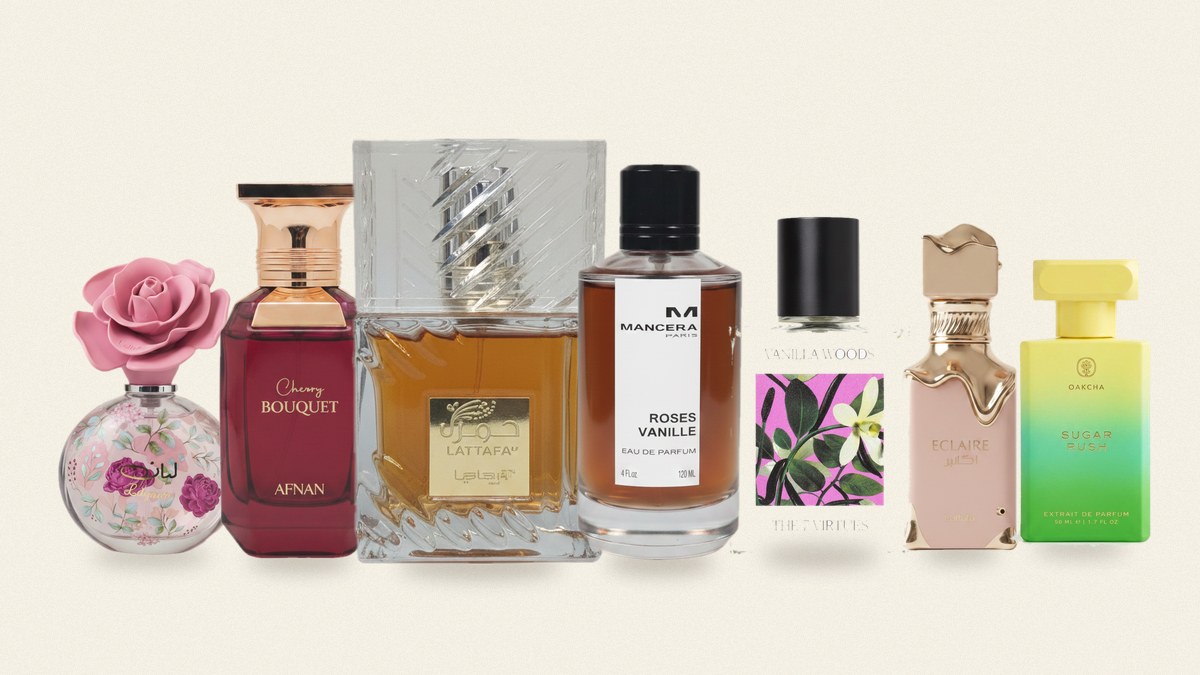
A Field Guide
Perfume layering is the practice of applying two or more scented products in a deliberate order — heaviest viscosity first — to create a combined scent that is personal and difficult to replicate. Order matters because a light, alcohol-based spray applied before a heavier oil causes what’s called scent shearing: the layers separate on the skin instead of blending into one composition. Done well, layering replaces the single signature scent with something better — a fragrance wardrobe. A small, curated set of combinations you choose from by mood, season, and occasion, the way you’d choose what to wear.
This guide covers the whole practice: the physics of what goes on first, which notes actually work together, how to build a wardrobe that covers your real life, and how to keep the combinations that work from being lost to memory.
I. What Is Scent Layering?
Scent layering — you’ll also see it called scent stacking — is combining multiple fragranced products so they read as one composed scent on the skin: a body oil under an eau de parfum, a hair mist over both, sometimes two perfumes worn together deliberately.
For most of the twentieth century, the ideal was the signature scent. One bottle, worn for decades, that people associated with you the way they associated your handwriting. That ideal is quietly dissolving. Collectors now build small wardrobes instead — five bottles, ten, fifteen — and compose from them the way a cook composes from a pantry.
The appeal is not novelty for its own sake. A layered combination is yours in a way no single bottle can be. Two people can own identical bottles and never smell alike, because the ratios differ, the order differs, and skin differs. Layering is the difference between buying a scent and authoring one.
There is also a quieter reason, and it’s the one I care most about. The pressure in fragrance culture right now is acquisitive: the next launch, the next blind buy, the next viral bottle. Layering points the other direction. It asks what else the bottles you already own can do. A collection of eight, layered thoughtfully, holds more distinct scents than a shelf of thirty worn one at a time.
Read next → Skin Scents vs Projection Beasts: Building a Quiet-Luxury Rotation
II. The Viscosity Rule: What Goes On First
Apply products from heaviest to lightest: oils and lotions first, then eau de parfum or extrait, then mists and sprays last. This single rule fixes most failed layering attempts, and almost nobody teaches it.
Here’s the physics, briefly. A fragrance needs something to hold onto. Dry skin is a poor surface — the alcohol in a spray flashes off and takes a good portion of the scent with it. A high-viscosity base (a body oil, a rich lotion) does two things: it traps moisture, and it gives the perfume’s aroma molecules a medium to dissolve into, which slows their evaporation. That’s why the same perfume lasts hours longer over a base than on bare skin.
Reverse the order and you get scent shearing. Spray your EDP first, apply an oil over it, and the oil sits on top of the perfume rather than under it — smothering the top notes, distorting the heart, and causing the composition to come apart in patches as the day goes on. The layers shear away from each other instead of binding.
I think of every layered wearing in three movements:
First — The Anchor (the base). A high-viscosity product: body oil, body butter, a dense lotion. Unscented if you want the perfume untouched; lightly scented if you want to steer it. The Anchor’s job is to trap moisture and give everything above it something to hold.
Second — The Heart (the core). Your primary eau de parfum, extrait, or perfume oil. This is the identity of the combination. Everything else exists to frame it.
Third — The Veil (the topper). A body spray, hair mist, or eau fraîche. Light, diffusive, alcohol-forward. The Veil adds sillage — the trail — and airiness. It’s the part of your scent other people meet first, before they get close enough for the Heart.
Not every wearing needs all three. But when a combination isn’t working, the order of these three layers is the first thing to check — before you blame the pairing.
Read next → How to Layer Perfume With Your Body-Care Routine
III. Which Notes Layer Well Together
Notes layer well under one of three logics: they share a facet (vanilla and tonka both carry coumarin warmth), they contrast a texture (a sharp citrus over a creamy milk accord), or one extends the other’s pyramid (a long-lasting musk base under a beautiful but fleeting floral).
Sharing a facet is the safest route and the best place to start. You’re amplifying something already present in the Heart rather than introducing an argument. Contrast is where layering gets interesting — the tension between bright and creamy, dry and sweet, is what makes a combination feel composed rather than merely doubled. Extension is the practical one: it’s how you give a two-hour floral an eight-hour life.
A quick reference, organized by what your Heart is:
| If your Heart is… | Anchor with | Veil with |
|---|---|---|
| A boozy gourmand (Khamrah-style) | Unscented or plain vanilla body oil | A dry amber or woody mist |
| A sharp citrus | A creamy fig or milk-accord lotion | Neroli or orange-blossom water |
| A white floral | A clean musk lotion | A green tea mist |
| An incense or oud | Sandalwood oil, sparingly | Nothing — let it breathe |
| A fresh aquatic | Unscented — keep the water clear | A light sea-salt or mineral mist |
Two cautions. First, never layer two dominant bases — two heavy ambers, two competing ouds. Top and heart notes negotiate; base notes fight, and the fight lasts all day. Second, when in doubt, make one layer unscented. An unscented Anchor still does its fixative work while leaving the Heart untouched.
Read next → Perfume Layering Combinations That Actually Work: A Note-by-Note Guide
IV. Building a Wardrobe by Mood, Season & Occasion
A fragrance wardrobe is a small, deliberate rotation — typically five to fifteen scents — organized by when and why you wear them, not by how many you own. The organizing questions are the same ones you’d ask of a clothing wardrobe: What does my actual week look like? What do I keep reaching for? Where are the gaps?
Start with three axes:
Season. Heat amplifies. The gourmand that glows in January can turn syrupy in July; the transparent citrus that carries a summer afternoon disappears entirely in winter air. Most collections skew toward the season they were built in — audit yours honestly.
Occasion. A work-safe scent is a genuine category, not a compromise: close-wearing, low-projection, inoffensive without being invisible. So is a going-out scent, a travel scent, a staying-in scent that no one else will ever smell. The wearing you do only for yourself is not the lowest tier of the wardrobe. It might be the point of it.
Mood. This is the axis fragrance culture talks about least and wearers act on most. You already choose scents by how you want to feel — grounded, sharp, softened, invisible, seen. Naming those moods, even loosely, turns a shelf of bottles into a vocabulary.
Map your collection against these three axes and the gaps announce themselves. Usually it isn’t “I need more bottles” — it’s “I have four scents for the same Tuesday and nothing for a hot evening.” Layering fills many of those gaps without a purchase: your winter amber, anchored lighter and veiled with something green, may already be the summer-evening scent you thought you were missing.
Read next → How to Organize a Perfume Collection by Mood and Occasion
V. Reading the Olfactory Pyramid
The olfactory pyramid describes how a fragrance unfolds over time: volatile top notes in the first minutes, heart notes across the following hours, and base notes that remain into the drydown. It exists because aroma materials evaporate at different rates — citrus and aldehydes flash off quickly; resins, musks, and woods linger.
For layering, the pyramid is the composition tool. When you anchor with sandalwood oil, you are extending a base. When you veil with neroli water, you are refreshing a top that would otherwise be gone by mid-morning. Reading a fragrance’s pyramid tells you where it’s thin — and therefore where a layer belongs.
One caution: the pyramid printed on a product page is marketing shorthand, not chemistry. Trust your nose’s timeline over the brand’s list. The note you smell at hour five is a base note for you, whatever the copy says.
We go deep on this — including how to smell-test your own pyramid timings — in the companion piece.
Read next → What Are Top, Heart, and Base Notes? The Olfactory Pyramid Explained Simply
VI. How to Track What Works
The fastest way to improve at layering is to write down every combination you try: what you wore, in what order, and how it read at hour one and hour six. Memory flatters. A journal doesn’t.
The failure mode is universal. You stumble onto a combination that’s genuinely beautiful — the proportions right, the drydown better than either bottle alone — and three weeks later you cannot reconstruct it. Was it two sprays or three? Which oil? Did the order matter? The discovery is gone, and you’re back to guessing.
The fix is a log, and it only needs four fields: the products, the order, the amounts, and a verdict written after the drydown — not at application, when everything smells promising. Add the occasion and the weather if you’re thorough; both change how a combination performs more than people expect.
“The combinations that work shouldn’t be lost to memory.”
I log every wearing in TheScentStyler — a private scent memoir that keeps your vanity, your layering notes, and a weekly narrative of what you wore and when. No feed, no followers, no one else’s collection to envy. Just your book. Begin your memoir →
Paper works too, honestly. The tool matters less than the habit: no wearing goes unrecorded, especially the failures. A note that reads “vanilla oil under the iris — muddy, never again” is worth as much as a triumph. It’s the failures that teach you your skin.
Read next → How to Keep a Fragrance Journal (and What to Write in It)
VII. Common Layering Mistakes
The three most common mistakes are applying light products before heavy ones, overspraying every layer, and stacking two dominant bases that fight for the drydown.
1. Light before heavy. Covered above, but it bears repeating because it causes more failed layering than every note-clash combined. Oil and lotion first. Always.
2. Overspraying each layer. Layering is additive. If your normal application is four sprays, a layered wearing wants perhaps two of the Heart — the Anchor and Veil are already carrying part of the load. Full doses of three products isn’t a composition; it’s a crowd.
3. Two fighting bases. Two heavy ambers, two ouds, two loud musks. Each wants the final word, and the drydown becomes a twelve-hour argument on your skin.
4. Judging at application. Every combination smells plausible in the first ten minutes, while the alcohol and top notes are doing the talking. The verdict belongs to the drydown. Wait for it.
5. Layering to rescue a scent you don’t like. A base you dislike will still be there under whatever you put over it — usually at hour six, when everything else has left. Layering extends and reframes; it doesn’t redeem.
Questions, Answered
Can you layer two perfumes?
Yes. Choose one as the Heart and treat the second as an accent — apply the heavier or sweeter of the two first, and keep the second to one or two sprays so the layers blend rather than compete.
What order do you apply perfume and lotion?
Lotion first, always. A moisturized base traps the perfume’s aroma molecules and extends wear; perfume applied under lotion gets smothered and shears apart.
Does layering make perfume last longer?
Yes — anchoring a spray over an oil or lotion base measurably extends longevity, because the fixative layer slows evaporation off the skin.
How many fragrances should be in a wardrobe?
Enough to cover your real life, no more. Most wardrobes settle between five and fifteen: a daily, a work-safe, an evening, a seasonal pair, and a few moods.
Can you layer oil-based and alcohol-based fragrances?
Yes, and it’s one of the best pairings there is — provided the oil goes on first. Oil under alcohol anchors and extends; alcohol under oil shears.
Do you layer perfume on skin or clothes?
Skin, for anything involving oils or lotions — the layers need warmth and contact to bind. A final Veil mist over clothing or hair is fine, and often where a mist performs best.
Seven is a collector, journaler, and the builder of TheScentStyler. Every combination on this page was worn, logged, and lived with — nothing here is theoretical.