
A Field Guide
Perfume combinations work when the notes share a facet (vanilla over tonka), contrast a texture (citrus over cream), or extend each other’s life (a musk base under a fleeting floral). Random pairings occasionally get lucky; understanding those three logics means you can compose on purpose. This guide walks the major note families — vanilla and the gourmands, citrus, white florals, woods and resins, musks — and gives you combinations for each, with the why attached, because the reasoning is what lets you improvise beyond any list.
One ground rule before the pairings: order matters as much as choice. Heaviest product first, always — oil, then eau de parfum, then mist. If that rule is new to you, start with the complete layering guide and come back; every combination below assumes it.
How to Read These Combinations
Each pairing below names an Anchor (the base layer — oil or lotion), a Heart (your main perfume), and where useful a Veil (a light mist over the top). You don’t need all three every time; the Anchor + Heart pair is the workhorse. And the amounts matter: a layered wearing wants less of each product than you’d use solo — roughly two sprays of the Heart where you’d normally do four. Layering is addition by restraint.
Vanilla & the Gourmands
The logic: shared facet. Vanilla is the friendliest note in perfumery — it shares warm, sweet facets with tonka, benzoin, caramel, and booze accords, so amplification pairings almost never fail.
Combinations:
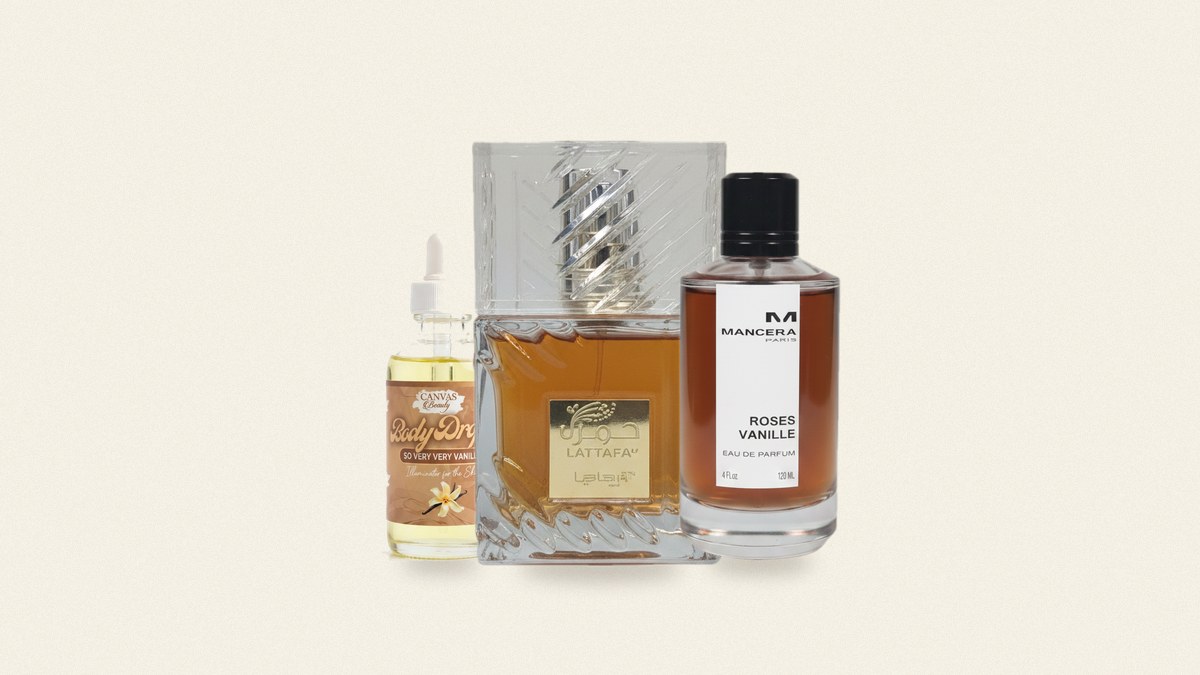
- Plain vanilla body oil + a boozy amber gourmand. The oil deepens the drydown and rounds the alcohol edge of the opening. This is the pairing that makes a Khamrah-style scent feel like it costs three times what it did.
- Vanilla Heart + a dry woody Veil. The mist’s dryness disciplines the sweetness — the difference between dessert and dressed.
- Two gourmands together — with a warning. Only if one is clearly quieter. Two loud gourmands don’t blend; they thicken. If the result smells like a candle shop, that’s this mistake.
What to avoid: vanilla under sharp green or aquatic scents. The facets don’t touch anywhere, and the vanilla just haunts the drydown like a guest who didn’t get the memo.
Citrus & the Fresh Openers
The logic: extension. Citrus notes are the most volatile materials in perfumery — brilliant for twenty minutes, gone by the first coffee. Layering exists to give them a future.
Combinations:
- Creamy fig or milk-accord lotion + a sharp citrus Heart. The classic texture contrast: bright over creamy reads as composed, expensive, Mediterranean. The lotion also slows the citrus’s evaporation — you buy an extra hour of the good part.
- Citrus Heart + a light musk Anchor. Clean musk gives the citrus somewhere to land when it fades, so the scent transitions instead of vanishing.
- Neroli or orange-blossom water as a Veil over almost anything fresh. Refreshes the top mid-day without re-committing to a full application.
What to avoid: citrus over heavy oud or amber oils. The citrus can’t compete and burns off doubly fast against a warm base — you paid for brightness and got fumes.
White Florals
The logic: contrast and control. Jasmine, tuberose, orange blossom, gardenia — these are the divas. Big, radiant, and prone to going indolic (that overripe, animalic edge) in heat. Layering is how you conduct them.
Combinations:
- Clean musk lotion + a white floral Heart. The musk cushions the indole and keeps the floral in its polished register. This is the office-safe version of a big-night scent.
- White floral Heart + a green tea Veil. Tea’s dryness cools the floral’s temperature — turns a hothouse bloom into a garden one.
- A drop of vanilla oil under tuberose — sparingly. Warm and narcotic, unapologetically evening. One of the great date-scent structures.
What to avoid: two white florals stacked. Each is a soloist; together they compete for the same frequency and the result blares.
Woods, Incense & Oud
The logic: mostly restraint. Deep woods and resins are already complete architectures — the drydown of an oud is a base note fortress. There's a whole range of warm, modern woody fragrances that wear far lighter than that. The layering rule here is fewer moves, lighter hands.
Combinations:
- Sandalwood oil, sparingly, under an incense Heart. Sandalwood is the one wood that plays supporting actor gracefully — it adds cream without claiming the stage.
- A woody Heart with no Veil at all. Sometimes the correct third layer is nothing. Woods project on their own timeline; a mist on top just smears the line.
- The one bold move: a whisper of rose over oud. Centuries of Middle Eastern perfumery vouch for it — but the rose goes on light, and the oud was there first.
What to avoid: two dominant bases. Two ouds, oud plus heavy amber, incense plus tar — base notes don’t negotiate, and the argument lasts twelve hours. This is the most common expensive mistake in layering.
Musks & Skin Scents
The logic: the universal Anchor. Clean musks are the connective tissue of layering — they flatter nearly everything, extend everything, and fight nothing. If you own one layering product, make it an unscented or lightly musked body lotion.
Combinations:
- Musk lotion under anything fleeting. Florals, citrus, light fruits — musk is the extension cord.
- A skin-scent Heart + a single gourmand accent. One spray of something sweet over a whisper-quiet musk creates the “is that you or a memory?” effect — the most intimate structure in this guide.
- Musk + musk. The rare same-family stack that works, because musks are texture more than statement. Layered, they read as depth rather than volume.
What to avoid: honestly, very little. The failure mode with musk isn’t clashing — it’s disappearing. If you can’t smell your combination an hour in, the musk swallowed it; rebalance toward the Heart.
Going Off-Map: The Three Tests
Any pairing not listed here can be evaluated with three questions. One: do these notes share a facet, contrast a texture, or extend a pyramid? If you can’t name which, you’re gambling. Two: is there exactly one dominant base in the stack? Two is a fight. Three: did you wait for the drydown before judging? Every combination smells plausible for ten minutes; the verdict lives at hour four.
And write the verdict down. The combinations that work are discoveries, and discoveries unrecorded are discoveries lost — a fragrance journal with four fields (products, order, amounts, verdict) turns lucky accidents into a repertoire. It’s what I built TheScentStyler for: a private book where the pairing you loved in March is still findable in November.
Budget note, because it deserves saying: layering is the great equalizer. An affordable wardrobe layered with intent outperforms an expensive shelf worn one bottle at a time — the Lattafa and Oakcha houses are practically designed for it.
Quick Answers
What perfume notes go well together?
The reliable pairings: vanilla with tonka, amber, or booze accords; citrus over creamy or musky bases; white florals over clean musk; rose over oud, lightly. The pattern behind all of them — shared facet, textural contrast, or pyramid extension.
Can you layer cheap and expensive perfumes together?
Yes, and it’s one of layering’s best tricks. Use the affordable scent as the Anchor or Veil and let the expensive one be the Heart — the pricier composition stays the identity while the budget layer does the labor of extension.
How many perfumes can you layer at once?
Two scented layers is the sweet spot; three is the ceiling. Beyond that you’re not composing, you’re crowding — and the drydown becomes unreadable even to you.
For the full method — the viscosity rule, wardrobe-building, and the mistakes to unlearn — the complete perfume layering guide is the place to start.
Seven is a collector, journaler, and the builder of TheScentStyler. Every combination on this page was worn, logged, and lived with — nothing here is theoretical.
Keep reading The Drydown
The Drydown publishes a new piece most days. If you’d like them quietly delivered, leave your email — no noise, just the writing.
One email per new piece. Unsubscribe anytime.
Comments
2 responses to “Perfume Layering Combinations That Actually Work: A Note-by-Note Guide”
[…] the best canvases in perfumery — a quiet musk under something with more color is the foundational layering structure, which means the quiet rotation moonlights as your layering infrastructure. Three bottles, six […]
[…] oil, veiled with a dry woody or amber mist, drops the perceived sweetness a full register — the dry veil does the disciplining that the new compositions build […]