
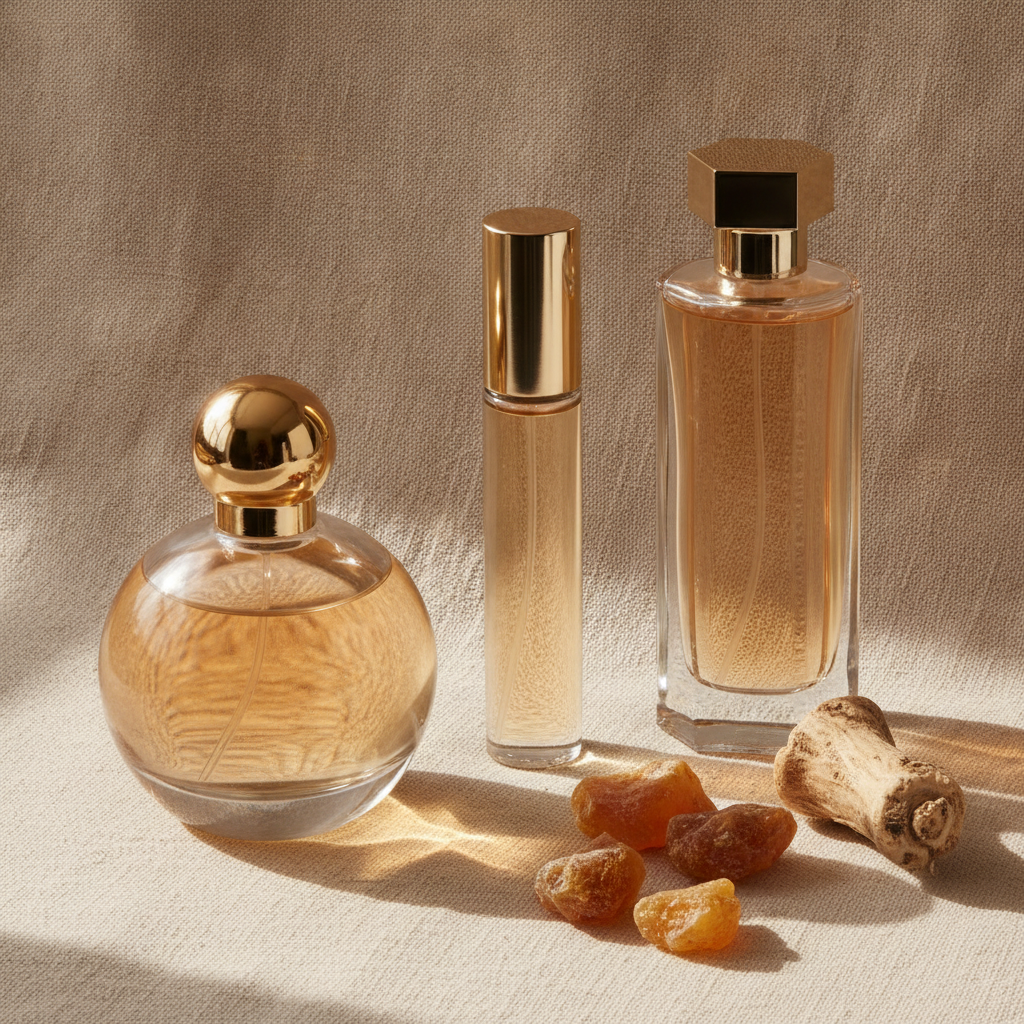
You've probably noticed it: the same fragrance name, two different bottles — one says Eau de Toilette, the other Eau de Parfum — and yet they don't quite smell the same. That's not your imagination. Concentration genuinely changes what you're smelling, not just how loud it is.
Here's what's actually going on.
The Ladder, Explained Simply
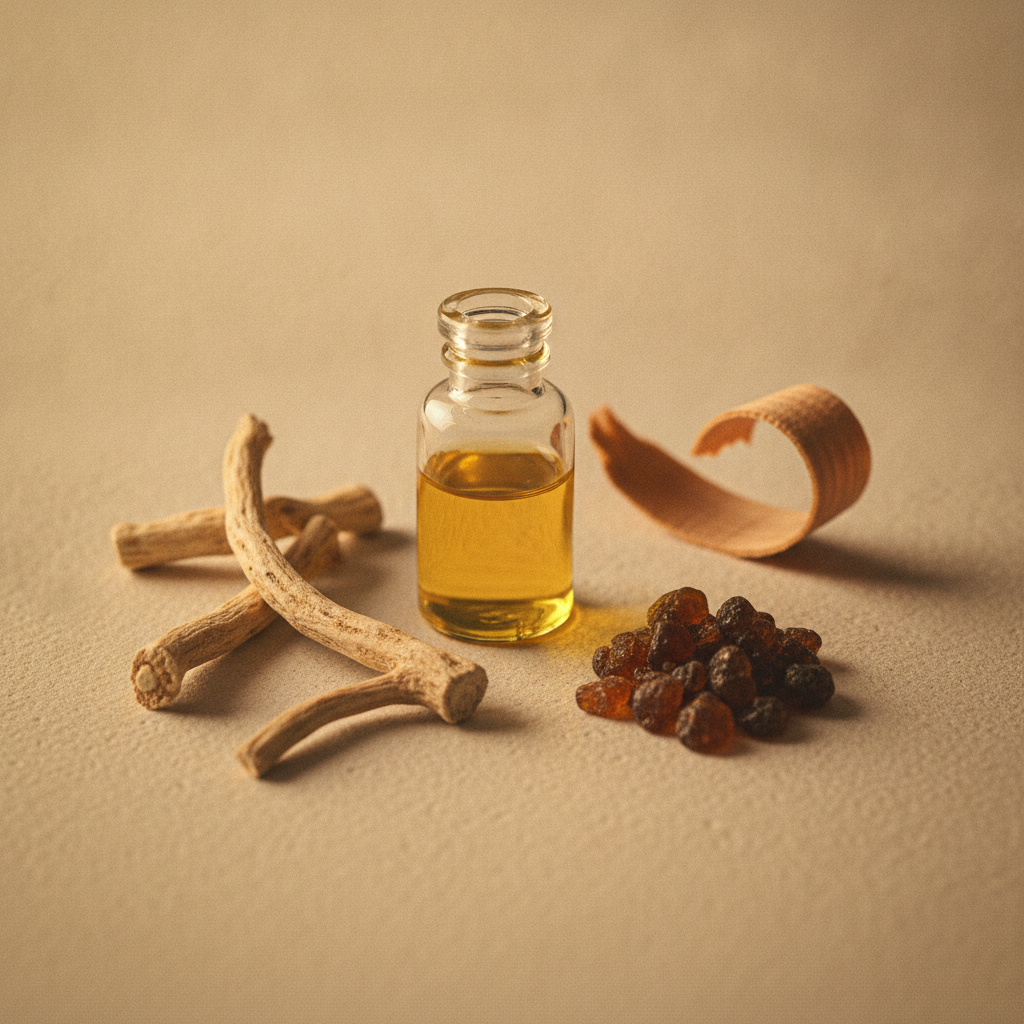
Every fragrance is a mix of aromatic ingredients dissolved in alcohol — though oils, attars, and solids skip the alcohol entirely. Concentration refers to how much of that aromatic mixture — the stuff that actually smells — is in the bottle relative to the alcohol.
The four you'll see most often, from lightest to richest:
Eau de Cologne (EDC) — roughly 2–4% concentration. Very light, fast to fade, historically citrus-led. The word "cologne" has drifted in everyday speech to just mean "men's fragrance," but technically it's a concentration.
Eau de Toilette (EDT) — roughly 5–15%. The most common format for everyday releases. Tends to sit closer to the skin, especially in its later hours.
Eau de Parfum (EDP) — roughly 15–20%. Richer, usually longer-lasting, and often noticeably more complex on dry-down.
Parfum (or Extrait de Parfum) — 20–40%. The most concentrated form. Oilier in texture, more intimate in projection, and the most expensive to produce.
These ranges aren't regulated with precision — different houses use them differently — so treat them as a rough map rather than hard law.
Higher Doesn't Mean Better
This is the big one worth getting clear in your head.
More concentration isn't a quality upgrade — it's a different tool. An EDT isn't a "worse" version of an EDP. It's often intentionally lighter and more open in character, built to wear a certain way.
Some fragrances are genuinely more pleasant at a lower concentration. Heavy musks and rich orientals can become overwhelming in a full parfum — they're designed to bloom at EDT strength, where the alcohol lifts them and they breathe. Strip that away and you get something denser and potentially more opaque.
The other thing: higher concentration doesn't always translate to longer wear on your skin. That depends on the specific ingredients, how volatile they are, and your skin chemistry. An EDP with mostly high-volatility top notes may still fade faster than an EDT built around heavy woods and musks. The correlation is real but looser than most people expect.
How the Same Fragrance Can Smell Like Two Scents
This is where it gets interesting. When a house releases the same fragrance in both EDT and EDP, they rarely just dilute one to make the other. They often reformulate the balance.
The EDT might lean into the citrus and green top notes — brighter, airier, more immediately appealing. The EDP, with more room for depth, might foreground the heart and base — warmer, rounder, the woods and musks doing more work. Both carry the same DNA, but they read differently on skin.
Some collectors genuinely prefer the EDT of a fragrance they otherwise own in EDP, because the lighter version shows off a specific note they love. There's no wrong answer here.
Which is exactly why tracking which version you own is worth doing. If you're building a collection with any intentionality, "I have Fragrance X" is less useful information than "I have Fragrance X in EDP, 100ml, and I reach for it when I want something that lasts through an evening." TheScentStyler's Librarian fills in the notes and DNA of a fragrance for you automatically — so when you log a bottle, you're capturing the actual version you own, not just a name.
A Simple Rule of Thumb
When you're deciding which concentration to buy:
If you want something you can wear freely — more spray, lighter touch, good for warm weather or close quarters — lean EDT.
If you want depth, longevity, and a richer dry-down — or if the fragrance is one you love specifically for its base notes — lean EDP or parfum.
And if you've worn a fragrance for years in one concentration and it's never quite worked for you the way you expected, it's worth trying the other before writing it off entirely. Sometimes the version you haven't tried is the one that finally clicks.
The Version You Own Is Part of the Scent
Fragrance memory is specific. When you remember a scent from ten years ago, you remember a particular concentration, a particular skin, a particular temperature. "I love that fragrance" often really means "I love that EDT on dry skin in August."
Knowing which version you own — and making a note of what you actually think of it — is more useful than you'd expect. It saves you re-buying something you already have, helps you compare concentrations deliberately, and builds a clearer picture of what you actually reach for.
If that kind of catalog is something you've been keeping loosely in your head, building it properly in the app is easier than it sounds — and a lot more satisfying to look back on.
Keep reading The Drydown
The Drydown publishes a new piece most days. If you’d like them quietly delivered, leave your email — no noise, just the writing.
One email per new piece. Unsubscribe anytime.