
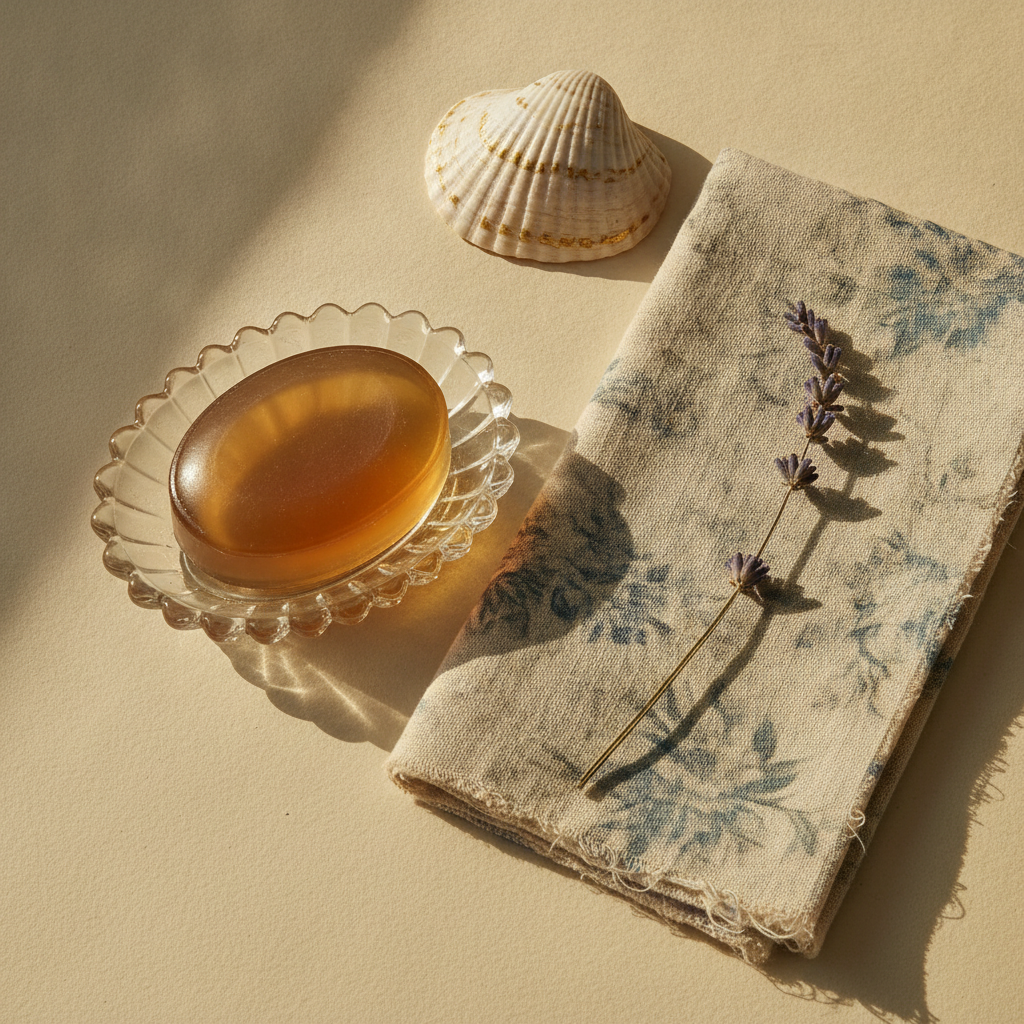
Before you had opinions about anything, you had a nose.
Before you knew what you liked in music or food or people, some smell was already lodging itself into the deepest part of your memory — so deep that decades later, a single whiff of the right fabric softener can send you somewhere so specific and so physical that you have to stop for a moment and just be there.
That is the thing about early scent memories. They aren't decorative. They're foundational.
The soap in the bathroom
Most people, when they dig back far enough, arrive at a bathroom. A grandparent's bathroom, specifically. There's something about that room — the stillness of it, the particular light, the fact that you were small and everything in it was grown-up and slightly mysterious — that makes it a perfect setting for a first scent memory.
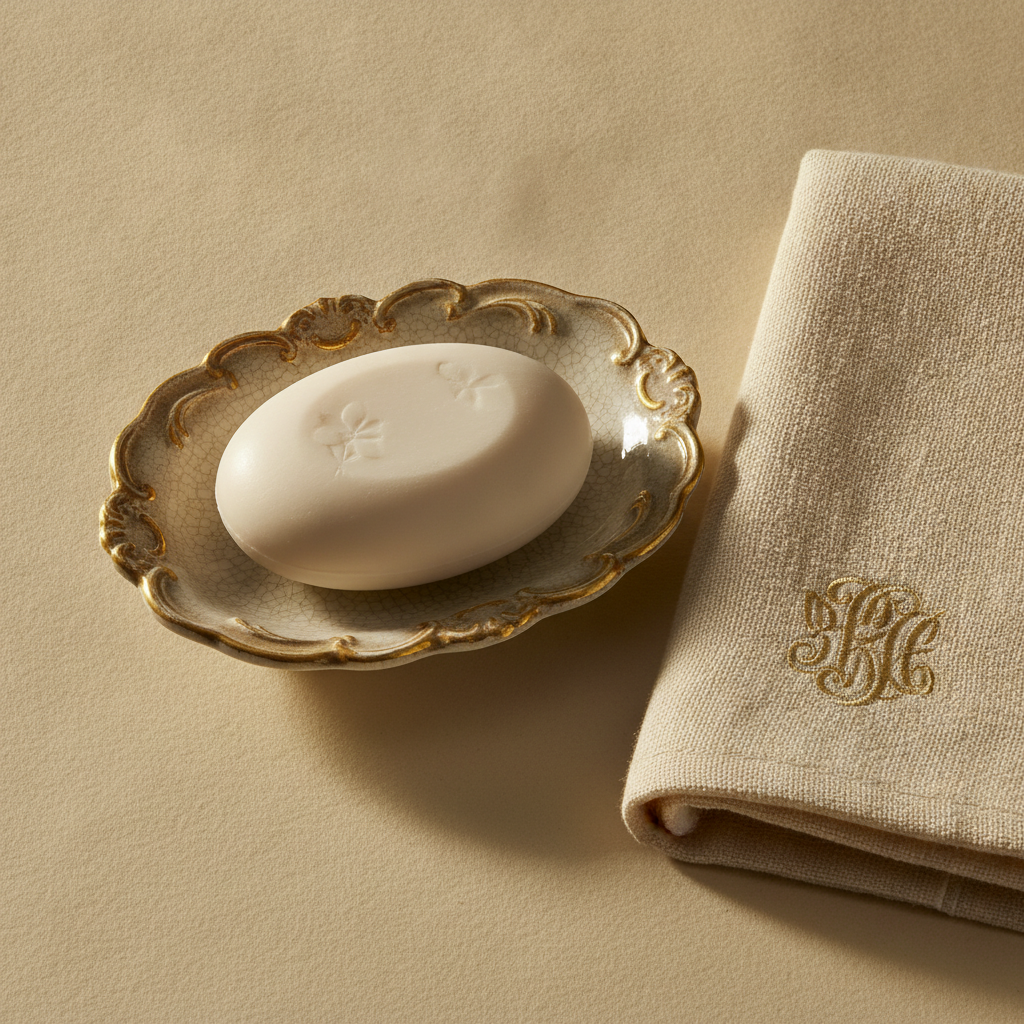
Maybe it was a bar of soap with a waxy, powdery smell, faintly floral, that sat in a dish you weren't supposed to touch. Maybe it was a specific talcum powder, or a hand cream left on the edge of the sink. Whatever it was, it smelled like that person — and now, years later, it smells like safety. Like being taken care of. Like a Saturday morning with nowhere to be. It is the same pull as a scent that belongs to someone else.
That connection isn't sentimental coincidence. Smell is the only sense that routes directly to the brain's memory and emotion centers without going through a relay station first. Everything else — what you see, hear, touch — gets processed and then filed. Smell arrives and just is. It's why a scent can feel like a memory before you've even identified what you're smelling.
Sunscreen and the smell of summer
After the bathroom, summer. Or whatever outdoor thing held the most weight for you as a kid.
Sunscreen is one of those universally triggering smells — that particular coconut-and-chemical sweetness, warm from a bottle left in the sun, applied by someone else's hands. It doesn't smell like a beautiful ingredient. It smells like anticipation. It smells like the hour before something good.
Or maybe yours was cut grass. Or chlorine. Or the particular dustiness of a car that had been sitting in the heat. Or rain on dry pavement, which has an actual name — petrichor — but which most of us knew simply as the smell that means we have to go inside now.
These weren't scents you chose. They were scents that chose you, by virtue of being present during moments that mattered. The same thing happens later, too — the fragrance that fuses to a turning point. And the brain, being the efficient pattern-maker that it is, filed them all under important.
How those early imprints shape what you buy now
Here's what's worth sitting with: a lot of what you're drawn to in a fragrance today probably traces back to something you smelled before you were ten.
The person who reaches for warm, powdery musks might be reaching, without realizing it, for their grandmother's bathroom. The one who can't resist a good aquatic or a citrus soliflore might be chasing that sunscreen summer, that particular feeling of freedom and heat and someone else worrying about the practicalities.
Even the people who think they have purely "sophisticated" taste — who go deep into dark resins and incense and smoke — often find, when they look, that there was something from childhood that smelled like wood or earth or something burning, and that it felt not dangerous but good. Mysterious. Like a door into a room you weren't supposed to enter.
We talk a lot about how a fragrance develops on your skin, how it behaves in heat or cold, how it changes over hours. We talk less about how our entire sense of what smells right was written for us long before we ever walked into a perfumery.
The question worth asking
So: how did you get from there to here?
From your grandmother's soap dish to whatever is sitting on your shelf right now — that's a real journey, and most of us have never actually traced it. Not because it's hard to trace, but because nobody ever asked.
Try it, even loosely. Go back to the first smell you genuinely remember. Not the first fancy perfume you ever liked — before that. What did it smell like? What were you doing? Who was there?
Then fast-forward. Look at what you own now, what you reach for, what makes you stop at a perfume counter. Is there a thread? A family resemblance between then and now that you've never named?
There usually is. And naming it changes something — the way understanding why you love a thing tends to deepen the love rather than diminish it.
The TheScentStyler Historian is built for exactly this kind of looking-back. It takes what you've been wearing and wearing and wearing — the entries you've logged, the patterns you might not have noticed — and turns them into a short written narrative of your scent life. Think of it as the app asking you that same question: how did you get from there to here? And then showing you one possible answer.
You might recognize something in it. You might even smell something, faintly, from a long time ago.
Keep reading The Drydown
The Drydown publishes a new piece most days. If you’d like them quietly delivered, leave your email — no noise, just the writing.
One email per new piece. Unsubscribe anytime.