
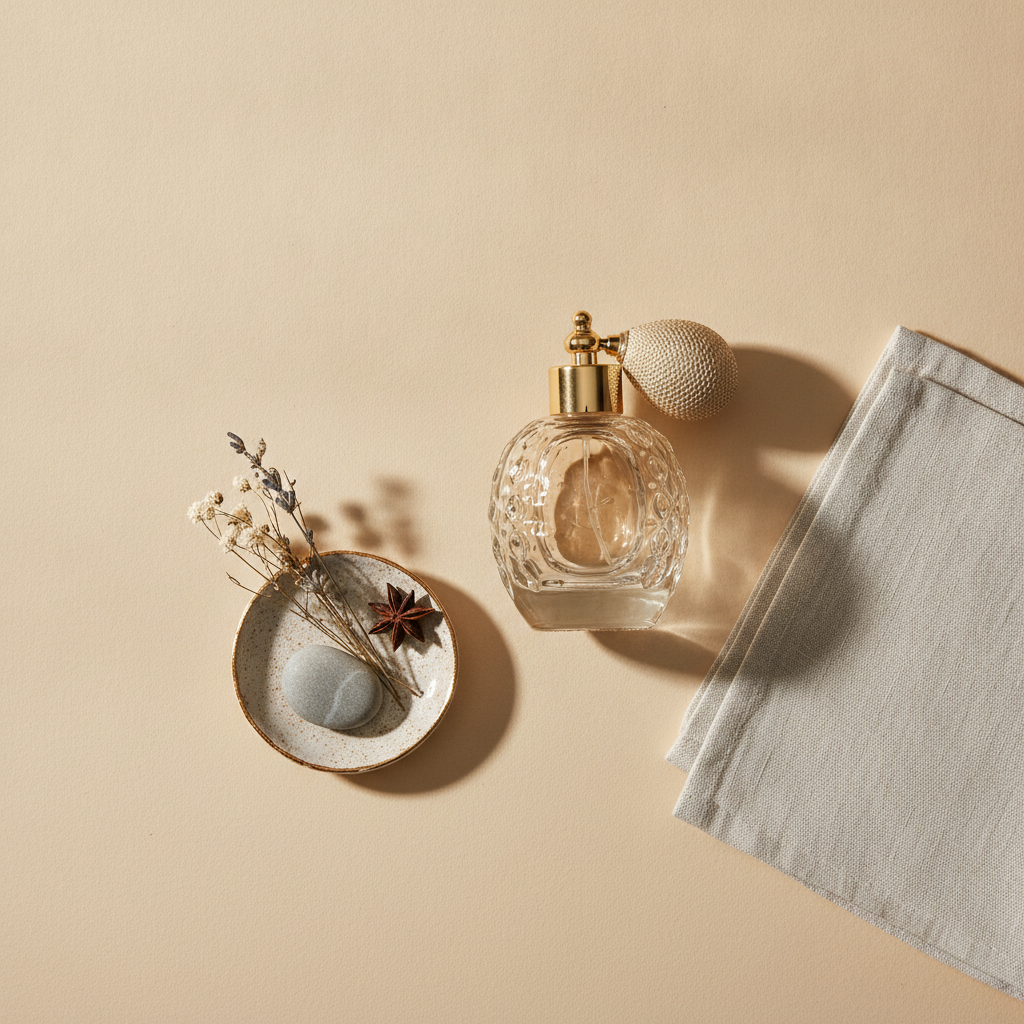
There's a particular frustration that comes from spraying on something you love in the morning and finding it completely gone by lunch. You start to wonder if the bottle is watered down, or if something is wrong with your skin, or if you just wasted your money.
Usually it's none of those things. There are a few straightforward habits that make a real difference in how long a scent stays with you — and once you know them, they're easy to work into your routine. One of them happens before you even spray: storing your fragrance so it doesn't degrade.
Start with moisturized skin
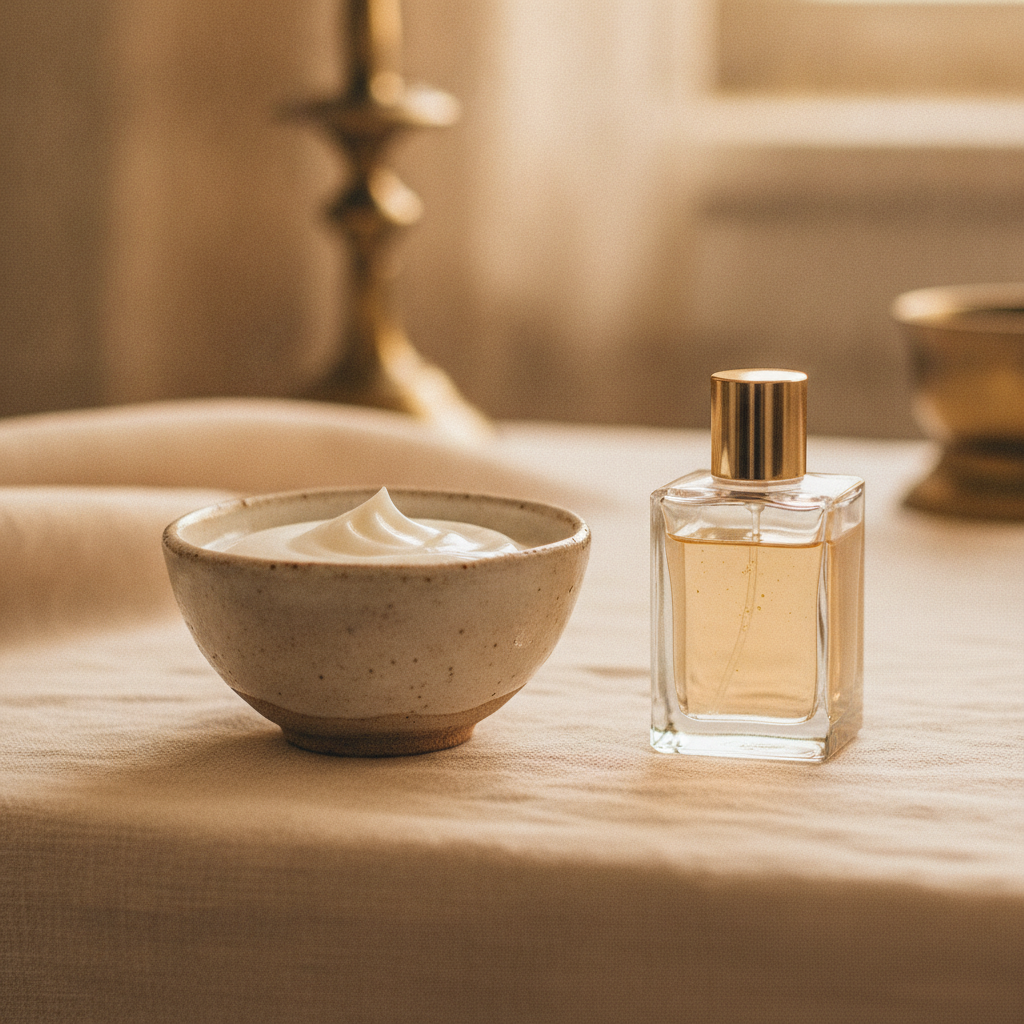
This is the single biggest factor, and it's genuinely underrated. Dry skin doesn't hold fragrance well — the scent has nothing to cling to and it evaporates quickly. Hydrated skin gives it something to settle into. The same logic is why oil-based perfumes cling longer than alcohol sprays.
The simplest approach: apply an unscented body lotion or a fragrance-free moisturizer right after your shower, let it absorb for a few minutes, then apply your perfume on top. The difference in longevity can be dramatic — sometimes a couple of extra hours from just this one step.
If you don't want to mess with a separate product, a tiny amount of unscented petroleum jelly or balm on the spots where you spray works the same way.
One thing worth knowing: scented lotion can interfere with or muddy your perfume, especially if the two aren't complementary. If longevity is your goal, fragrance-free is the safer choice.
Where you spray matters
Pulse points are warm spots on your body where blood vessels run close to the surface — the inside of your wrists, the sides of your neck, behind your ears, the inside of your elbows, and the backs of your knees. The gentle warmth there helps the fragrance diffuse slowly and continuously throughout the day.
You don't need all of them. Two or three well-chosen spots is plenty. Layering fragrance — applying it to both your neck and your wrists, for instance — means you get it close to your nose throughout the day, and the warmth from different areas keeps the scent active at different rates.
One tip that gets repeated a lot but is genuinely worth following: don't rub your wrists together after you spray. It seems natural, but the friction generates heat that breaks down the top notes faster and shortens how long the scent lasts. Spray and let it dry on its own.
If you want more of a scent cloud around you — what some people call sillage, which just means the trail a fragrance leaves in the air — spraying into your hair or on your clothes (assuming the fabric is safe) can help. Fabric holds scent longer than skin. Just check with lighter colors first, since some formulas can stain.
Apply right after your shower
The warmth from a shower opens your pores slightly and your skin is still a little damp — both of which help fragrance absorb better. This is the ideal window to apply.
It also means the scent has time to settle into its middle and base notes before you're around other people. Those top notes that first hit you out of the bottle are the most fleeting. What lingers is what really defines the fragrance on your skin.
Some scents are just short-lived — and that's fine
There's a real temptation to assume a fragrance that fades quickly is somehow defective or cheap. But the truth is more interesting than that: a lot of beloved scents are light by design. Citrus-forward fragrances, fresh aquatics, and anything built on delicate florals tend to be short-lived regardless of concentration or price. That's the nature of the ingredients, not a flaw.
Some people find that a lighter fragrance suits them exactly because it doesn't announce itself. A scent that fades to a gentle warmth close to your skin can be quietly personal in a way a loud, long-lasting one isn't.
The better question isn't always "how do I make this last longer?" It's "how long does this actually last on me?" — and then deciding if that works for your life. A three-hour fragrance might be perfect for an evening out. A subtle afternoon wear might be exactly what you want for the office.
Your own skin chemistry also plays a role. Body temperature, diet, how dry or oily your skin runs — all of it affects how a scent performs on you specifically.
The only real way to know your own patterns is to pay attention. Keeping a quick note about when you applied something and how it was wearing a few hours later tells you more than any general guide can. If you're already logging what you wear in TheScentStyler, adding a note on longevity turns a simple journal entry into a genuinely useful reference — you'll start to know which of your bottles needs to be refreshed by midday and which ones quietly hold on all day without you thinking about it.
That kind of knowledge takes the frustration out of it. You stop wondering why something faded and start planning for it instead — which, honestly, is the most practical tip of all.
Start tracking how your fragrances actually wear on your skin — TheScentStyler makes it easy to log what you wore, when, and how it held up, so you build a real picture of your own scent patterns over time.
Keep reading The Drydown
The Drydown publishes a new piece most days. If you’d like them quietly delivered, leave your email — no noise, just the writing.
One email per new piece. Unsubscribe anytime.