
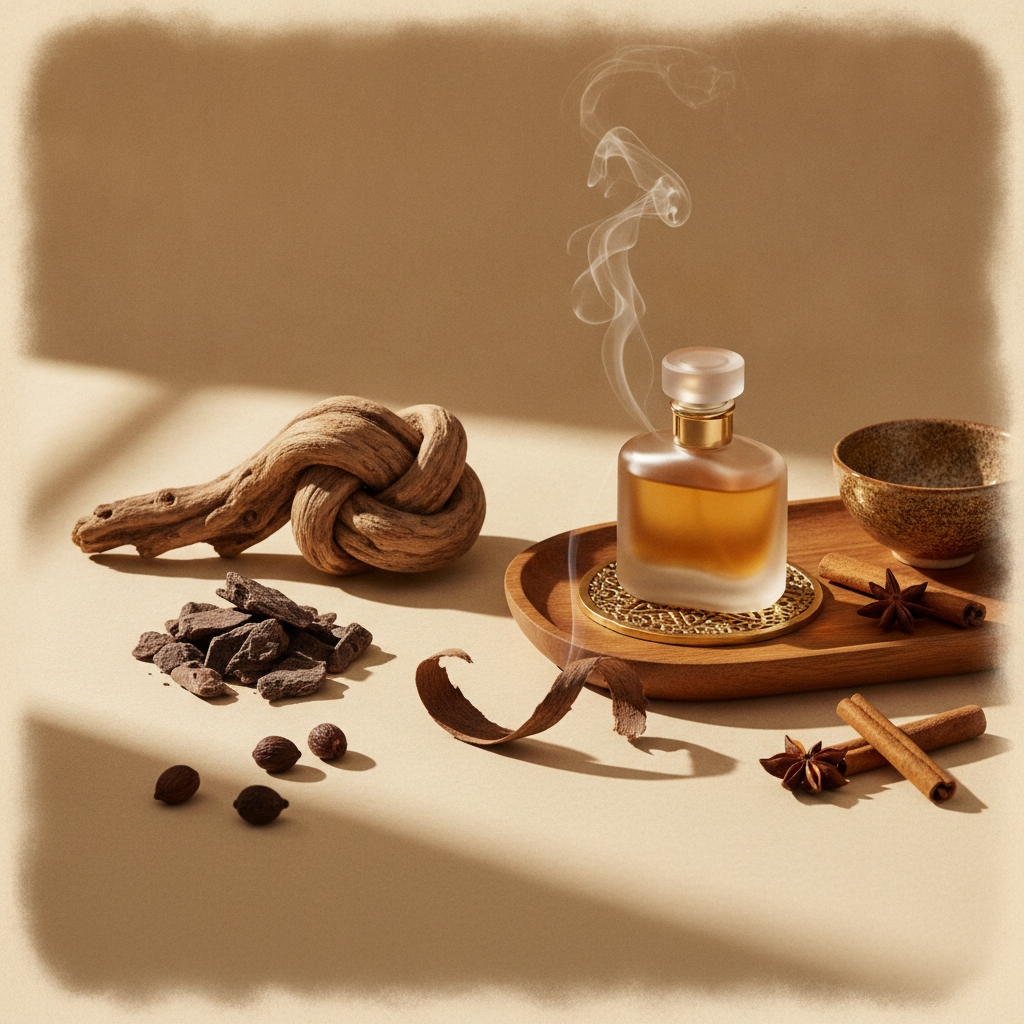
Oud is everywhere right now. It's in department store launches, niche houses, and the budget section of your favorite online fragrance shop. And yet if you asked most people to describe what it actually smells like, you'd get a long pause followed by "rich? Dark? Kind of smoky?"
That vagueness isn't a personal failing. Oud has been wrapped in so much mystique — ancient trade routes, royal courts, eye-watering prices — that the scent itself sometimes gets lost under the story. So here's a plain account of what oud is, where it comes from, why it costs what it does, and how to tell whether you'll actually enjoy wearing it.
It starts with a tree getting sick
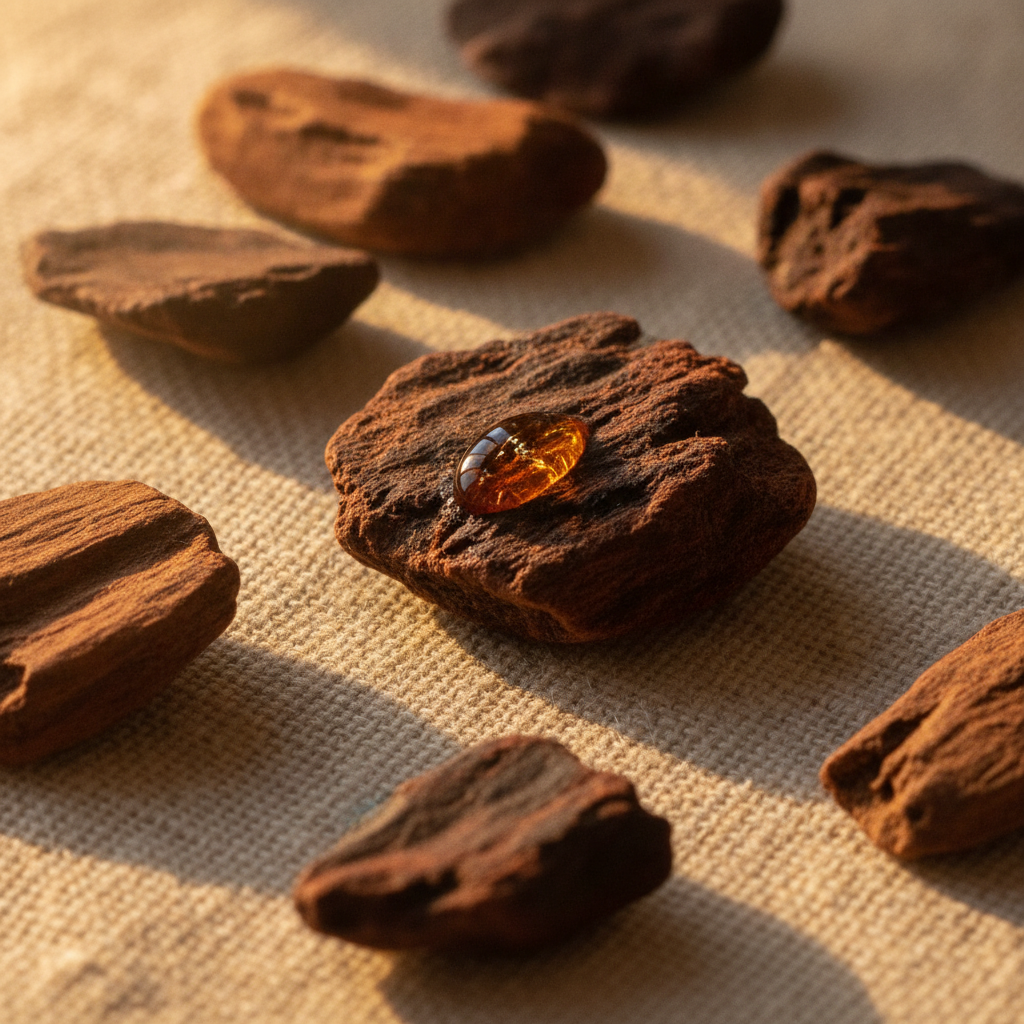
Oud comes from agarwood, which is the resin-soaked heartwood of Aquilaria trees native to South and Southeast Asia — think India, Bangladesh, Vietnam, and parts of Indonesia.
Here's the thing: healthy Aquilaria trees don't produce oud. The resin only forms when the tree comes under stress, usually from a specific mold infection. The tree responds by saturating its heartwood with a dark, dense resin — essentially defending itself. That infected, resin-saturated wood, when harvested and distilled, is what we call oud oil (also called attar or dehn al oud) — one of the oil-based attar formats that wear differently from a spray.
Wild-infected trees are increasingly rare, which is most of the reason genuine oud oil is so expensive — it can cost more per gram than gold. Most commercial production now comes from cultivated Aquilaria plantations where the infection is artificially induced, which brings costs down but still produces a complex, labor-intensive material.
What does real oud actually smell like?
This is the part that surprises people who expect "expensive" to mean "immediately pleasant."
Real oud has depth and some rough edges. The smell is woody and warm at its core, but it often has a barnyard quality — something almost animalic, leathery, or even slightly funky, especially in Indian varieties. Cambodian and Laotian ouds tend to be sweeter and more balsamic. Vietnamese oud can lean incense-like, almost medicinal.
None of those are negatives. That slight wildness is exactly what gives oud its gravity. It sits in the base of a fragrance and adds something that's hard to fake: real weight, real age, a sense that you're smelling something with a history.
Over the drydown — the hours after you first spray — real oud usually gets warmer and smoother. A lot of people who are cautious about it on first sniff come around to loving it an hour in.
Most "oud" you'll smell isn't real oud
This matters a lot for setting expectations.
Genuine oud oil is too expensive for most mass-market and designer releases to use in meaningful quantity. What you're smelling in the majority of "oud" fragrances — including big launches from houses like Tom Ford, YSL, and Dior — is a synthetic molecule designed to evoke oud's character. Iso E Super, Javanol, and various proprietary captives all get used to create an "oud impression."
Synthetic oud tends to be cleaner, smoother, and more immediately wearable than the real thing. Less barnyard, more polished warmth. That's not necessarily worse — it's just a different thing. Many people love oud-adjacent fragrances precisely because they deliver that warm, dark woodiness without the intensity of the genuine material — the warmer end of the modern woody family.
Niche houses and dedicated oud specialists — Amouage, Rasasi, Ajmal, Abdul Samad Al Qurashi — are more likely to use real oud, or at least higher concentrations of it. The price usually reflects it.
How to know if you'll like it
If you're nervous about oud, the most useful thing is to know which direction it's been taken in a given fragrance.
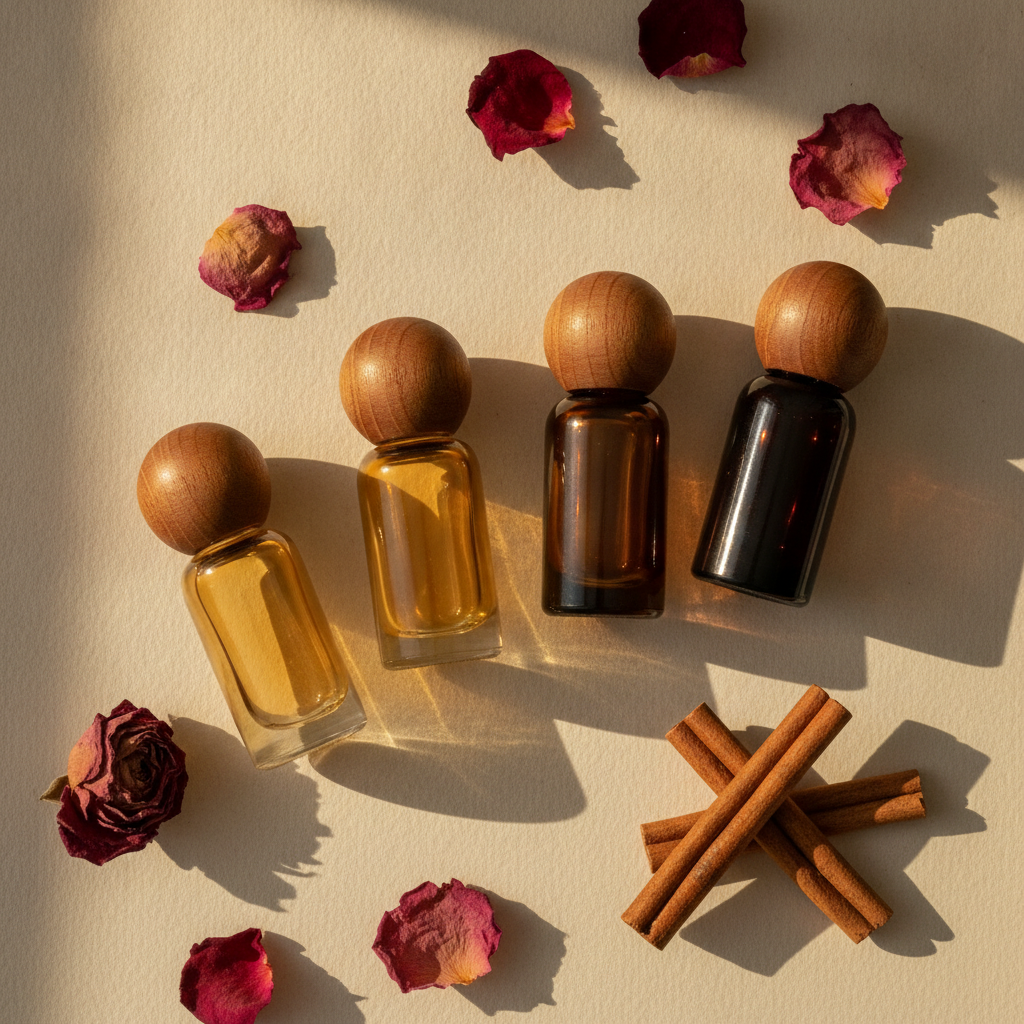
Oud + rose is one of the most classic pairings in Middle Eastern perfumery — the rose softens oud's rougher edges and brings out its sweetness. If you like florals, this is a good entry point.
Oud + amber and vanilla pushes it into warm, resinous territory. Rich and a little sweet. Think of it as a more complex version of a cozy oriental fragrance.
Oud + leather or smoke leans into the animalic, darker side. More challenging, but incredibly compelling if that's your register.
Oud + clean white musks is what a lot of designer releases do — it tames oud's wildness into something that reads as "expensive and warm" without much edge.
The label alone won't tell you which of these you're dealing with. That's why reading the notes carefully — and trusting your own nose over the marketing — matters so much.
Knowing your notes changes everything
A big part of figuring out whether a fragrance will suit you is understanding its building blocks — what's in it, and what role each ingredient plays. Oud is a base note, meaning it emerges and lingers in the later hours of wear, and it shapes the whole character of the drydown.
Once you start cataloging what you own and what you're testing, those patterns get easier to spot. TheScentStyler has a feature called the Librarian that fills in a fragrance's notes and DNA for you automatically — so instead of hunting through databases, you can just see what you're working with and start connecting the dots.
Oud isn't intimidating once you understand what it is: a resin, a wood, a smell with history. Your nose will tell you the rest — and it's worth giving it the chance to do exactly that.
If you want to start mapping the notes in what you already own, the TheScentStyler app is a good place to begin — it turns your collection into a catalog you can actually learn from.
Keep reading The Drydown
The Drydown publishes a new piece most days. If you’d like them quietly delivered, leave your email — no noise, just the writing.
One email per new piece. Unsubscribe anytime.