
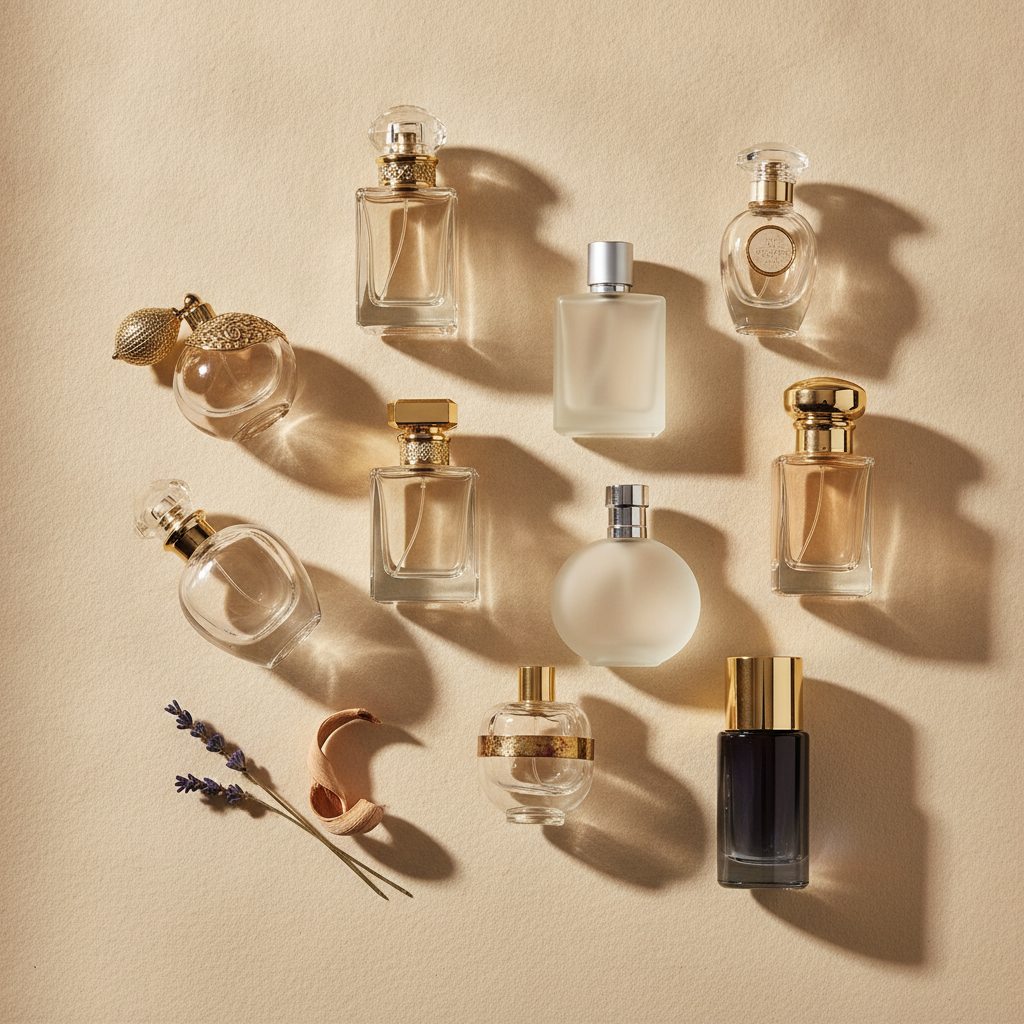
Pull out a bottle you loved five years ago. Spray it. Notice how it sits on you now — maybe flatter, maybe stranger, maybe smaller than you remembered. The juice hasn't changed. You have.
This happens to almost everyone who spends real time with fragrance, and it happens so gradually you rarely catch it happening. One day you reach for something you used to wear constantly and realize it doesn't quite feel like you anymore. Or you pick up something you dismissed years ago and suddenly get it. The drift is quiet, and unless you've been keeping notes, it's nearly impossible to trace.
Your nose gets an education
The first fragrances most people fall for are loud and legible — big florals, rich vanillas, something with a clear personality that announces itself immediately. Some of that traces back to the scents we imprint on in childhood. That's not a flaw in taste; it's just where most noses start. Dense, obvious scents are easier to hold onto when you're still learning what you're smelling.
Exposure changes that. The more time you spend with fragrance — wearing it, seeking it out, reading about it, sitting with samples — the more your nose learns to pick things apart. You start noticing the quieter materials underneath the top notes. You develop a feel for what makes a scent interesting versus what just makes it loud. And gradually, the things that used to excite you can start to feel too blunt, while the spare or unusual things you once found boring start to open up.
This isn't everyone's trajectory. Some people move the other way — toward warmer, more opulent fragrances as their palate matures. The point isn't the direction. It's that exposure educates, and an educated nose wants different things than a new one.
Life stages reset the equation
Beyond the nose, there's everything else going on in your life — and it turns out that has a lot to do with what feels right to wear.
A fragrance that suited you in your mid-twenties might have matched a version of yourself that no longer quite exists. The way you dressed, where you spent your time, what you wanted to signal or feel — all of it shifts, and scent shifts with it. Some people notice a pull toward lighter, airier things during periods of stress or change, and back toward something anchored and warm when life feels more settled. Others find that a new job, a new city, or a new relationship quietly resets what "smells like me" means.
There's also the role that age itself plays in skin chemistry — how fragrances interact with your skin can change over the years in ways that have nothing to do with preference but still shape what you reach for. A perfume that used to feel balanced might start skewing sweeter or drier on you than it once did.
None of this is something you can predict. You just notice it, after the fact, if you're paying attention.
Burnout is real, and so is revival
Spend long enough with any fragrance — or any category of fragrance — and you can wear it into the ground. The nose adapts. Something you found thrilling can become background noise, and background noise can eventually feel like nothing at all.
Fragrance burnout is worth taking seriously because it masquerades as boredom with the thing itself when it's really just overexposure. People sell off bottles they'd have loved if they'd given them space — so before letting one go, it's worth knowing what to do with a perfume you don't love. They dismiss whole families — aquatics, musks, chypres — because they've been too close to them for too long.
The revival, when it comes, is one of the better small pleasures in this hobby. You pick up something you set aside, and it's suddenly alive again. The nose has rested; the association has faded; the bottle is new again. That cycle of overexposure and rediscovery happens quietly across years, and it's another layer in the arc of how your taste moves.
The drift is invisible unless you record it
Here's the thing about all of this: it's happening whether you track it or not, but you can only read it if you do.
Most people reconstruct their fragrance history from memory, which is notoriously unreliable. You remember the bottles, maybe a few associations. But the actual texture of your preferences — what you were drawn to and why, what you were avoiding, what surprised you — that fades. The arc exists; you just can't see it.
Keeping notes changes that. Not detailed reviews, necessarily. Just what you wore, when, and how it felt that day. Over weeks and months, that becomes something you can actually look back on — and what you find is rarely what you expected. You see patterns you weren't conscious of. You notice seasons in your taste. You spot the slow drift from one kind of thing toward another.
TheScentStyler's Historian is built for exactly this — it takes your logged entries over time and draws out the through-line, turning a week or a month of wear into a short written narrative of where your taste actually lives. Not where you think it lives. Where the record says it does.
That gap between the two is usually the most interesting thing you'll learn about yourself as a fragrance person. Your taste is always moving. The question is whether you'll be paying attention when it does.
Keep reading The Drydown
The Drydown publishes a new piece most days. If you’d like them quietly delivered, leave your email — no noise, just the writing.
One email per new piece. Unsubscribe anytime.