
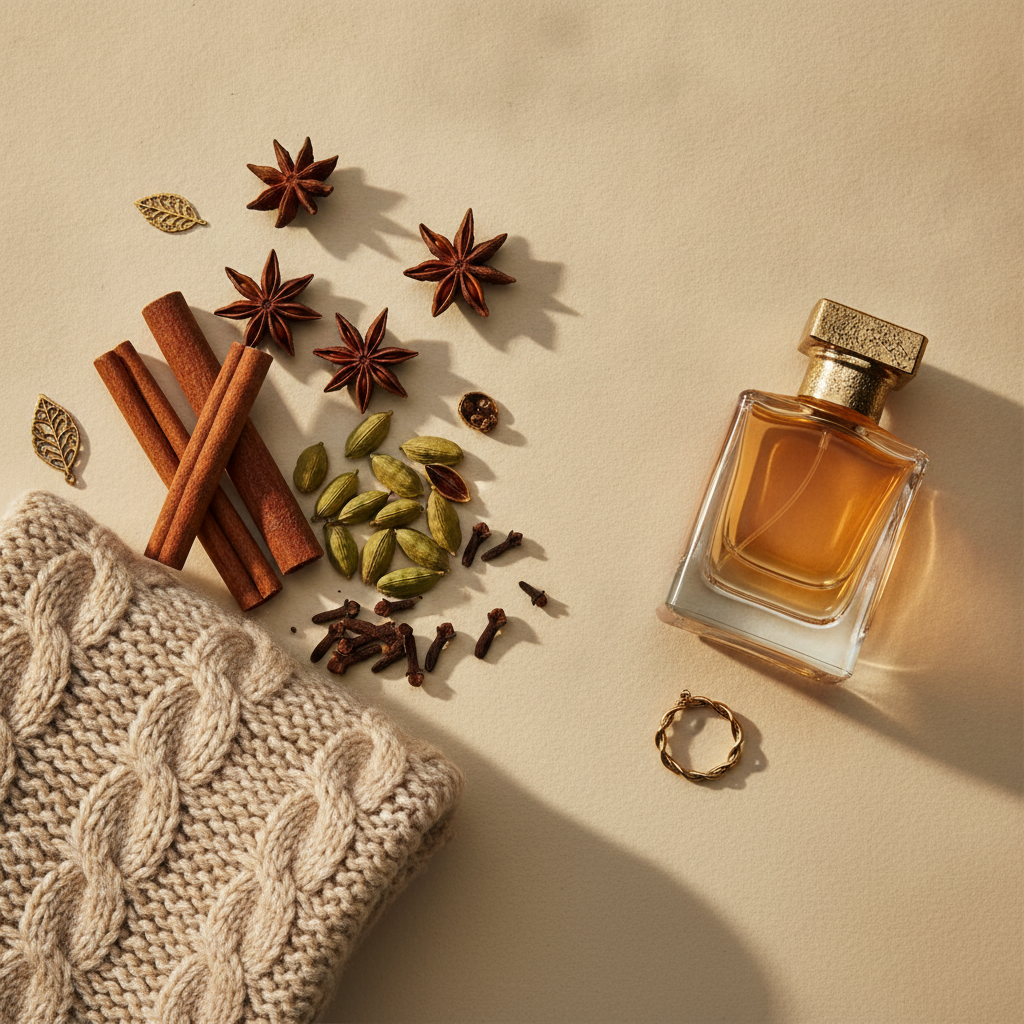
There's a shift that happens sometime in October. The air gets that particular cold-and-dry edge, you pull on the first sweater of the season, and suddenly the light, airy fragrance you've been wearing since June feels wrong — too thin, too distant, like a summer song playing in the wrong room.
That's when spice steps in.
Warm, spicy fragrances are built for exactly this kind of weather. Spice is one lane within the wider world of fall fragrances. Cold air makes fragrance behave differently — it slows the diffusion, pulls the scent closer to your skin, makes everything feel more intimate. Spice notes thrive in that environment. What might feel like a lot in August becomes exactly right when the temperature drops.
The Notes Worth Knowing
Not all spice is the same, and the differences matter when you're choosing what to wear.
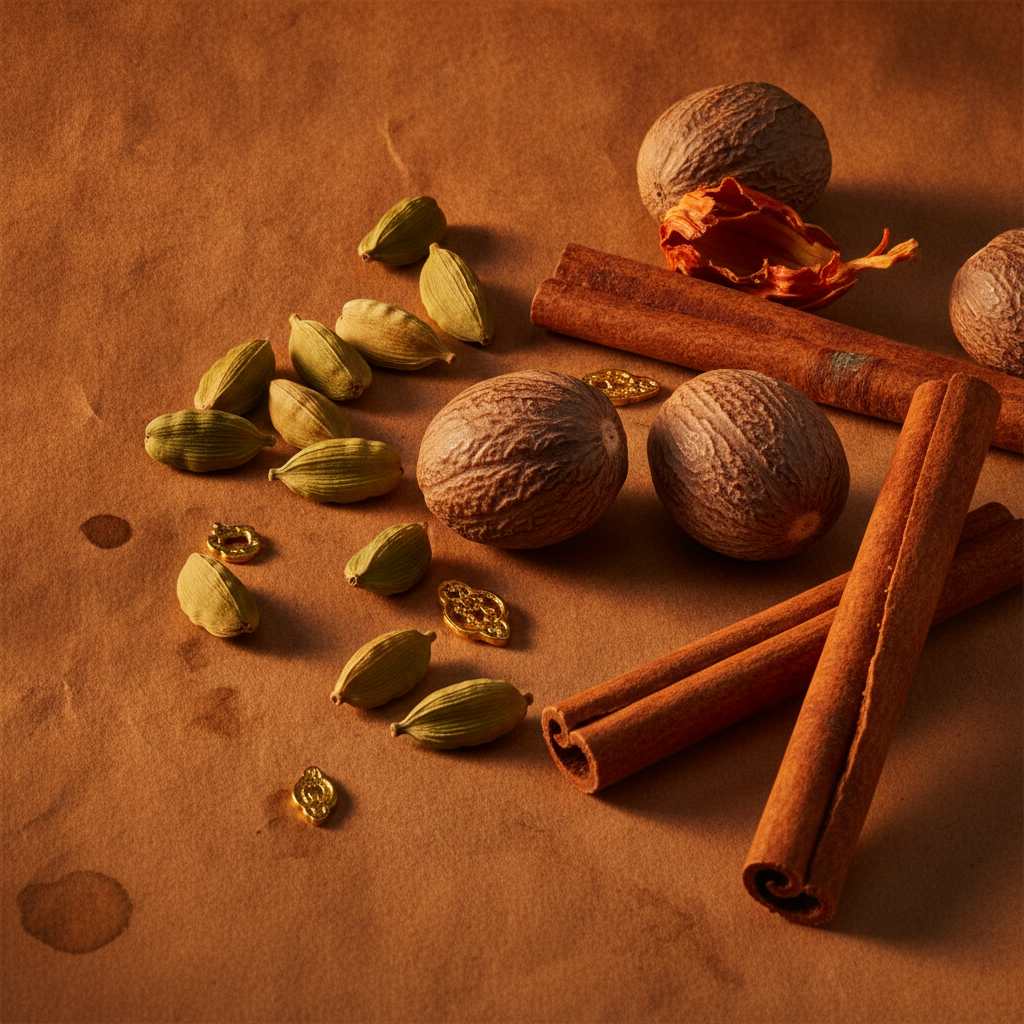
Cinnamon is the most recognizable of the bunch — sweet, warm, slightly sharp. In a fragrance it can read like fresh-baked pastry or like something older and more incense-like, depending on what surrounds it. Paired with vanilla or sandalwood, it goes cozy and bakery-soft. Paired with resins and woods, it gets smokier and more serious.
Clove is denser and darker than cinnamon. It has a slight medicinal edge that keeps it from being too sweet, which is why it works well in evening fragrances — it adds weight and gravity. It also blends beautifully with tobacco and leather, which is why you see it often in that family of scents.
Cardamom is the one that surprises people. It has a cool, almost minty freshness underneath the spice, which means it can sit comfortably in a fragrance that's worn during the day without feeling overwhelming. It bridges the gap between warmth and freshness in a way cinnamon and clove can't quite manage.
Nutmeg is the subtlest of the group. It tends to be a background player — the thing that makes a fragrance feel rounded and full without announcing itself. You might not notice it when someone lists the notes, but you'd notice something missing if it weren't there.
Who Spicy Fragrances Suit
Short answer: most people, most of the time, in cooler weather.
The longer answer is that spice-forward fragrances tend to suit warmer and deeper skin tones beautifully — the skin chemistry amplifies the sweetness and rounds out the edges. But they're not exclusive to that. On cooler skin tones, the same fragrances can read as more sharp and defined, which is its own kind of interesting.
What matters more than skin tone is your relationship with sweetness. If you love gourmand fragrances — vanilla, tonka, caramel — you'll likely find that spice is a natural companion and already know how to wear it. If you tend to reach for fresh, citrus-forward scents, a full-on spice bomb might feel like too much. In that case, cardamom-led fragrances or anything that blends spice with an aromatic note (like rosemary or sage) are a gentler entry point.
Day vs. Evening
The same spice note can read completely differently depending on what carries it through the rest of the pyramid — and that's useful when you're thinking about day-to-night wear.
For daytime, look for fragrances where the spice sits alongside something lighter — citrus, tea, or a soft wood like cedar. Cardamom particularly shines here. You want warmth without weight; something that projects close to the skin rather than announcing itself across the room.
For evening, you have room to go deeper. Clove and cinnamon paired with amber, benzoin, or leather make the kind of fragrance that suits low light and close conversation. These are scents that earn their sillage — the trail they leave — because they're worn into situations where that richness makes sense. Cold weather keeps projection in check naturally, so a fragrance that might feel overpowering indoors in July will behave itself beautifully on a cold November evening.
A Few Directions Worth Exploring
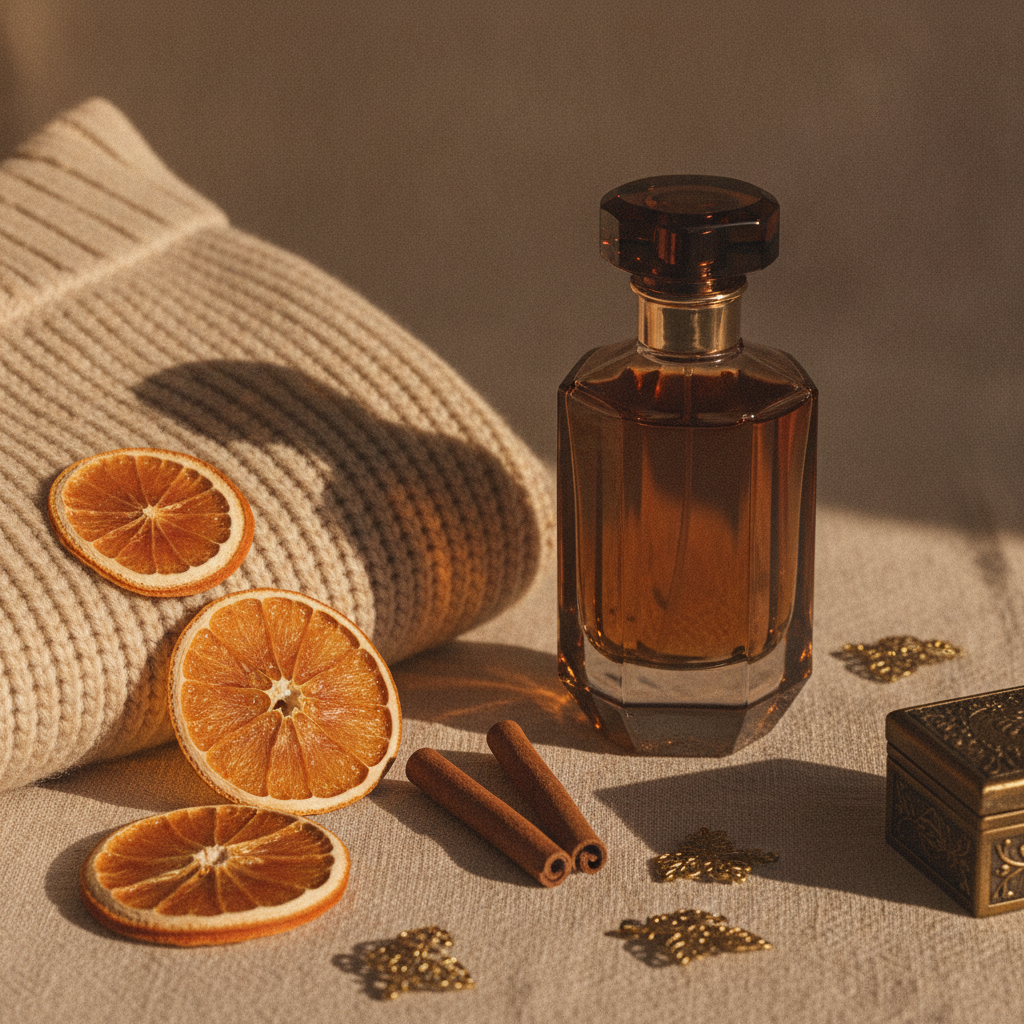
Rather than a ranked list, here are four types of spicy fall fragrance worth looking for — they cut across different price points and will help you identify what you're drawn to.
The warm amber-spice: Typically cinnamon and clove carried on a base of amber and vanilla. Rich, sweet, and uncomplicated in the best way. Common in the Lattafa and Orientica end of the market and done just as well there as anywhere.
The woody spice: Cardamom or pepper (pepper counts — it's dry and sharp in the same family) paired with something like oud, cedar, or vetiver. Less sweet, more austere. These tend to wear more quietly but last all day.
The gourmand spice: Think nutmeg and cinnamon sitting inside something that smells like a specific dessert — apple tart, chai, spiced rum. These are unabashedly cozy and tend to draw compliments from people who don't normally notice fragrance.
The green-spice hybrid: Cardamom or clove paired with an herbal or slightly earthy note. These are the day-wearers, the ones that feel interesting rather than heavy, and the best on-ramp if you're new to this category.
Finding What Works for You
The honest truth about spice fragrances is that they reward experimentation. The same clove note can read completely differently on your skin than it does on a card at the counter, and what feels cozy to one person can feel like too much to another. It's worth trying things on and giving them thirty minutes before you decide.
If you're already building out a fall wardrobe of scents and want help figuring out what pairs with what — say, a spicy evening fragrance you already own alongside something fresher for daytime — TheScentStyler's Atelier is built exactly for that kind of question. It looks at what you have and suggests combinations, alternatives, and what to reach for by season or occasion.
Sweater weather doesn't last. It's worth smelling good through all of it.
Keep reading The Drydown
The Drydown publishes a new piece most days. If you’d like them quietly delivered, leave your email — no noise, just the writing.
One email per new piece. Unsubscribe anytime.