
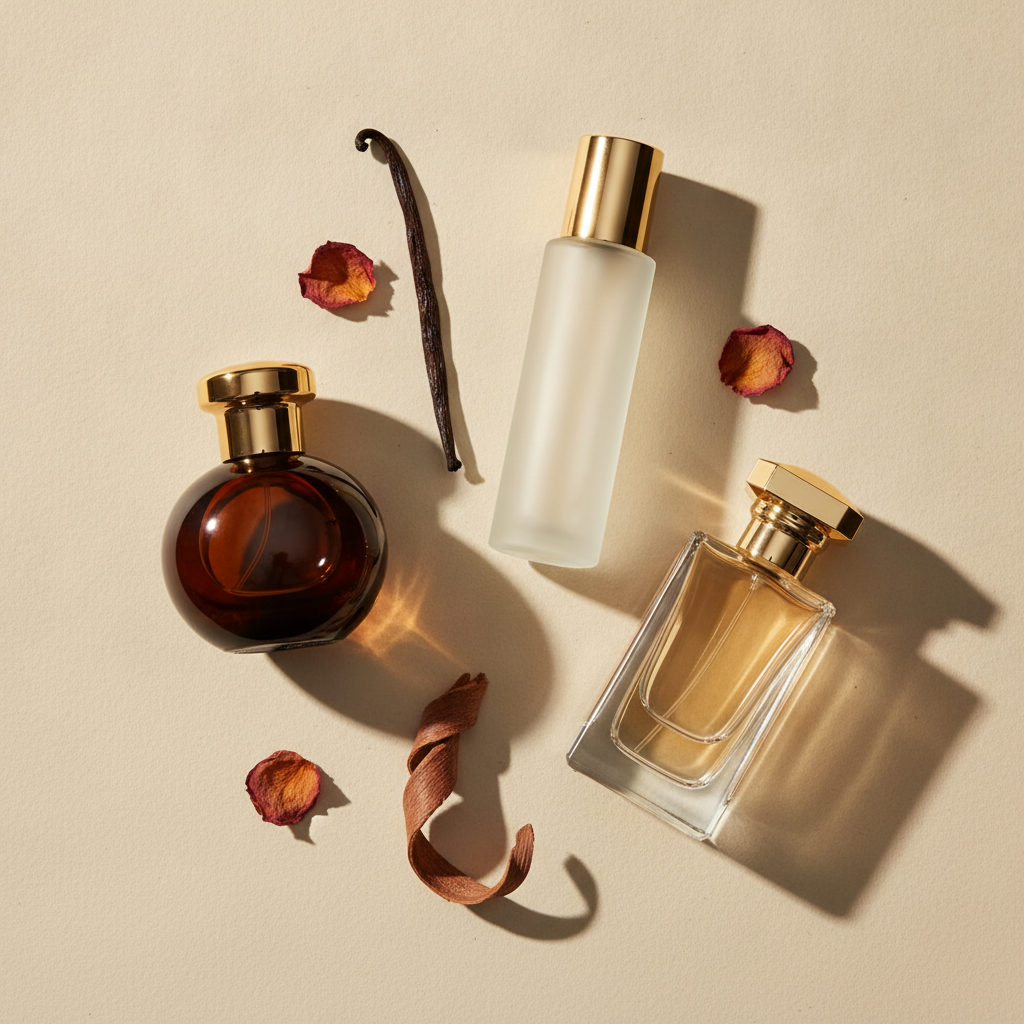
Most people discover layering the same way — by accident. Two sprays from different bottles on the same morning, and something clicks. The combination smells better than either one alone. So you do it again, deliberately this time, and somehow it doesn't quite land. It's flat. A little muddy. You can't tell what's what.
The difference is almost always order.
Why order matters at all
When you put fragrance on skin, you're not just stacking scents — you're building a structure that changes over time. The heavier notes in a perfume anchor everything else. The lighter ones lift and project. Get the sequence wrong, and the lighter one gets buried before it can do its job.
Think of it like seasoning food. If you add the delicate herbs last, you taste them. Add them first and cook everything on top, and they disappear.
Fragrance on skin works the same way.
The basic principle: heavy first, light on top
The rule is simple: apply your denser, richer fragrance first, then layer the lighter one over it.
What counts as "heavy"? Anything built around woods, resins, musks, amber, or gourmand notes — vanilla, tonka, sandalwood, oud. These are the foundations. They cling to skin, they develop slowly, and they have enough presence to anchor something on top of them.
"Light" means citrus-forward fragrances, green or watery compositions, airy florals, ozonic things. These live in the top and middle registers. They're energetic but brief, and they need a solid base under them so they don't just evaporate and leave you with nothing.
Apply the heavy base first. Let it sit for a minute or two — not long, just enough for the initial alcohol blast to settle and the fragrance to start actually reading on your skin. Then apply the lighter one on top, ideally to the same spots.
What happens when you get it backwards
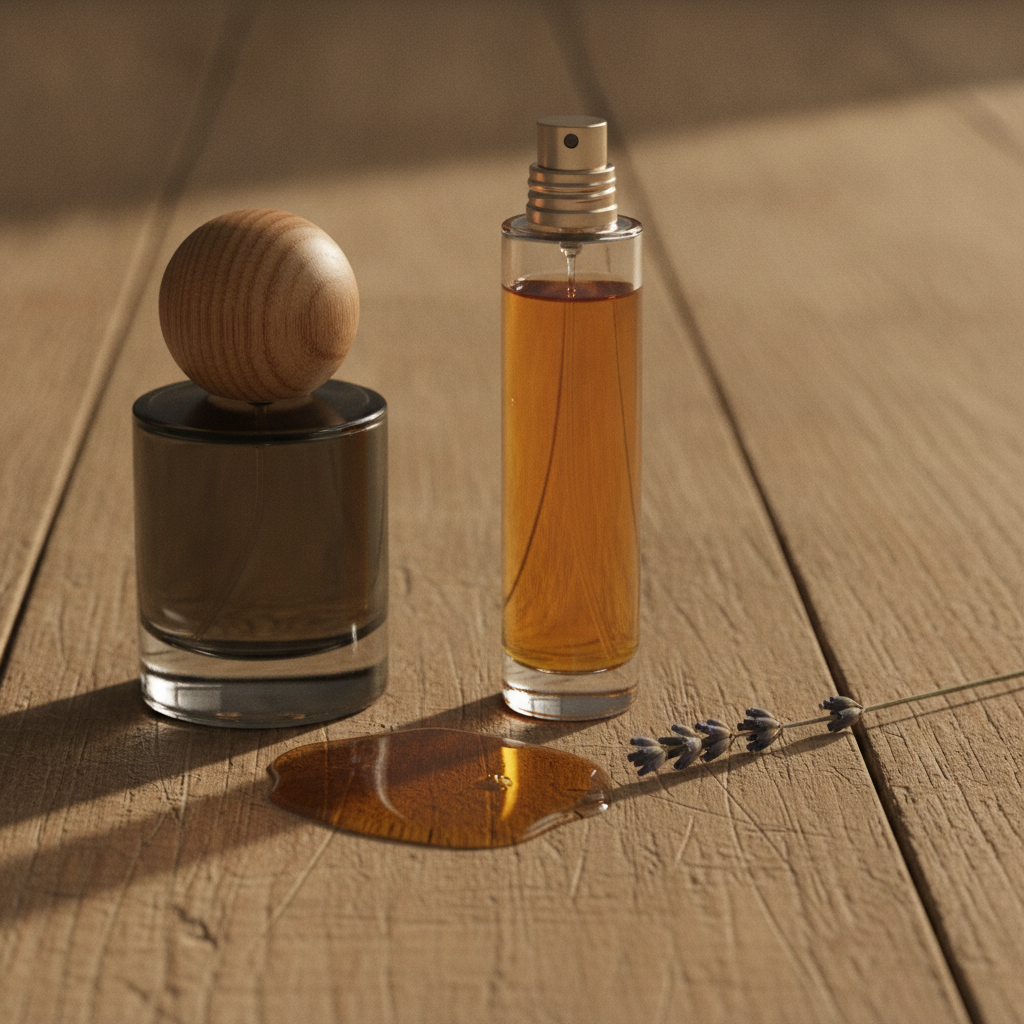
Spray the citrus on first, then add the heavy amber on top — and the amber essentially suffocates the lighter scent. You may get a flash of brightness in the first few minutes, but it disappears quickly. What's left is just the base, sitting there unaccompanied.
This is why some combinations feel disappointing even when the two fragrances theoretically work well together. It's not the pairing that failed — it's the sequence.
There's also a secondary problem: projection. The lighter fragrance is what people smell when they catch a drift of you from a few feet away. If it's underneath the heavier one, it never really projects. The combination only reads up close, and even then it's muddier than it should be.
A few practical details
Apply to the same spots. Putting one fragrance on your wrist and one on your neck doesn't create a blend — it creates two separate fragrances that happen to be on the same person. For real layering, both go on the same pulse points.
Less is more. One spray of each is usually enough to start. Layering doubles your concentration, and it's much easier to add than to undo.
Not every combination works. Two powerhouses layered together — say, a heavy oud and a deep resinous amber — can become overwhelming or simply shapeless. Contrast tends to make better combinations than similarity. A woody base under a green or citrus fragrance, for example, gives each element room to be itself.
Skin matters. Your chemistry affects how both fragrances develop, and how they interact on your skin specifically. The same combination can smell completely different on someone else. This isn't a flaw — it's just what makes it interesting.
Finding combinations worth keeping
Most people stumble into good pairings through trial and error, which is fine, but it takes a while. If you want to shortcut that process, TheScentStyler's Atelier suggests combinations drawn from the fragrances you already own — based on your actual collection, not a generic list. It's the difference between random experimentation and having a starting point that makes sense.
One last thing
Layering isn't a technique for perfume obsessives. It's just a way to get more out of what you already have. Most of the combinations you'll find satisfying are simple ones — a base that anchors and a top note that brightens.
Start with what you own. Heavy first, light second. Same spots, small amounts. See what happens.
If you want a more structured way to explore, the Atelier in TheScentStyler app can suggest where to start — working from your own bottles rather than sending you to buy something new.
Keep reading The Drydown
The Drydown publishes a new piece most days. If you’d like them quietly delivered, leave your email — no noise, just the writing.
One email per new piece. Unsubscribe anytime.