
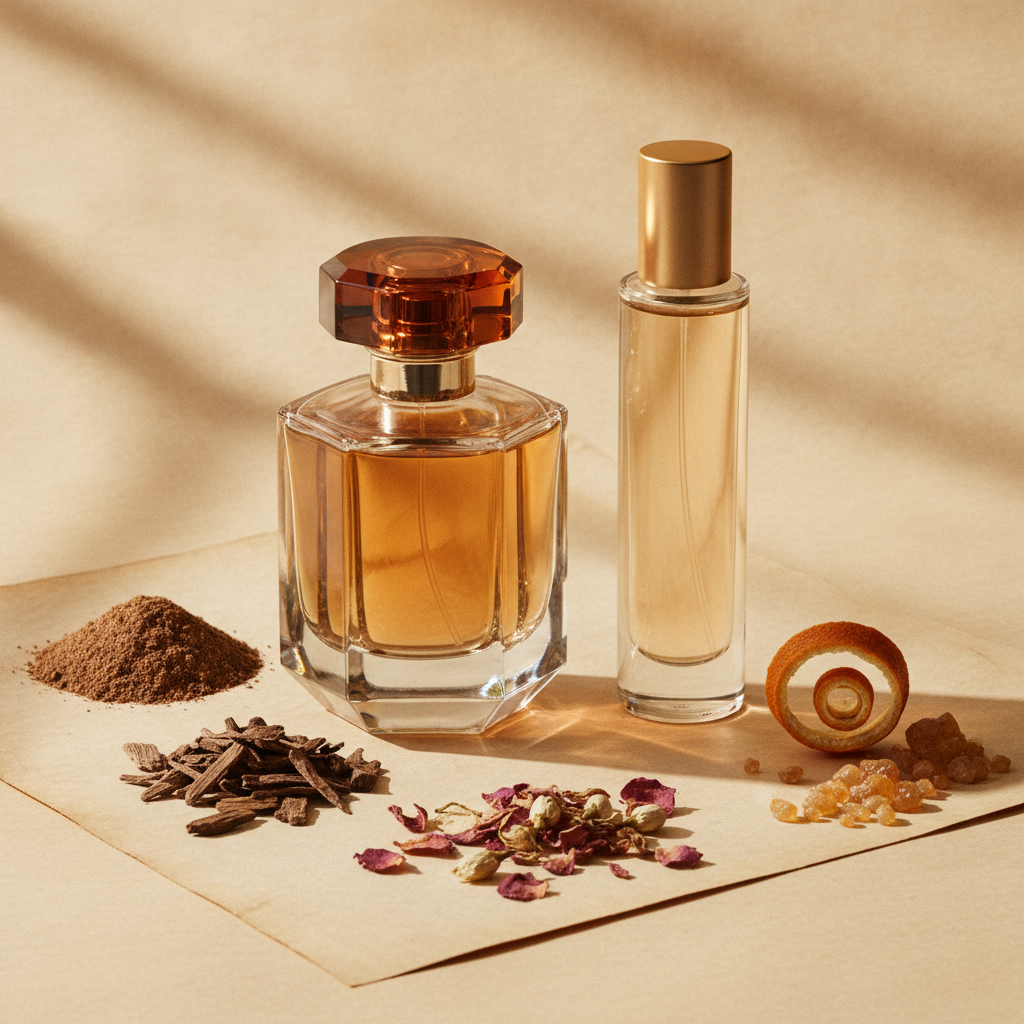
Walk into a department store and you can pick up a well-made designer fragrance for $80–120. Walk into a niche boutique — or down a particular rabbit hole online — and you'll find bottles starting at $180 and climbing well past $400. Sometimes for the same 50ml.
So what's actually going on? Is niche fragrance worth it? Is designer underrated? The honest answer is: it depends, and the gap isn't explained by one thing.
Here's what the price difference is actually made of.
Ingredients — real, but often overstated
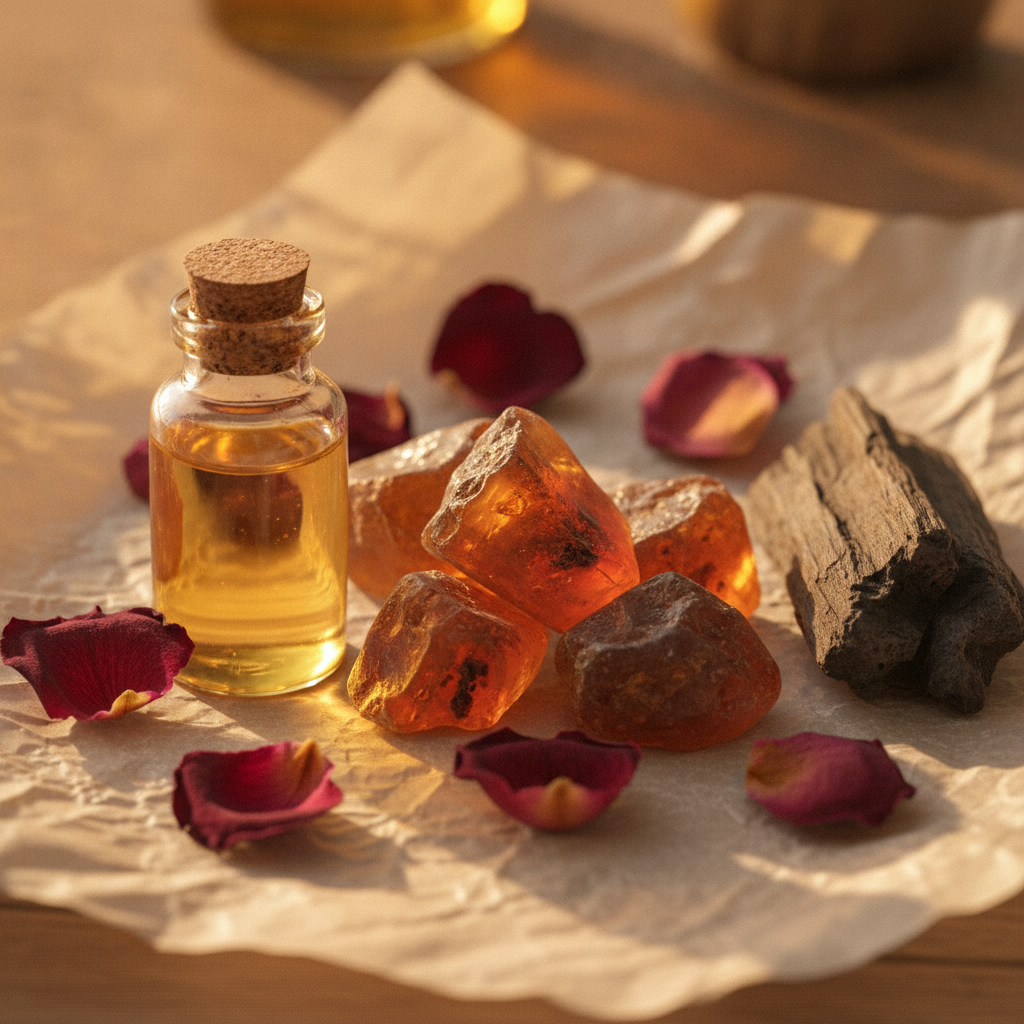
The ingredient quality argument is real. Niche houses do tend to use higher concentrations of natural materials — real oud, genuine iris root (orris butter, which costs more per kilo than most metals), actual rose absolute rather than synthetic rose. These things cost money, and you can often smell the difference: a texture, a roundness, a way the scent shifts over hours rather than staying flat.
But the ingredient story gets oversimplified fast. Synthetic aromachemicals aren't cheap shortcuts — some of the most beloved modern fragrances are built almost entirely on synthetics, and the good ones are expensive in their own right. A niche house using a novel, proprietary molecule is spending real money. So is a designer house using Ambroxan by the barrel.
The honest version: ingredients are part of the price difference, rarely all of it.
Distribution and marketing — the invisible cost
Designer fragrances carry enormous overhead that has nothing to do with what's in the bottle. Department store shelf space, global advertising campaigns, celebrity endorsements, gift-with-purchase promotions, the cost of being stocked in 3,000 doors worldwide — all of it gets baked into that $95 price tag.
Niche houses, by contrast, tend to sell through fewer, more selective retailers (or direct), run little to no traditional advertising, and rely almost entirely on word of mouth and community — Parfums de Marly is a useful case study in that model. Their margins look different, even at three times the price.
This is part of why a well-constructed designer fragrance at $90 can represent genuinely good value — a real perfumer, real materials, but subsidized by scale. And it's why some niche bottles at $250 are priced the way they are not because of what's inside, but because the brand is small and their costs don't spread across millions of units.
Exclusivity — and what you're buying when you buy it
There's a third thing in the price: the feeling of wearing something most people won't recognize. Niche fragrance trades partly on that. No one smells your Bortnikoff or your Filippo Sorcinelli at a work meeting and goes "oh, that's the new campaign." That obscurity has value to some people. It's not snobbery — it's a genuine preference for something that feels personal rather than broadcast.
Whether that exclusivity is worth a $200 premium is a personal call. But it's honest to name it as part of what you're paying for.
When designer genuinely competes
Here's the myth worth busting: niche is not automatically better.
Some designer fragrances are quietly exceptional. Hermès has been working with perfumer Christine Nagel and before her Jean-Claude Ellena, and their work holds up against almost anything. Dior's in-house perfumers, Chanel's Les Exclusifs line, certain releases from Guerlain — these are made with skill, good materials, and real artistic intent. The fact that you can buy them at a department store doesn't make them lesser.
And on the other end: some niche fragrances are priced on mystique and packaging alone. A pretty raw concrete jar and a brand story about an obscure mountainside doesn't guarantee what's inside is worth four times your Mugler.
Price and quality correlate loosely, at best.
Keeping both in one place
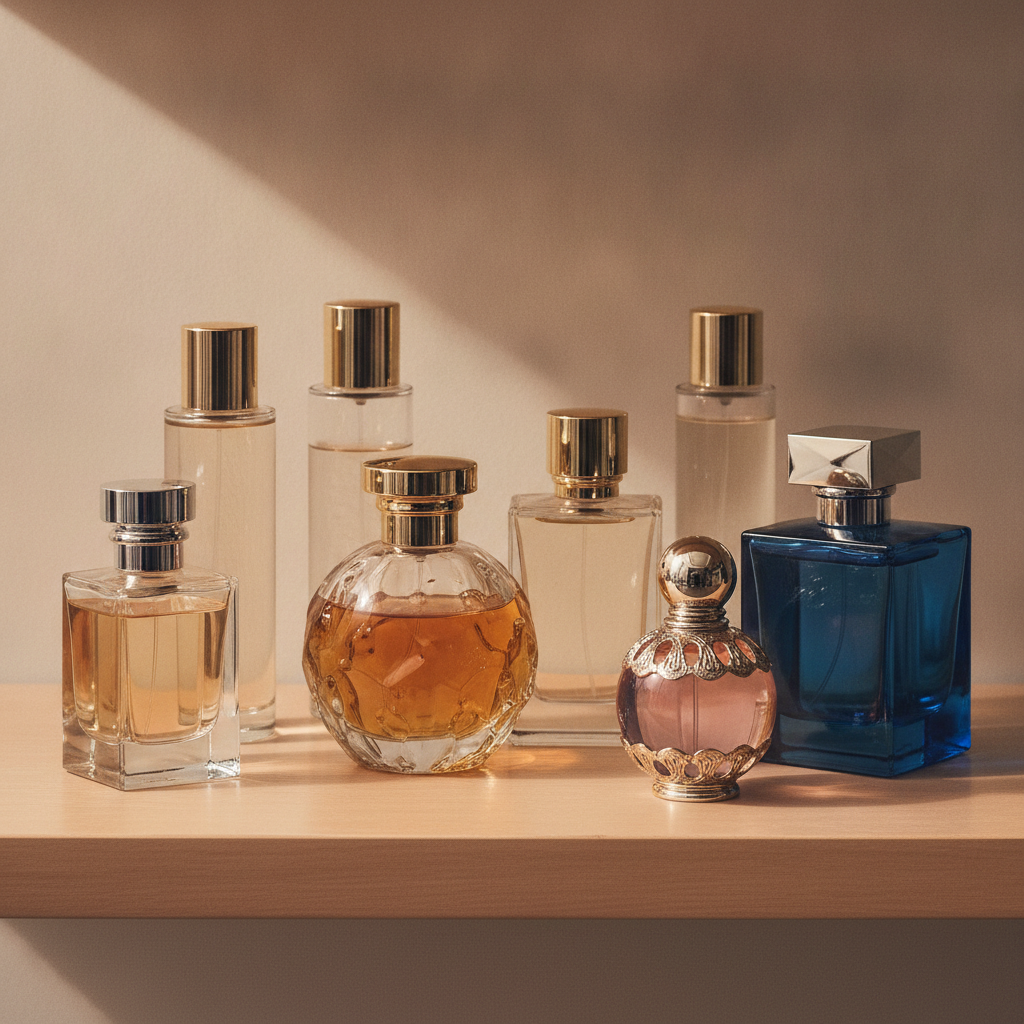
Most serious fragrance people own both — a designer daily driver alongside a niche bottle they save for the right occasion, or a Lattafa clone they reach for on a hot day without guilt. The niche/designer divide matters less than having things organized so you actually reach for what fits the moment.
That's where TheScentStyler earns its keep: the Librarian feature fills in each fragrance's notes, concentration, and DNA automatically when you add it to your catalog — whether it's a $60 clone or a $320 limited release. Everything lives in one place, properly described, so the whole collection becomes easy to navigate.
The real question
Instead of asking "is this niche bottle worth it," try asking: does this smell like something I'd want to live with? Does it do something the rest of my collection doesn't? Would I wear it, or just admire it on a shelf?
Those questions work the same way at $80 and at $380.
The price gap is real, and now you know what's inside it. What you do with that is yours.
If you want to start seeing your collection — designer, niche, clone, and everything between — as one organized whole, the TheScentStyler app is a good place to build it. The Librarian does the cataloging work so you can spend the rest of your time actually wearing things.
Keep reading The Drydown
The Drydown publishes a new piece most days. If you’d like them quietly delivered, leave your email — no noise, just the writing.
One email per new piece. Unsubscribe anytime.