
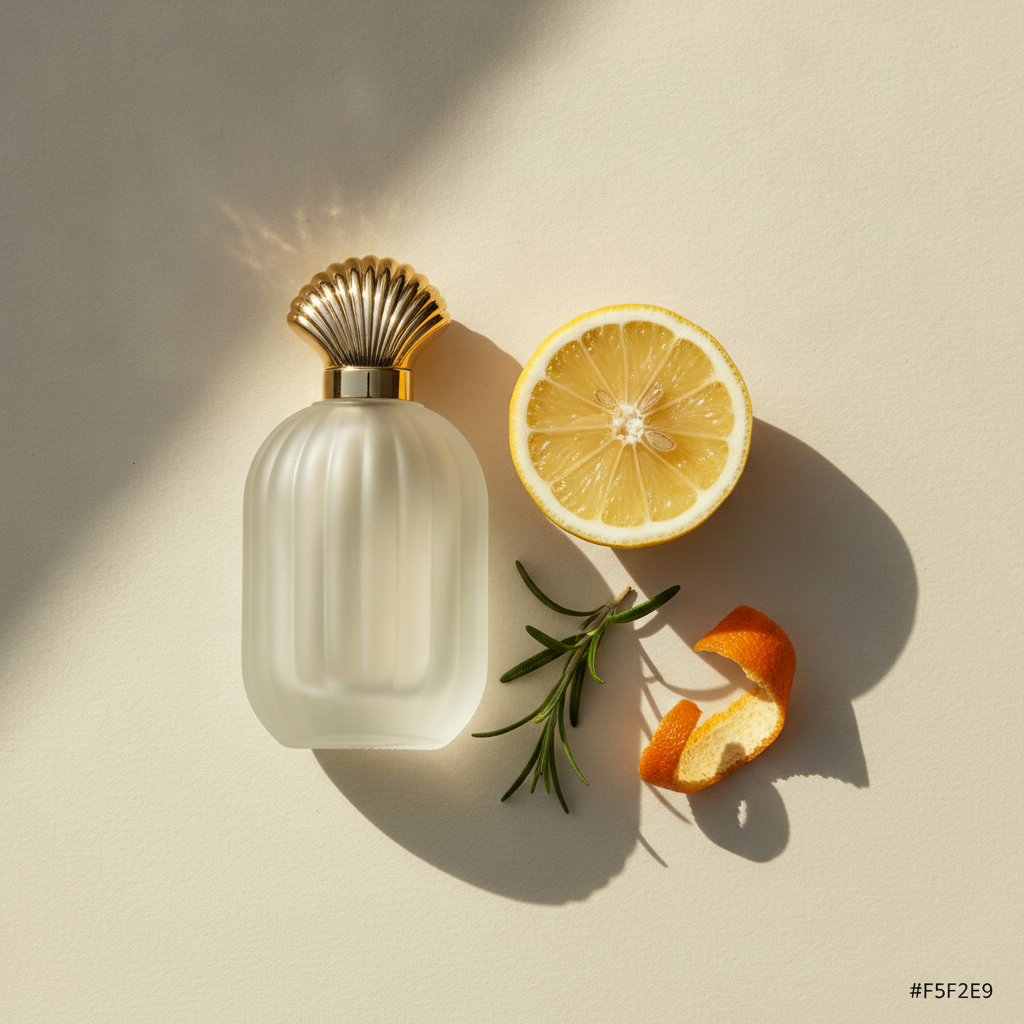
There's a particular kind of disappointment that only happens in summer. You spray something you love — something that worked beautifully in March — and by noon it's gone sour on your skin. Or worse, it's become a heavy, cloying cloud that follows you around like a bad mood. The fragrance didn't change. The heat did. And heat changes everything.
Understanding why that happens is actually pretty simple, and once you get it, choosing what to wear in July gets a lot easier.
Heat is an amplifier — and not always a kind one
Your skin gets warm in summer. That warmth speeds up the way a fragrance evaporates and throws its scent into the air. This is why perfume performs differently on a hot day — the notes come out faster, louder, and sometimes in a different order than the bottle suggests.
For lighter, fresher scents, this can be a good thing. A citrus or a clean aquatic blooms on warm skin in a way it never quite does in winter. You get that full, immediate brightness without having to wait.
But for heavier, richer compositions — thick amber bases, dense orientals, resinous musks — the heat amplifies things in ways that weren't designed for July. Notes that smell warm and inviting at room temperature can start to feel suffocating once your skin is radiating heat all day. Certain sweet, heavy base notes can also interact with sweat in ways that turn them sharp or sour over time. It's not the fragrance failing, exactly. It's the fragrance doing too much.

What to reach for instead
The families that tend to hold up best in heat share a few common qualities: they're relatively transparent, they work with the speed of warm-skin evaporation rather than against it, and they don't have heavy bases fighting for airtime on a day when everything is already turned up.
Citrus and aromatic greens are the obvious answer, and there's a reason they've been worn in hot climates for centuries. Lemon, bergamot, neroli, petitgrain — these notes are bright and immediate. They don't ask much of your skin because they were already designed to be vivid and fleeting. The trick with citrus is accepting that the top notes will go faster in heat, and what's underneath matters. A citrus built on a clean, dry musk or a light woody base gives you something to land on. A citrus sitting on a heavy amber will shift on you.
Aquatics and ozonic scents behave well in heat because they're built to feel like a relief. The cool, slightly salty quality that defines a good aquatic reads almost refreshing when it's 90 degrees outside. Performance can be lighter — these aren't projection monsters — but that's actually appropriate when you don't want to clear a room in August.
Light florals and white florals are more variable, but the right ones work beautifully. Neroli, magnolia, and clean jasmine tend to stay pleasant in heat. Very rich, indolic white florals — the kind that lean animalic and heady — can tip into something uncomfortable on a hot day, depending on your skin.
Skin musks and clean woody scents often do better in summer than people expect. They sit close, they warm with your body temperature in a natural way, and they tend to read intimate rather than loud. Not a great choice if you want presence, but perfect if you want to smell like yourself, slightly better.
The notes that tend to cause trouble
Heavy ambers, labdanum, benzoin, very sweet vanilla bases, dense oud — these aren't bad notes. They're just built for cold. When heat forces them out fast and loud all at once, the balance can collapse. What smells like a beautifully layered composition in November can smell like a single overwhelming note in July.
The same goes for dense oriental bases with a lot of sweetness in them. The sweetness gets exaggerated by heat. On dry, cool skin it reads as warmth and depth. On hot, humid skin it can turn sticky or slightly sour.
None of this is an absolute rule — skin chemistry varies wildly, and what cloys on one person reads perfectly balanced on another. But if you've had a fragrance consistently disappoint you in summer, the base notes are usually worth looking at.
Finding what actually works for you
Here's the honest part: there's no universal summer fragrance list. A dense oriental might be exactly right for someone with dry skin living somewhere with low humidity. An aquatic might perform terribly on someone whose skin chemistry eats fresh notes for breakfast.
The most useful thing you can do is narrow it down by what you know about your own skin and the climate you're actually in — and then let that guide what you explore next. If you want a starting point tuned to the season, your mood, and what you already own, the Atelier feature in TheScentStyler is built for exactly that kind of question. You can tell it what you're working with and it'll suggest combinations or directions worth trying rather than handing you a generic hot-weather list.
Summer fragrance is genuinely one of the more interesting puzzles in building a wardrobe. Getting it right — finding the things that bloom on your skin instead of going flat or sour — is worth the trouble. When it works, wearing the right scent on a hot day feels less like effort and more like a small, private luxury.
Keep reading The Drydown
The Drydown publishes a new piece most days. If you’d like them quietly delivered, leave your email — no noise, just the writing.
One email per new piece. Unsubscribe anytime.