
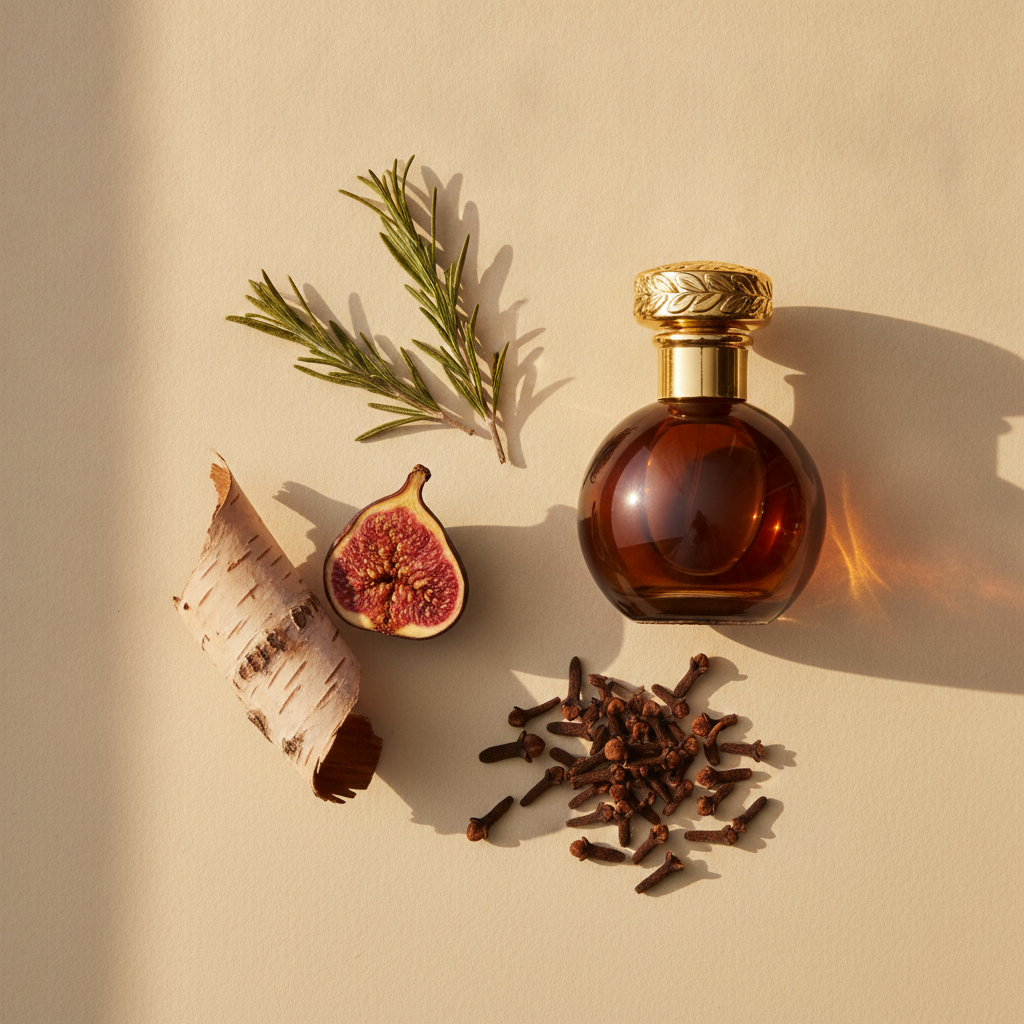
There's a specific moment every fall when the air changes — not just gets colder, but takes on a different texture. Woodsmoke somewhere nearby, maybe. Wet leaves underfoot. The light going golden earlier. Your wardrobe shifts, and without really thinking about it, you stop reaching for the citrus bottles and start pulling things from the back of the shelf.
That instinct is worth trusting. Fall fragrances aren't just warmer. They behave differently on cooler skin, project differently in cold air, and settle into something more intimate than summer scents do. The question isn't really which bottle is best — it's which kinds of scents actually read as autumn, and how to build a small rotation that carries you through. As it gets colder, that grows into a full fall-and-winter rotation.
What Makes a Fragrance Feel Like Fall
Heat amplifies fragrance. When temperatures drop, that changes — the light, airy structures that sang all summer suddenly feel thin and vanish too fast. Fall is when heavier molecules come into their own.
A few families reliably land for the season:
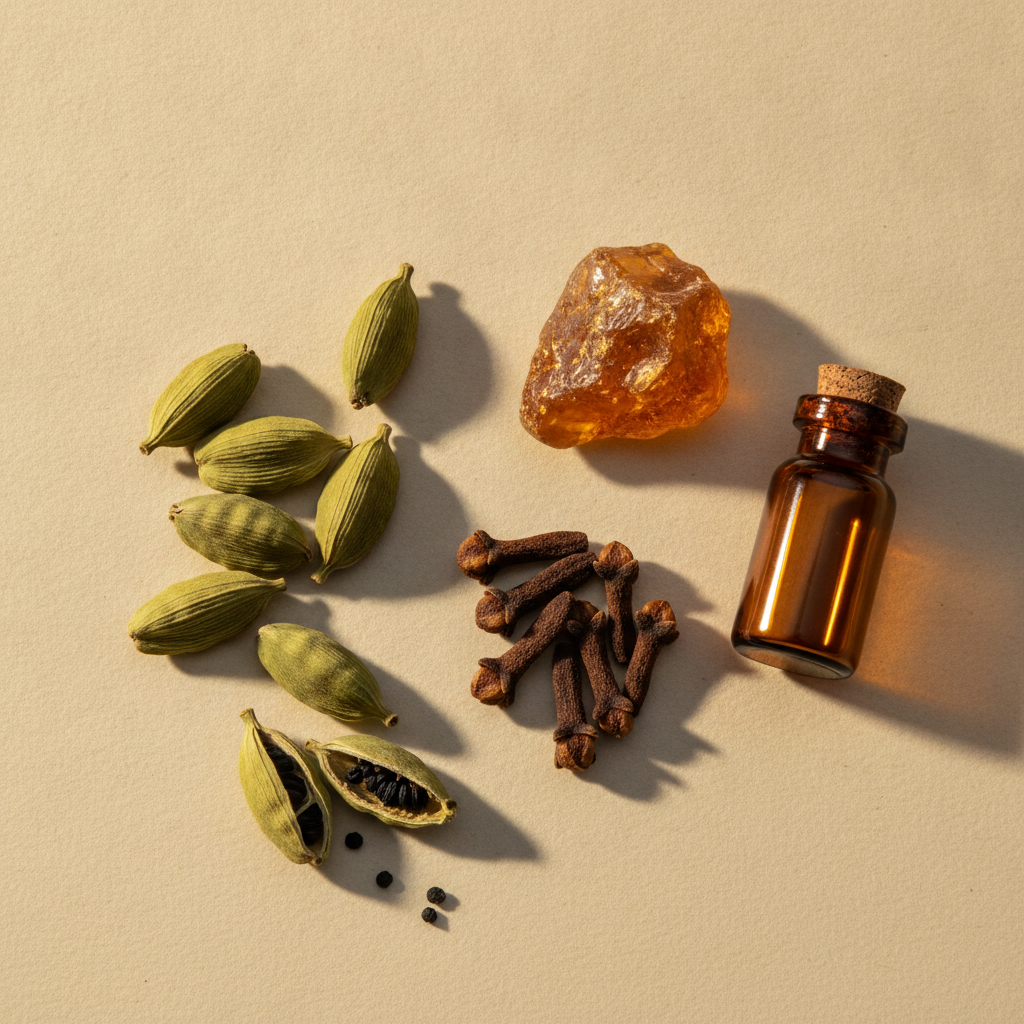
Warm amber and resin. Amber is the workhorse of fall. It reads as dry warmth — not sweet in a sugary way, but deep and slightly powdery, the way old wood or incense settles into a room. Benzoin, labdanum, tonka bean, and vanilla all cluster in this family and each has its own personality. Benzoin is darker and slightly smoky. Tonka is warmer and more almond-like. Labdanum is animalic and honeyed. These notes don't just smell autumnal — they last. In cool air, they hug close and stick around in a way they never quite do in summer.
Spice. Not the aggressively spiced fragrances that announce themselves across a room, but spice as a background warmth — cardamom, clove, pink pepper, cinnamon in low doses. The best fall spice fragrances feel the way mulled things smell: lived-in and welcoming, not sharp. Watch out for anything that leads so hard with clove or cinnamon that it goes airless. The best of these use spice the way you'd season food — present but not the whole point. When you want spice front and center, that is its own subject: spicy perfumes and how they actually wear.
Soft wood and smoke. Sandalwood, cedarwood, vetiver, and very light smoke notes give fall fragrances their structure. Sandalwood in particular plays beautifully in cold weather — it goes creamy and quiet where it might have been louder in heat. Vetiver is earthier, almost mineral, and slightly more demanding. A little smoke (guaiac wood, birch tar in small doses) gives a scent depth without tipping into bonfire territory.
Fig and dried fruit. This is an underrated fall register. Fig in fragrance is green and milky close to the fruit, but in darker interpretations it goes jammy and almost leathery — both work in autumn. Dried fruits (plum, apple, quince) used as supporting notes give a scent a sense of ripeness that feels seasonal without being gourmand.
Thinking in Roles, Not Just Bottles
One thing that keeps people from over-buying is thinking about what role each scent plays in a rotation rather than trying to find one perfect fall fragrance.
A small fall rotation realistically needs three slots: a daytime workhorse, an evening scent, and something versatile for unpredictable weather — exactly what the fall shoulder season is built for (the days that start at 55°F and end at 75°F, which happen constantly in early fall).
The daytime scent should be comfortable but not boring. Soft woods plus a little spice tends to work here — something your coworkers can enjoy without having to negotiate it. Sandalwood-forward fragrances, cedar-and-cardamom structures, or light ambers with a citrus top that fades to warmth are all candidates.
The evening scent earns more latitude. This is where you bring in deeper resins, smoke, heavier musks, or something sweeter and more enveloping. The kind of thing that reads as too much at 10am but exactly right after dinner.
The wild card is usually something in the woody floral or spiced floral space — fragrances with enough lift to work in mild weather but enough warmth not to disappear in the cold. Rose with oud, iris with wood, or something in the chypre family (oakmoss, labdanum, bergamot) can all serve this role.
If you're trying to figure out which of your bottles already fills each slot — or where you have gaps — that's exactly what TheScentStyler's Atelier is built for. You describe the season, the occasion, the mood, and it helps you see your collection differently and points to combinations you might not have thought to try.
A Few Practical Notes
Don't overbuy. Fall has a long window — September through November, really — but your wearing habits probably don't change that much. Two or three bottles you genuinely reach for beats six you rotate dutifully.
Revisit what you have. A lot of people discover their perfect fall scent is already in their collection, tested in August and set aside because it felt too heavy. Cool air changes everything about how a fragrance performs. Pull out your ambers, your resins, your woods and try them again now.
Layering opens up in fall. The same things that make autumn fragrances last longer — heavier molecules, less evaporation — also make layering easier. A plain sandalwood or musk can anchor an amber spray on top; a woody base can extend something that normally fades too fast. Fall is the season to experiment with combining.
Performance expectations shift. Longevity and sillage (how far a scent projects) both change with temperature. In cold, dry air, most fragrances project less but last longer. In the weird warm-cold shoulder season, you'll often get both extremes on the same day. Apply a little more than usual in cold weather; dial back when it warms back up.
The Point Isn't to Find the Best Fall Fragrance
It's to find your fall rotation — the two or three bottles you'll actually reach for when the air changes, the ones that feel like the season rather than fighting it.
That's a more interesting question than any ranked list can answer, because it depends on what you already own, what you're missing, and how you want to feel in October versus November.
If you want help working that out — matching what you have to the season, finding the combinations that actually make sense for your collection — the Atelier in TheScentStyler is worth a look. It's built for exactly this kind of thinking: not what the internet recommends, but what works for what you've already got.
Keep reading The Drydown
The Drydown publishes a new piece most days. If you’d like them quietly delivered, leave your email — no noise, just the writing.
One email per new piece. Unsubscribe anytime.