
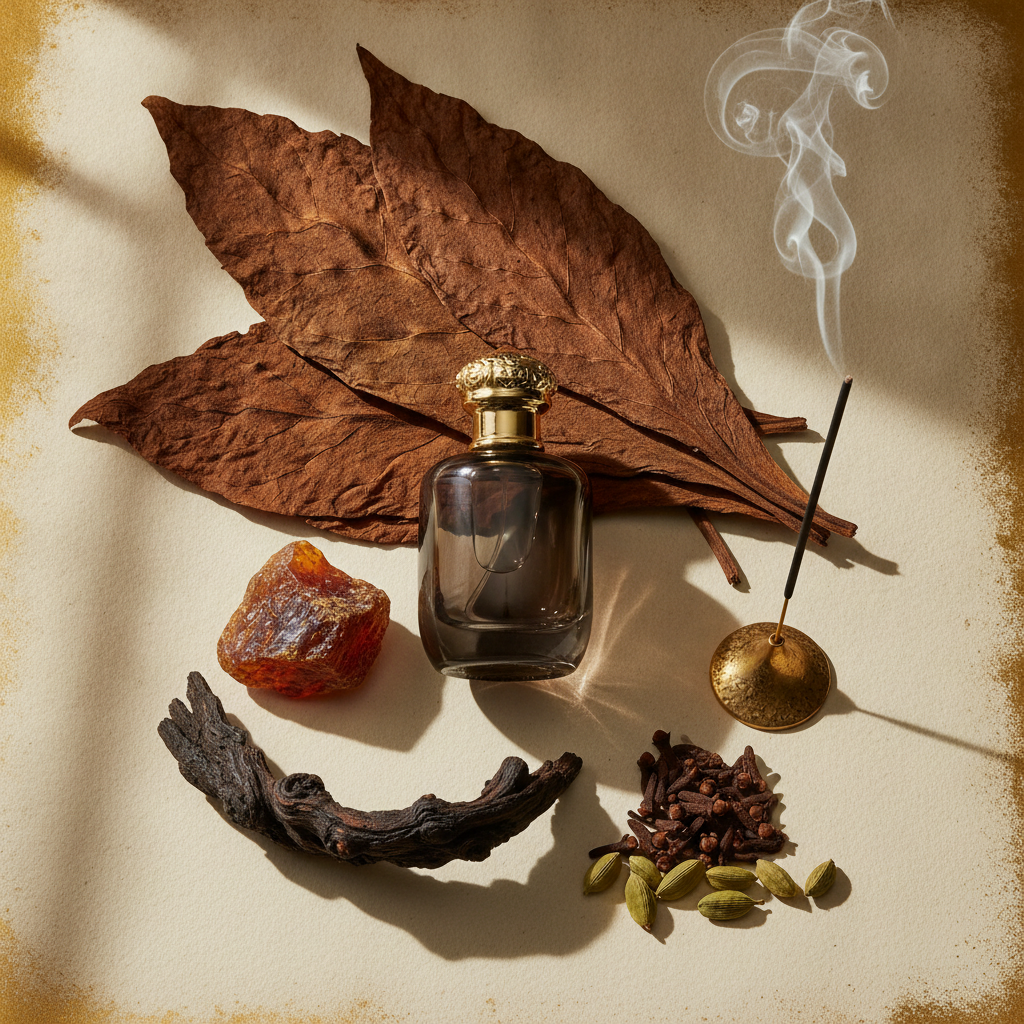
Vanilla gets a lot of the credit for winter fragrance. It's warm, it's easy to love, and there's a whole article on why vanilla works so well in the cold months if you want to understand the appeal. But if you've reached the point where vanilla feels like the obvious answer and you want something with a little more edge, more texture, more something — this is the guide for you.
There are plenty of ways to smell warm that have nothing to do with gourmand sweetness. This is a tour through the main ones: what each family actually smells like, how it wears, and who tends to love it.
Incense
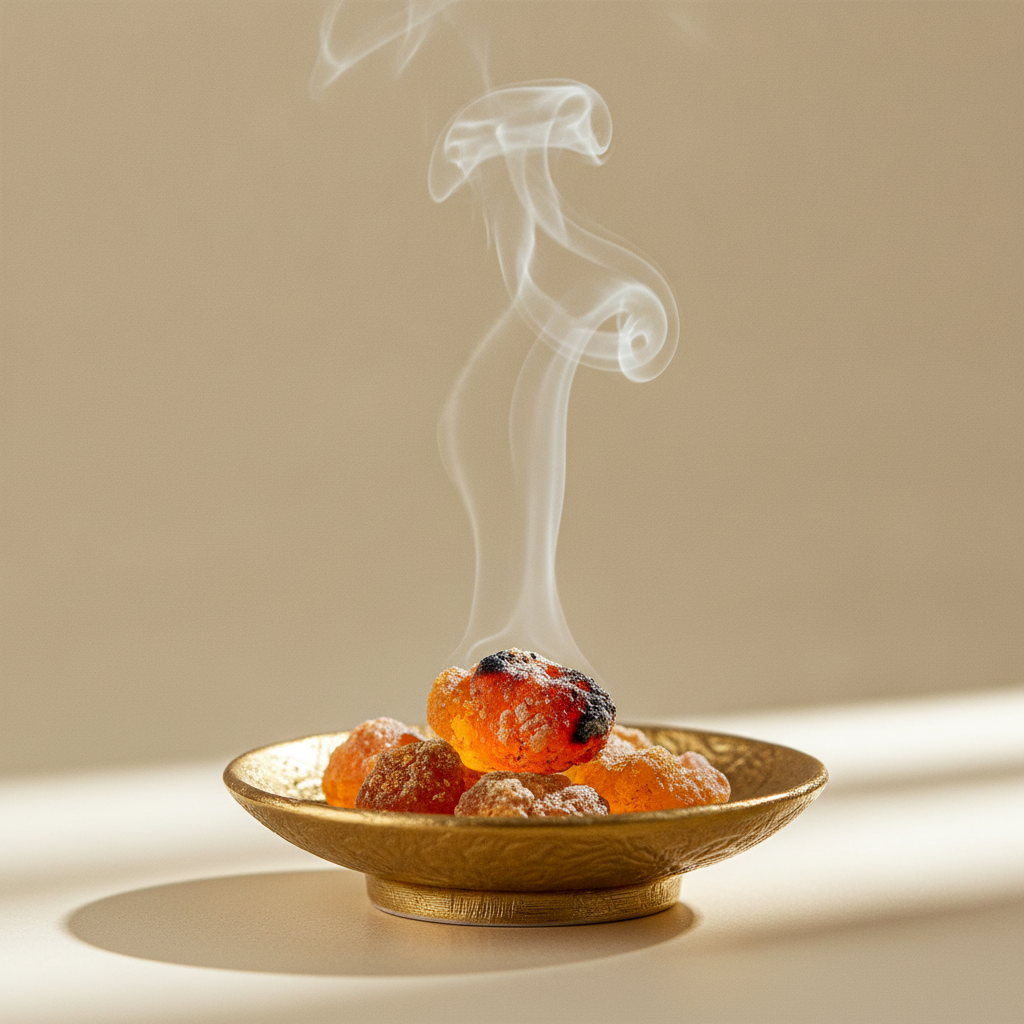
If you've ever walked into an old church, a Buddhist temple, or a market stall selling loose resin, you already know this smell. Incense in perfumery captures that same quality — smoky, slightly ethereal, dry rather than sweet. It hangs in the air the way smoke does, which gives it unusual presence without being loud.
Frankincense is the most common, and it smells like what you'd expect: a dry, resinous smoke with a faint citrusy brightness underneath. Oud-based incense goes darker and woodier. Myrrh adds something almost medicinal and bittersweet.
Who loves it: people who want to smell atmospheric rather than cozy. If you're drawn to the idea of smelling like a candlelit room rather than a dessert, incense families are worth exploring.
Leather
Leather in perfume rarely smells like a car interior. It's more like the idea of leather — a certain dry, slightly animalic quality that's hard to pin down until you've smelled it a few times. Some lean smoky. Some lean suede-soft. Some have a faint medicinal quality that reads as vintage and sophisticated.
What they share is a kind of gravity. Leather fragrances feel grown-up in a way that's hard to manufacture with other materials. They tend to be low-slung, not loud — the projection is often closer to the skin, which actually suits cold weather, when you want a scent that stays close rather than evaporating into the freeze.
Who loves it: people who want to smell commanding without being aggressive. Leather pairs beautifully with tobacco or woods if you want more warmth under it.
Tobacco
Tobacco in perfume almost never smells like a cigarette. Unlit tobacco — the cured leaf, the dried stem — has a sweetness to it, almost like dried fruit or brown sugar, and that's what perfumers tend to reach for. It's rich and slightly smoky, with an earthy quality that feels lived-in and comfortable.
Some tobacco fragrances lean sweet and dark, like a pipe tobacco with a little honey. Others go drier, almost herbaceous. The note is especially good in winter because it has the warmth you want without the cloying quality that heavy musks or thick vanillas can develop under a coat.
If you already like the idea of spiced and warming fragrances for cold weather, tobacco is a natural step further — deeper, less obviously spiced, more complex.
Who loves it: people who want warmth that's grown-up and slightly old-world. It's a note that tends to age well on the skin, developing interesting facets as the day goes on.
Spiced Woods
This is probably the broadest category here, but it earns its own section because it reads distinctly. Think cedarwood or sandalwood as the base — dry or creamy, respectively — with something like cardamom, black pepper, or cinnamon woven through. Not the cinnamon-bun sweetness of a gourmand, but the actual spice: a little sharp, a little dry, warming without being soft.
Sandalwood tends to be the creamier, more skin-friendly option. Cedar goes more austere. Vetiver, which technically falls in the grass family but behaves like a dark, smoky wood in many fragrances, adds a rooty earthiness that some people find immediately recognizable and compelling.
These are the fragrances that tend to smell slightly different on everyone — skin chemistry pulls out different facets of the wood, which is part of what makes them interesting. Why a scent develops differently on your skin comes down to body heat, pH, and moisture, and woody fragrances are particularly sensitive to all three.
Who loves it: people who want something clean and sophisticated but still grounded. Spiced woods are versatile — they can work at the office or in the evening without much adjustment.

Dry Amber
Amber often gets confused with vanilla, and there's a whole piece on what amber actually smells like and how it differs if you want the full breakdown. The short version: amber can go sweet and soft, but it doesn't have to. Dry amber — the kind that uses labdanum, benzoin, or cistus without much vanilla support — smells resinous, slightly leathery, almost dusty. It's warm but not cozy.
Think of it as the arid cousin to the sweet amber most people know. Desert-dry, sun-warmed resin on stone. It gives depth without heaviness.
Who loves it: people who want the warmth of amber without anything that tips into sweet or soft. Dry amber blends particularly well with incense or leather underneath.
Tea
Tea might seem like an odd choice for a winter guide — it reads lighter and more subtle than the other families here. But a well-made tea fragrance has real warmth to it, especially one built around black tea or smoked tea (like Lapsang Souchong, which smells exactly how it sounds: smoky, leafy, slightly camphor-ish). Green tea is brighter and more astringent; it works better in spring. Black tea in winter is another story — it has a malt and tannin quality that pairs naturally with woods and leather.
Tea fragrances tend to be quieter, which makes them perfect if you want something interesting but genuinely understated.
Who loves it: people who want complexity without any heaviness. Tea-forward fragrances are especially good for daytime or office wear in winter, when you don't want your coat to arrive before you do.
None of these families are mutually exclusive — most interesting winter fragrances blend two or three. Incense and leather. Tobacco and spiced wood. Dry amber and tea. The best approach is to identify which starting point sounds like you, then use that as the thread to pull on when you're sampling.
If you want a good way to track what you're testing and what actually works on your skin, TheScentStyler's Librarian can fill in the note breakdown for any bottle in your catalog — useful when you're trying to figure out why one woody fragrance clicked and another didn't.
Once you know which note family you're gravitating toward, the Librarian can help you see the pattern across your collection. What you reach for in January tends to say something about you. Worth paying attention to.
Keep reading The Drydown
The Drydown publishes a new piece most days. If you’d like them quietly delivered, leave your email — no noise, just the writing.
One email per new piece. Unsubscribe anytime.