

Amber in perfume smells warm, smooth, slightly sweet and a little dark, with a resinous depth underneath and a soft, skin-close muskiness. It is not a single ingredient but a built accord — usually labdanum, benzoin and other resins. Vanilla reads edible and direct; amber reads abstract and enveloping.
Pick up almost any warm, wintry perfume right now and the word amber is somewhere on the box. But ask what amber actually smells like and most people pause. Is it sweet? Resinous? Something like vanilla? Kind of — but not quite.
Amber is one of the most common notes in perfumery and also one of the least understood, partly because it isn't really a single thing you can point to. Here's what it actually is, what it smells like in plain terms, and how it sits alongside — and apart from — vanilla.
Amber Is an Accord, Not an Ingredient
This is the part most descriptions skip. When a perfume lists amber as a note, it almost never means a single raw material pulled from the earth. Real fossilized amber (the stuff you see in museums, sometimes with a prehistoric insect inside) has almost no smell at all. What perfumers mean by "amber" is a built accord — a small recipe of ingredients assembled to create a particular warm, rounded, resinous effect.
The classic formula leans on a few key materials: labdanum (a sticky resin from the rockrose plant, dark and slightly animalic), benzoin (a tree resin with a soft, sweet, almost vanilla-like quality), sometimes vanilla itself, and other aromatic resins like styrax or olibanum. The exact blend varies by house and perfumer. Some add a synthetic called Ambroxan — derived from ambergris — which gives a smooth, skin-close warmth that's become a signature of many modern ambers.
Understanding this matters because it explains why two perfumes can both claim "amber" and smell noticeably different from each other. It's a direction, not a recipe stamped in law.
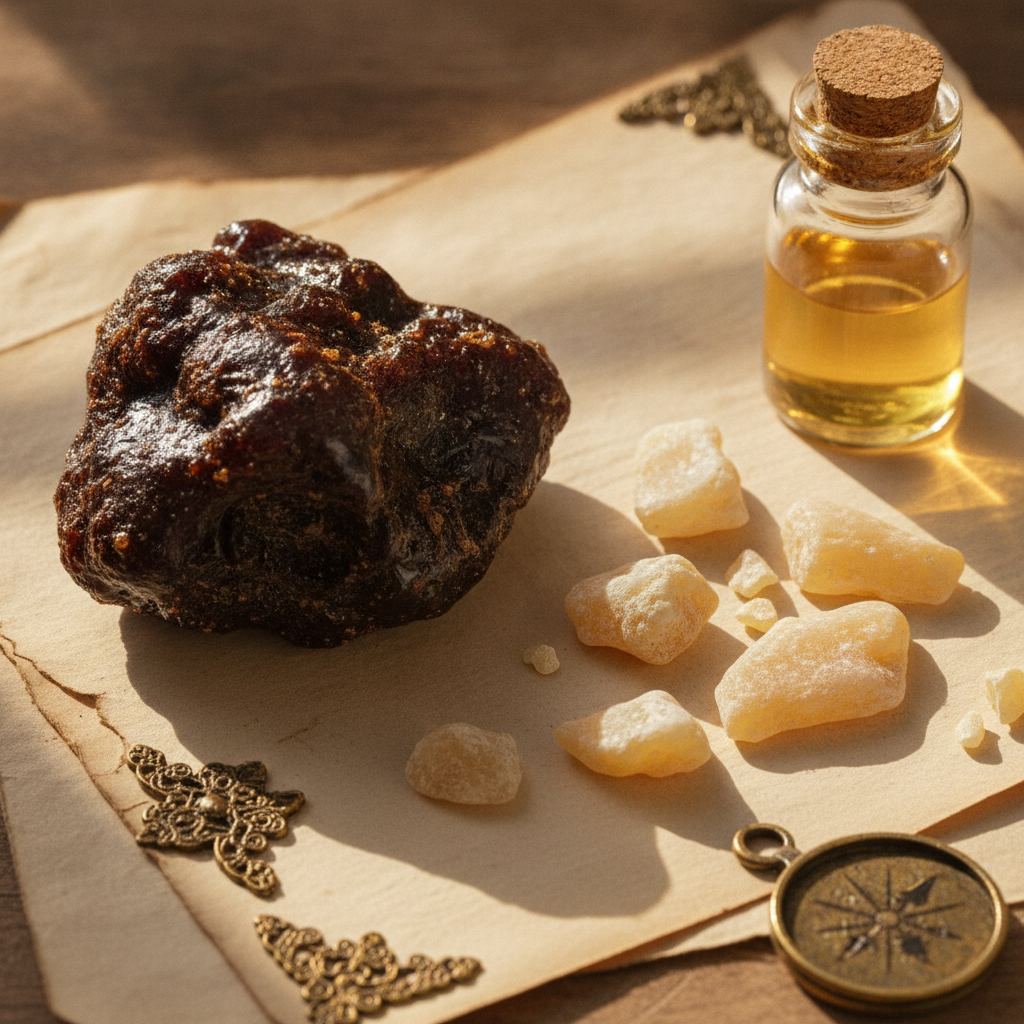
What Amber Actually Smells Like
In plain terms: warm, smooth, slightly sweet, and a little dark. There's a resinous depth underneath — something that feels almost sticky or thick, even in a spray — with a softness on top that keeps it from being sharp or challenging.
Think of standing near a candle that's just been blown out, or the faint smell of old wood and incense in a building that's been warm all day. It's comfortable in a slightly luxurious way. It wraps rather than announces.
Most ambers have:
- A warmth that feels physical — not spicy-hot, just enveloping
- A sweetness that is softer and less direct than vanilla
- A resinous quality — a gentle stickiness, almost like the smell of dried tree sap
- A musky, skin-close base in modern formulas, especially those using Ambroxan
Some amber accords lean darker and more balsamic (incense-adjacent). Others lean lighter and creamier. The ones built with more benzoin and vanilla tip toward gourmand territory. The ones leaning on labdanum and musks feel more animalic and earthy.
How It Differs From Vanilla
This is the question people most often want answered, and it's a fair one because the two overlap in interesting ways.
Vanilla is a single note with a recognizable identity — sweet, creamy, slightly custardy. Most people know it from food. In perfume, it tends to read the same way: direct, edible, unambiguous. Pure vanilla in a fragrance is immediate and obvious.
Amber is rounder and more complex. The sweetness is there, but it's layered under resin and musk, so it doesn't read as food. It's sweet the way warm skin smells sweet after a long day — softer, more abstract. You wouldn't describe amber as edible the way you might vanilla.
Another useful way to put it: vanilla says bakery. Amber says fireplace.
The two often appear together precisely because they balance well. Vanilla sharpens and sweetens amber's dark edges. Amber gives vanilla some body and warmth so it doesn't float away into candy territory. When a perfume describes itself as "vanilla amber," you're generally getting both working in concert — which is why gourmand fragrances built around this pairing have become so popular without always smelling like dessert.
Why Winter Scents Lean So Heavily on Amber
Warm notes generally suit cold weather, and amber is one of the warmest things in a perfumer's palette. It's also a strong fixative — the heavier resinous molecules help other notes stay on the skin longer, which is why amber tends to show up in the base of a fragrance as it moves through the drydown.
There's a comfort factor, too. The same qualities that make amber feel enveloping — the warmth, the slight sweetness, the skin-close muskiness — are exactly what people reach for when the light goes early and the temperature drops. It's the olfactory equivalent of putting on a good coat.
If you've ever noticed that your taste in fragrance shifts somewhere around November, that pull toward warmth and darkness is amber doing its job.
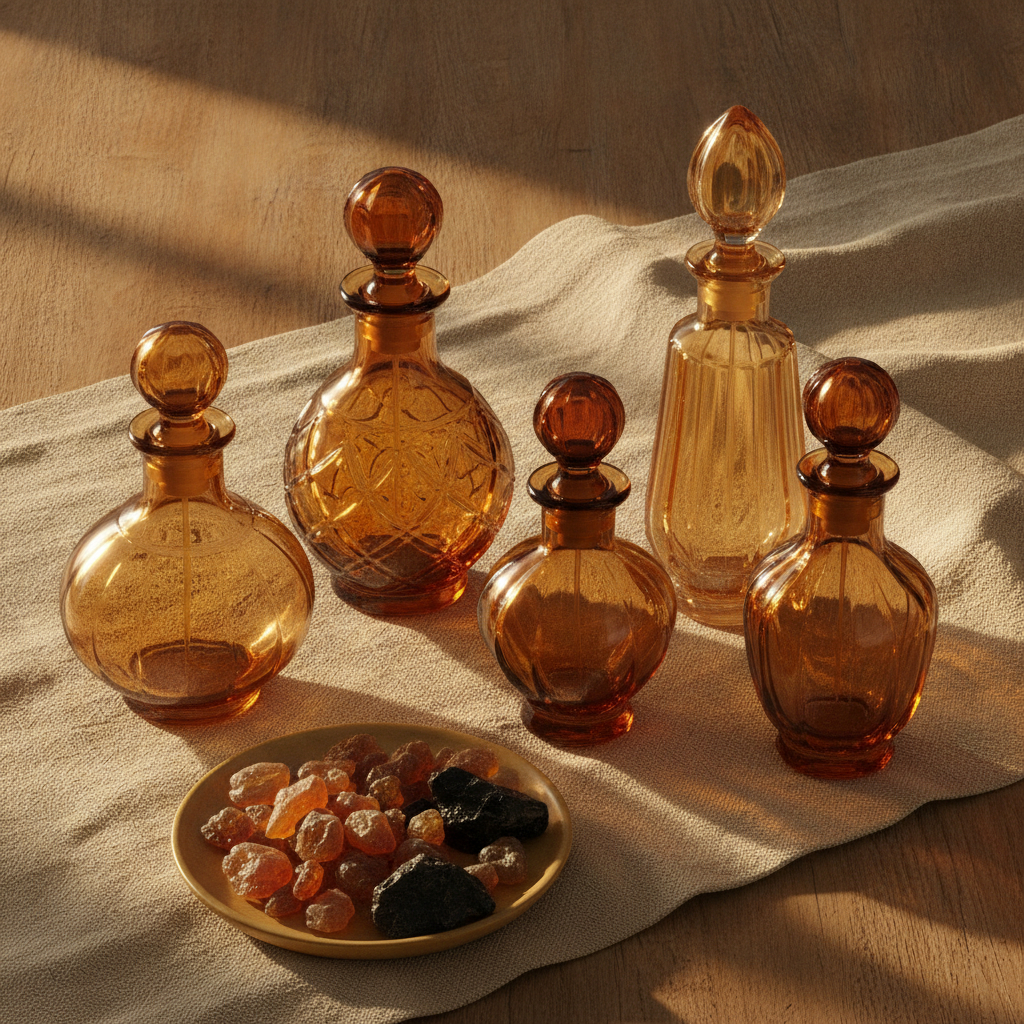
A Few Amber Scents Worth Knowing
You don't need to spend a lot to explore what amber actually smells like on your skin — it exists at every price point.
At the affordable end: Lattafa's Ameer Al Oud and Khamrah both put amber front and center in different ways — one heavier and more oud-forward, one sweeter and more approachable. If you want to understand how amber interacts with gourmand notes, Khamrah is a good classroom.
Mid-range: Giorgio Armani's Sì and its flankers lean on a soft rose-amber combination that's clean and modern. Yves Saint Laurent's Black Opium layers amber with coffee and vanilla in a way that shows how the three notes complement each other.
Niche and investment: Maison Margiela's Replica Jazz Club and By the Fireplace both use amber as a structural element, though in different directions — one leaning smoky and leather-adjacent, one leaning warm and resinous. They're useful comparisons because they show how far the "amber" umbrella stretches.
No list of examples is a substitute for testing. Amber is one of those notes where skin chemistry shifts the result noticeably — it might read creamy and vanilla-like on you, or warmer and more resinous, depending on your skin's pH and natural oils. That's worth knowing before you commit to a full bottle.
Finding Your Amber
The most practical thing you can do is start paying attention to where amber shows up in fragrances you already own or have tried and liked. Does it appear in the base? Is it the main character or the supporting role? Does it tip toward sweet or toward resinous?
Once you know what direction appeals to you, it's much easier to ask for what you want — whether that's "something warmer and darker" or "amber but not too sweet."
If you've been building a collection and want help finding where amber fits into combinations with what you already have, the Atelier feature in TheScentStyler is built for exactly this — put in your current bottles and it can suggest what might layer well, or what to reach for next by season or mood. It's a useful starting point when the counter has twenty amber options and you don't know where to begin.
Keep reading The Drydown
The Drydown publishes a new piece most days. If you’d like them quietly delivered, leave your email — no noise, just the writing.
One email per new piece. Unsubscribe anytime.