
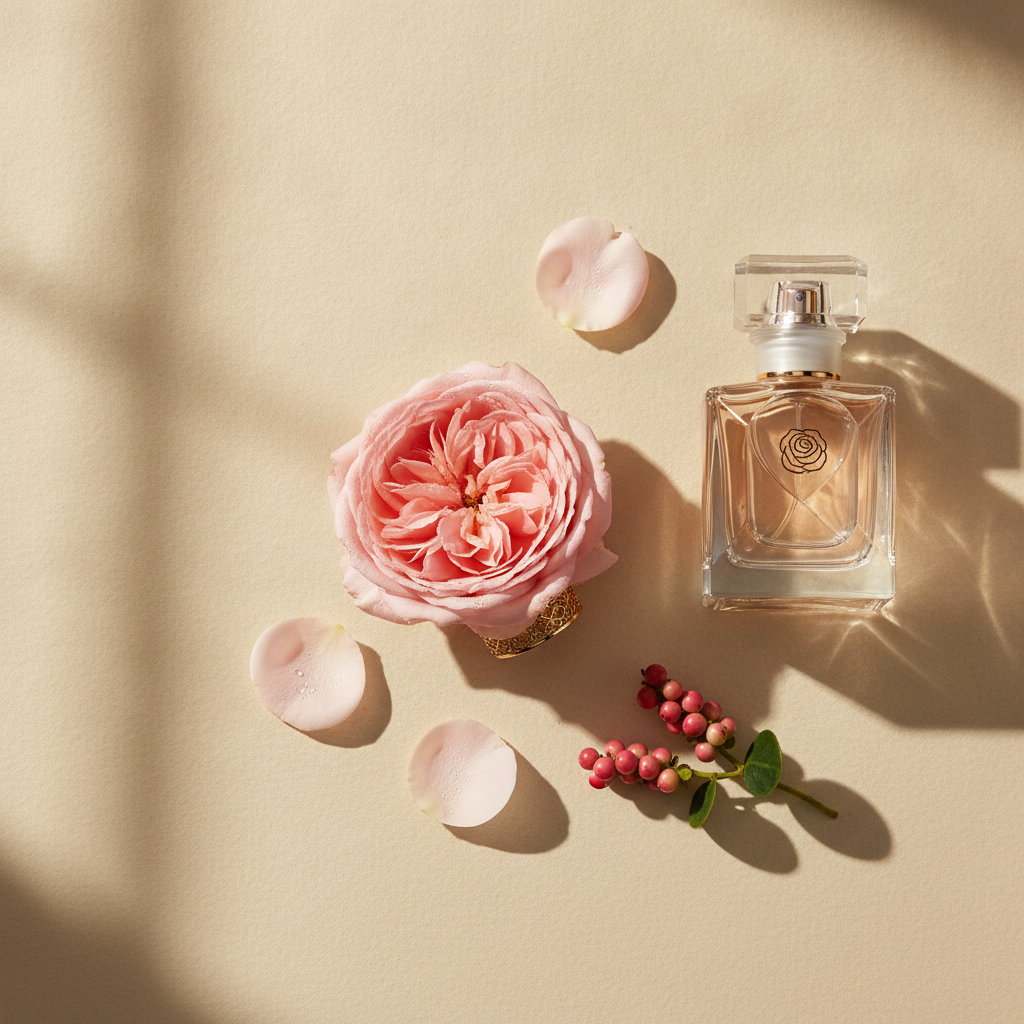
Rose has a reputation problem. Somewhere along the way it became shorthand for a certain kind of perfume — powdery, heavy, a little stiff — the kind you associate with a relative's vanity table or a department store counter circa 1987. If that's your reference point, it makes complete sense that you'd write rose off entirely.
But that association belongs to a specific style of rose, not to rose itself. The flower is one of the most versatile raw materials in perfumery. Depending on how a perfumer uses it, rose can smell like cold water, like ripe fruit, like pepper and dirt, like skin. Modern rose fragrances have almost nothing in common with the powdery classics — and once you understand the families they fall into, it's much easier to find one that actually suits you.
Why "rose" can smell like completely different things
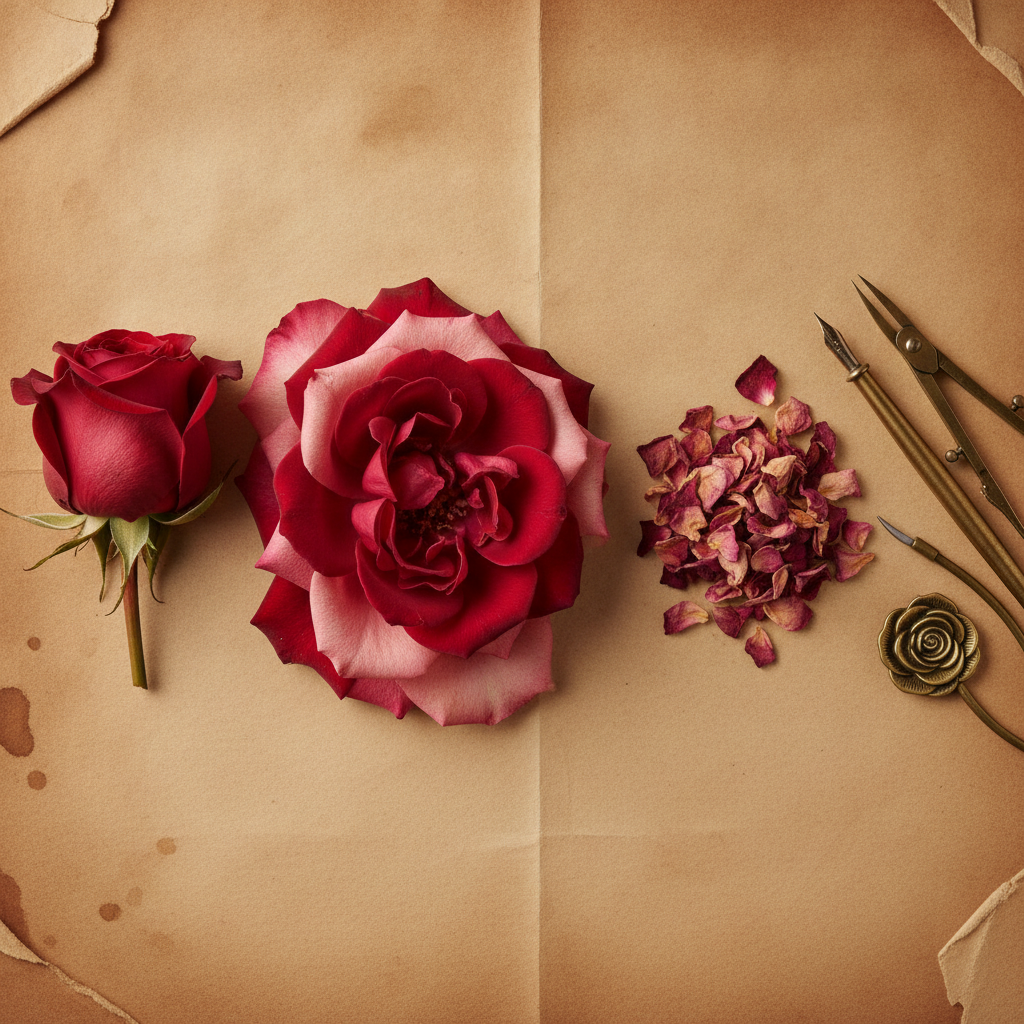
Rose is complicated even before a perfumer touches it. There are hundreds of rose varieties, and they don't all smell the same. Damask rose tends toward rich, honeyed, and slightly spiced. Centifolia (also called cabbage rose) leans more delicate and green. Bulgarian rose can have a dewy, almost aquatic quality. Turkish rose is warmer and fruitier.
Then there are synthetic rose molecules — things like geraniol and citronellol — that isolate individual facets of the flower. A perfumer can choose to push the fresh green edge of rose, or the fruity center, or a cool metallic note that's always been there but never dominant in nature. This is why two perfumes both listed as "rose" can smell like they share nothing.
The powdery vintage effect people tend to dislike usually comes from rose combined with heliotrope, iris, or a lot of musks — ingredients that soften everything into a kind of haze. Modern rose tends to move in a different direction entirely.
The families modern rose falls into
Dewy and green. This is rose at its most literal — the smell of a petal just after rain, slightly cool, with a faint green stem underneath. If you love the smell of an actual rose garden but don't want to smell like perfume, this is where to start. These tend to be light, fresh, and close to the skin.
Peppery and stem-forward. Some modern rose fragrances lead with the sharp, almost spicy quality of the green parts of the plant — the stem and leaves — rather than the bloom itself. The result smells crisp and slightly bitter in the best way, more like a florist's bucket of water than a garden. These work well on people who like herbs and aromatic fragrances and aren't sure they like florals at all.
Jammy and fruity. Rose has a natural fruity quality that perfumers can amplify into something rich and almost edible — less like flowers and more like rose hip jam or Turkish delight. This family tends to read warm and lush. It pairs naturally with oud, amber, and woods. If you like rich orientals, this is where rose becomes yours.
Dark and smoky. Rose against a backdrop of vetiver, patchouli, or incense becomes something almost austere. The floral sweetness is still there but it's underground, visible only around the edges. This is rose for people who would normally reach for a leather or a dark wood fragrance — and it's often surprisingly wearable even on people who think they hate florals.
Clean and transparent. A newer direction: rose stripped back to something almost airless, filtered through white musks and cool woods. It smells like rose at the edge of your memory rather than rose in your face. These are the easiest to wear every day because they don't announce themselves.
How to actually wear rose now
The old way to wear rose was to let it do everything — volume, personality, statement. The modern approach is to treat it more like a neutral: something that layers with who you already are.
A dewy or transparent rose sits quietly over anything — morning coffee, a wool coat, your own skin. A dark or jammy rose earns a second application in the evening, or a heavier hand in cold weather. Peppery rose plays well with something slightly citrus on top, or goes alone when you want to smell like you made an effort without it looking like it.
If you've always reached for something else and you're curious about rose but nervous, start with a peppery or green-stem version. That category reliably converts people who think they don't like florals, because it doesn't smell like the thing they're afraid of.
Finding your version of rose
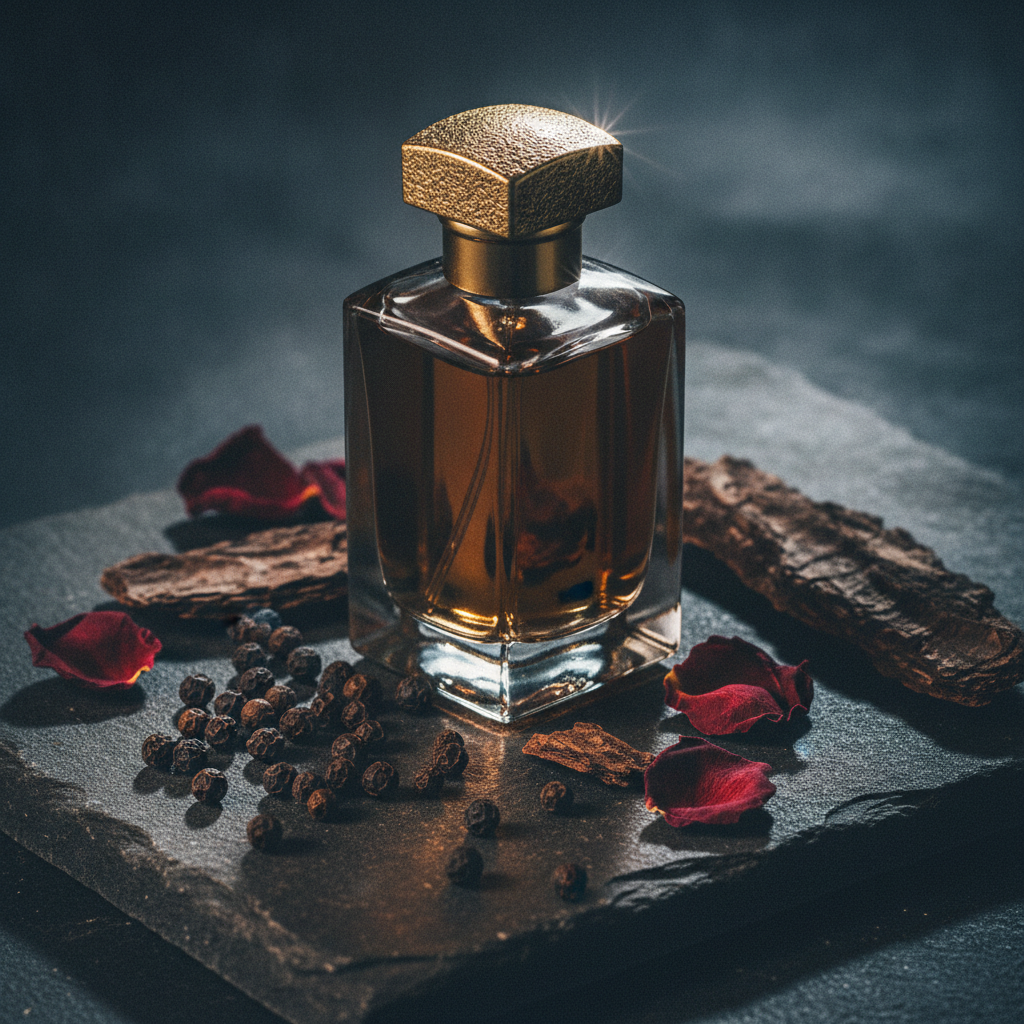
The challenge with rose is that the name tells you almost nothing about what's actually in the bottle. Two fragrances can both call themselves rose and land in completely different families. That's where understanding character over category matters: once you know whether you're drawn to the jammy version or the peppery version, the whole genre opens up.
It's also worth noting that rose shifts more than most ingredients depending on skin chemistry. The fruity, warm quality that blooms on one person can go powdery on another. The cool, dewy version that disappears on dry skin can last all day on someone else. This isn't a failure — it's just the nature of the ingredient, and it's a reason to keep notes on what you've tried.
If you want help finding where your taste actually lands, TheScentStyler's Atelier can suggest rose directions (and pairings) based on what's already in your wardrobe — useful when you're trying to figure out which family of rose is actually yours rather than sampling blindly.
Rose rewards the curious. It's been reinvented more than almost any other note in perfumery, and there's almost certainly a version of it you'd want to wear. You just have to find the right translation.
If you'd like to start narrowing it down, the Atelier is a good place to begin — tell it what you already love, and it'll point you toward the rose that actually makes sense for you.
Keep reading The Drydown
The Drydown publishes a new piece most days. If you’d like them quietly delivered, leave your email — no noise, just the writing.
One email per new piece. Unsubscribe anytime.