
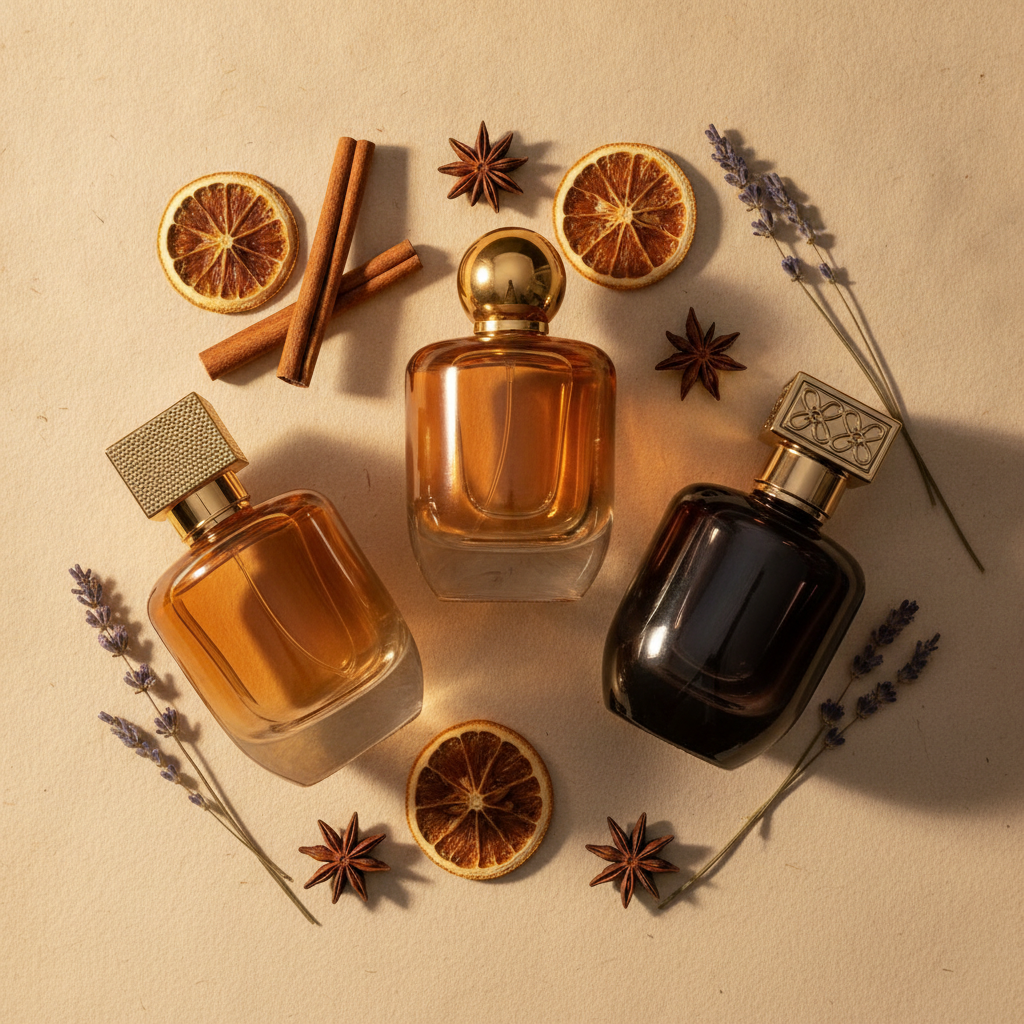
There's a particular satisfaction to reaching for the right bottle on a cold morning. Something dense and warm, something that actually holds up against a wool coat and a drop in temperature. If you've ever noticed that a fragrance you loved in July smells richer, deeper, and more full-bodied in October, that's not your imagination — and it's a great reason to think about cold weather as its own season for scent.
Why cold air changes everything
Warm weather speeds up how a fragrance moves off your skin. Heat amplifies projection and burns through the lighter, top-note layers quickly. In cold air, the opposite happens: everything slows down. Volatility drops. Scents sit closer to the skin, unfurl more gradually, and linger in the fabric of whatever you're wearing.
This is why heavy, resinous, and sweet-leaning fragrances that might feel suffocating in August become genuinely wearable in November. The cold essentially turns down the volume so you can wear bolder things without overwhelming a room. An amber that would be a full shout in July becomes a warm murmur in January — exactly the kind of presence you want on a grey morning.
It's also why citrus-forward fragrances, which depend on volatile top notes for most of their character, can feel thin or short-lived in winter. They're not bad fragrances — they're just built for a different season.
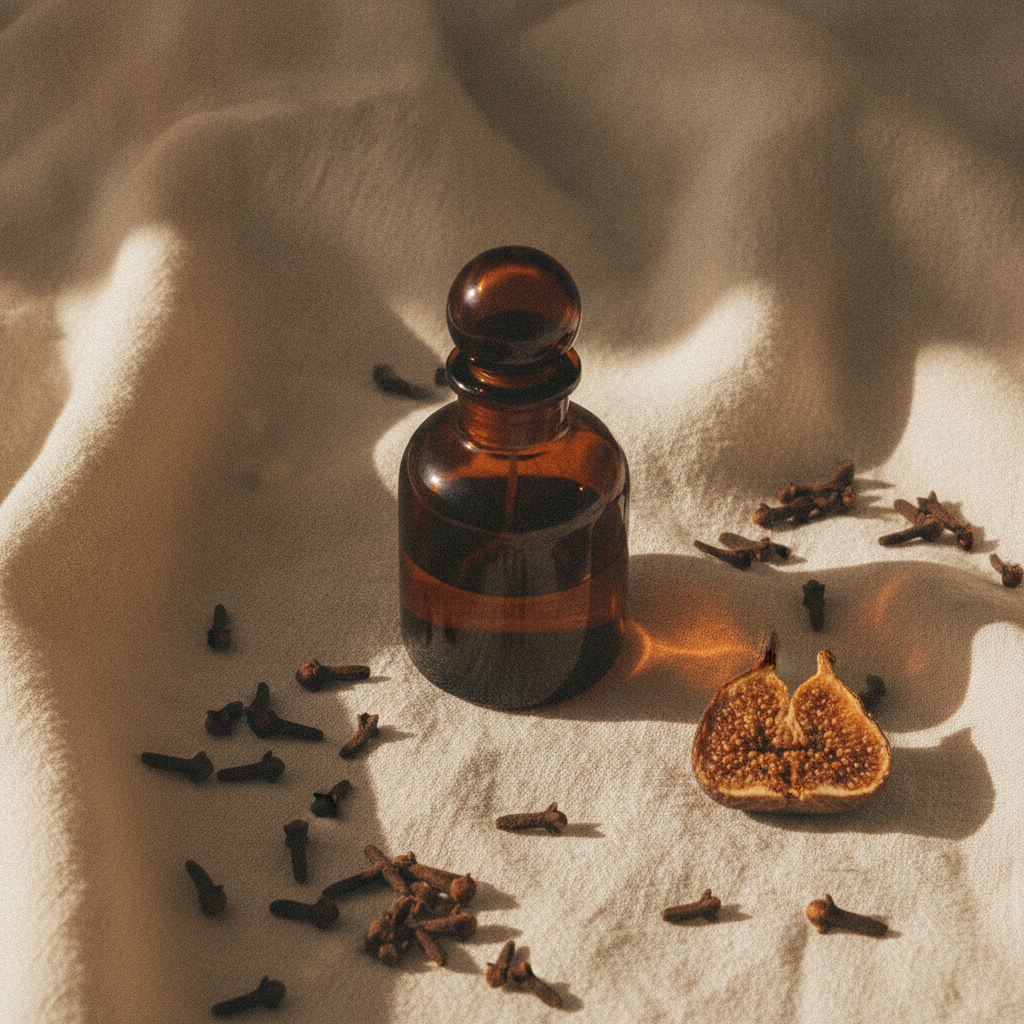
The families that shine in the cold
A few fragrance families are practically made for this season.
Ambers and orientals are the obvious ones — warm, resinous, often with a sweet or slightly powdery depth. Think of benzoin, labdanum, and tonka bean. They have a natural richness that cold air brings out beautifully.
Vanillas and gourmands lean sweet and edible, and in winter that sweetness reads as comfort rather than excess. These are the fragrances that make people turn around on the street and wonder what's baking. If you've avoided them in summer for being too heavy, revisit them now.
Resins and incense — frankincense, myrrh, oud, smoke — have a meditative quality that suits the season. They tend to be long-lasting and quietly commanding.
Warm woods like sandalwood, cedar, and vetiver anchor almost everything. On their own they're calm and grounded; blended with the above, they add a kind of structural warmth without sweetness.
You don't need a fragrance to fit neatly into one of these boxes. Many winter favorites blend across them — a smoky vanilla-amber, a resinous woody oriental — and that's part of the pleasure.
Why a rotation beats a single signature
It's tempting to pick one fall scent and commit. But winter is long, and your context changes. A cold Sunday at home calls for something different than a Tuesday at the office or a dinner out in December. A small rotation — three to five bottles — gives you range without overwhelming your shelf.
One way to think about it: a quiet everyday scent, a bolder going-out scent, and something warm and personal for slow mornings or evenings in. You don't need to spend a lot to do this well. Some of the most satisfying cold-weather fragrances come from houses like Lattafa or Al Haramain — thick, resinous, genuinely impressive in cold air, and priced so you can wear them freely.
If you're unsure how to build those slots around what you already own, TheScentStyler's Atelier can suggest combinations and seasonal recommendations based on the bottles already in your catalog — so you're not starting from scratch.
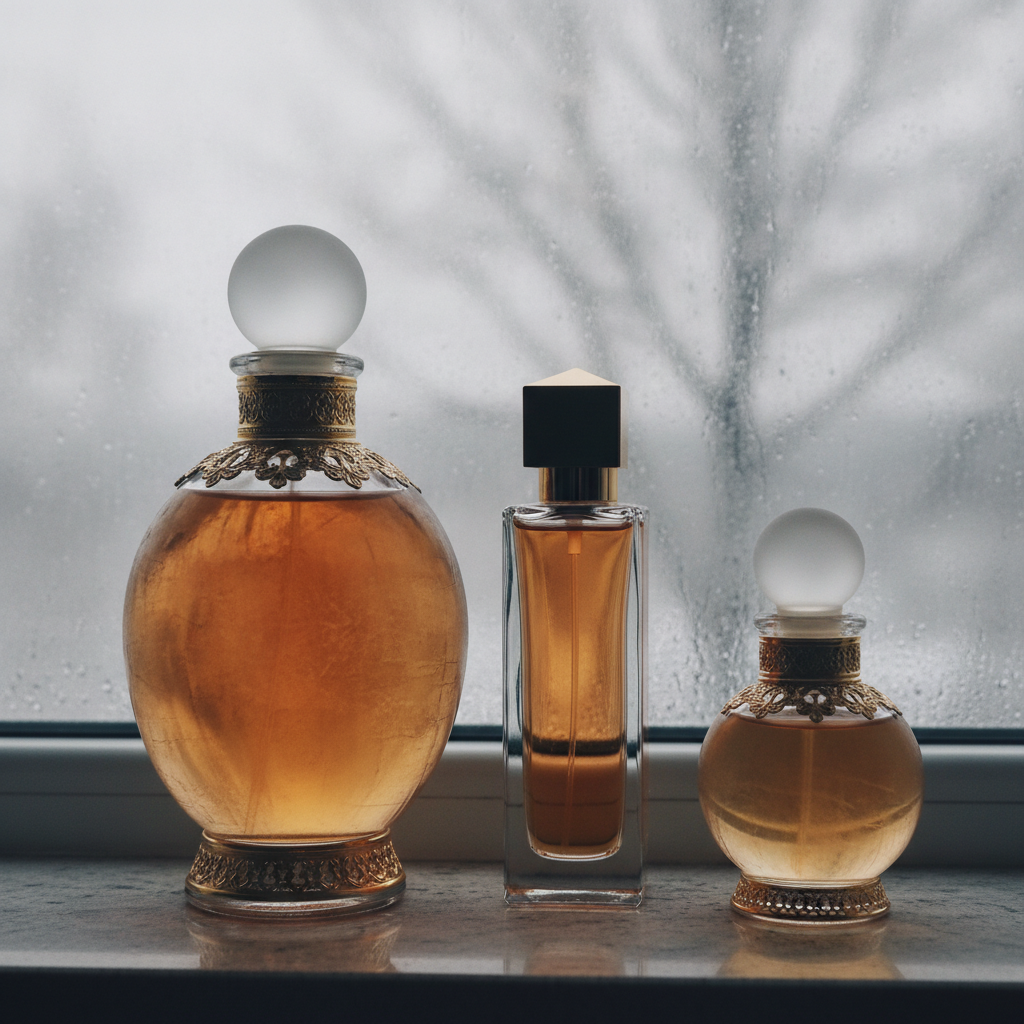
A few practical notes
Apply closer to the skin. In cold weather you lose the ambient heat that helps a fragrance bloom outward. The inside of your wrists, the base of your neck, and the warm hollow behind your ears will all serve you better than spraying onto a coat.
Spray before you layer up. Let the fragrance land on your skin, not your wool scarf. Fabric holds scent differently, and the story can get muddled.
Give things time. Cold-weather fragrances often have slow, deliberate drydowns. The opening might feel dense or sweet, but fifteen minutes in something quieter and more interesting usually appears. Don't judge on the first spray.
Build it slowly, wear it deliberately
A fall and winter rotation doesn't need to be built all at once. Start with what you have, identify the gaps — the cozy everyday you're missing, the bolder occasion scent you've been curious about — and fill them in over the season. Try things on skin rather than paper. Pay attention to what you actually reach for.
The best cold-weather wardrobe is the one you use. Let TheScentStyler help you figure out what's already worth wearing and what would round it out — the Atelier is there for exactly that kind of seasonal thinking.
Keep reading The Drydown
The Drydown publishes a new piece most days. If you’d like them quietly delivered, leave your email — no noise, just the writing.
One email per new piece. Unsubscribe anytime.
Comments
2 responses to “A Fragrance Rotation for the Colder Months”
[…] — the seasonal and occasional players: legitimate, just dormant. A rotation by season is what keeps these bottles alive instead of abandoned — dormancy with a return date is a plan; […]
[…] faster than any other category — which is why gourmands are at their best in a fall and winter rotation. Test on skin, across a full drydown, before any bottle commitment. The counter sniff lies hardest […]