
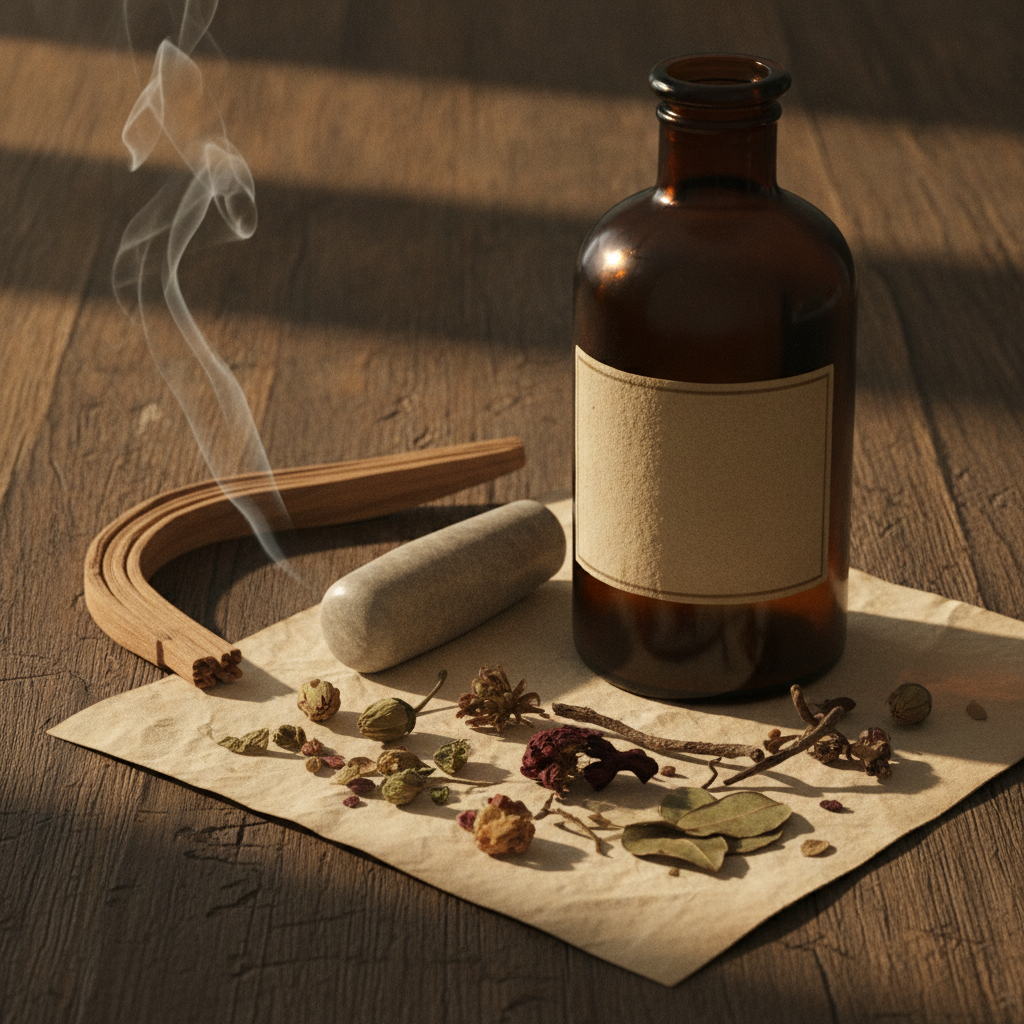
There's a version of Le Labo you encounter before you ever smell anything. The bare concrete floor. The typewriter font on every label. The pharmacist-style bottles filled while you watch. The staff who speak about fragrance the way a sommelier speaks about a difficult vintage. All of it has been very carefully designed to feel like it wasn't designed at all.
That's not a criticism — it's just useful to name it. Because when you're deciding whether Le Labo is worth $300 or $400 or more, you're not just buying liquid. You're buying a total experience, and knowing that helps you figure out what the experience is actually worth to you.
What the house is actually doing
Le Labo was founded in 2006 in New York, by two perfumers who wanted to strip away the celebrity-endorsed, department-store-counter model and make fragrance feel more like craft. The apothecary aesthetic — amber glass, hand-typed labels with your name and the date it was mixed — is their answer to mass luxury. It's saying: this was made for a person, not for a demographic.
The fragrances themselves are named with a note and a number: Santal 33 (sandalwood, note number 33), Rose 31, Bergamote 22. The number is the count of ingredients in the formula. It's a detail that sounds technical but functions more like poetry — it tells you to pay attention.
The perfumers behind the range are real and respected. Santal 33 was created by Frank Voelkl. Another 13 — the one that started as a collaboration with Another Magazine and became a cult in its own right — was made by Anne Flipo. These are not anonymous compositions.
Santal 33: why it became everywhere
If you've been in a certain kind of apartment, hotel lobby, or creative-agency bathroom in the last decade, you know Santal 33 without knowing you know it. It's woody and slightly smoky, with a dry creaminess underneath — often described as smelling like leather, cardamom, iris, and Australian sandalwood together. It became ubiquitous in creative and fashion circles to the point where some people grew tired of it on principle.
But ubiquity is a complicated argument against a fragrance. It got popular because it's genuinely unusual: drier and more austere than most sandalwood scents, and it blurs the line between masculine and feminine in a way that still feels considered rather than vague. If you haven't smelled it yet, it's worth trying with an open mind. If you wore it before the backlash and loved it, wearing it now is a quiet act of not caring what the room thinks.
A sample or decant first is wise — this is not a fragrance that reads the same on everyone, and at this price, buying without smelling it first is a real gamble.
Another 13 and the rest of the range
Another 13 is arguably Le Labo's best kept open secret. It's quieter than Santal 33 — a skin-close, slightly animalic musk with ambroxan and moss underneath, the kind of scent that people notice on you from close up and can't quite identify. If Santal 33 announces itself, Another 13 whispers. They represent the two poles of what Le Labo does well: the bold signature and the invisible one.
Beyond those two, the range has real depth. Thé Noir 29 is dark and slightly tobacco-tinged. Bergamote 22 is clean and bright without being generic. Noir 29 goes somewhere stranger and earthier. The house is consistent in a particular direction: minimal sweetness, real texture, a tendency toward dry or smoky materials. If you generally like your fragrances warm and rounded, Le Labo might frustrate you. If you lean toward the quieter end of projection, the house has a lot to offer.

The city exclusives: what they are and whether they're worth chasing
Le Labo has a rotating collection of fragrances exclusive to specific cities — Tokyo, Chicago, London, Dallas, and others. They're available year-round at their home city's boutique, and during one month in the year (usually around October), they travel globally. The idea is that each city's scent captures something about that place.
Dallas 14 is rosy and slightly powdery. Tokyo Iris 26 is cool and metallic. Chicago Brick 37 is earthy and warm. The quality is real — these aren't gimmicks. But the scarcity is partly engineered, which is worth knowing. If you happen to be in the city, or if the annual travel month lines up and you can get to a counter, trying them in person is genuinely worthwhile. Buying blind at a markup from a reseller is harder to justify.
The made-to-order blending and what it costs
One of the things Le Labo is known for is blending your fragrance in the store. You watch them combine the concentrate with alcohol, shake it, label it with your name and the date. Some people find this moving. Others find it theatrical. Both reactions are fair.
The honest answer is that the liquid is the same liquid you'd get from a pre-mixed bottle at a retailer. The ritual is about attention — yours, and theirs. In a category where most perfumes come plastic-wrapped in a department store, the act of making something in front of you does change how you feel about it. Whether that feeling is worth the price is a personal question.
Which brings us to the actual numbers.
What you're paying for, and the honest breakdown
A standard 50ml Le Labo runs around $200–250. A 100ml sits at $300–400 depending on the fragrance. These are niche prices — you can compare them to Frederic Malle, Byredo, or Diptyque — and they're higher than most designer houses, which the niche vs. designer breakdown covers well.
Some of what you're paying for:
- Fragrance quality: Genuinely good. The materials are real, the compositions are considered, and the house uses known perfumers.
- Longevity and projection: Generally solid on most skin types, though Le Labo's drier, more restrained style means some of their fragrances perform as close-to-skin scents rather than room-fillers. Skin chemistry will vary.
- The aesthetic package: The bottle, the label, the store experience, the brand story. This is real value if atmosphere matters to you. It is not value if you only care about the juice.
- The name: There is a portion of the price that is simply Le Labo being Le Labo — the cultural cachet, the Instagram-ability of the label, the recognition factor among people who recognize it.
That last part isn't cynical. Scent is partly social. But it's worth being clear-eyed about how much of that you're buying.
So is it worth it?
Yes, with conditions.
If you're drawn to the house's particular aesthetic — dry, textured, slightly austere, never sweet-for-the-sake-of-it — and you've tested something on your skin and it works, the price is defensible. You're getting a real fragrance from a serious house, not a brand riding on reputation alone.
If you're buying Santal 33 because it's recognizable, or a city exclusive because it's rare, or a Le Labo anything because the label is beautiful: that's also fine, but know what you're doing. Atmosphere has value, and you're allowed to pay for it. Just don't tell yourself it's purely about the juice.
Where Le Labo earns its price most clearly is for people who return to a fragrance repeatedly — who reach for it on a Wednesday for no reason, who travel with it, who feel something when they open the cap. That's the test that matters more than any review.
The question of what you actually reach for — versus what you own and never open — is something worth tracking honestly. TheScentStyler keeps that record for you: catalog what you have, and the Librarian fills in the details. Over time, the pattern of what you actually wear tells you more about your taste than any amount of browsing.
If Le Labo is on your shortlist, try Santal 33 and Another 13 first. Try a city exclusive if the timing works out. Then ask yourself, six months later, whether you went back.
Keep reading The Drydown
The Drydown publishes a new piece most days. If you’d like them quietly delivered, leave your email — no noise, just the writing.
One email per new piece. Unsubscribe anytime.