
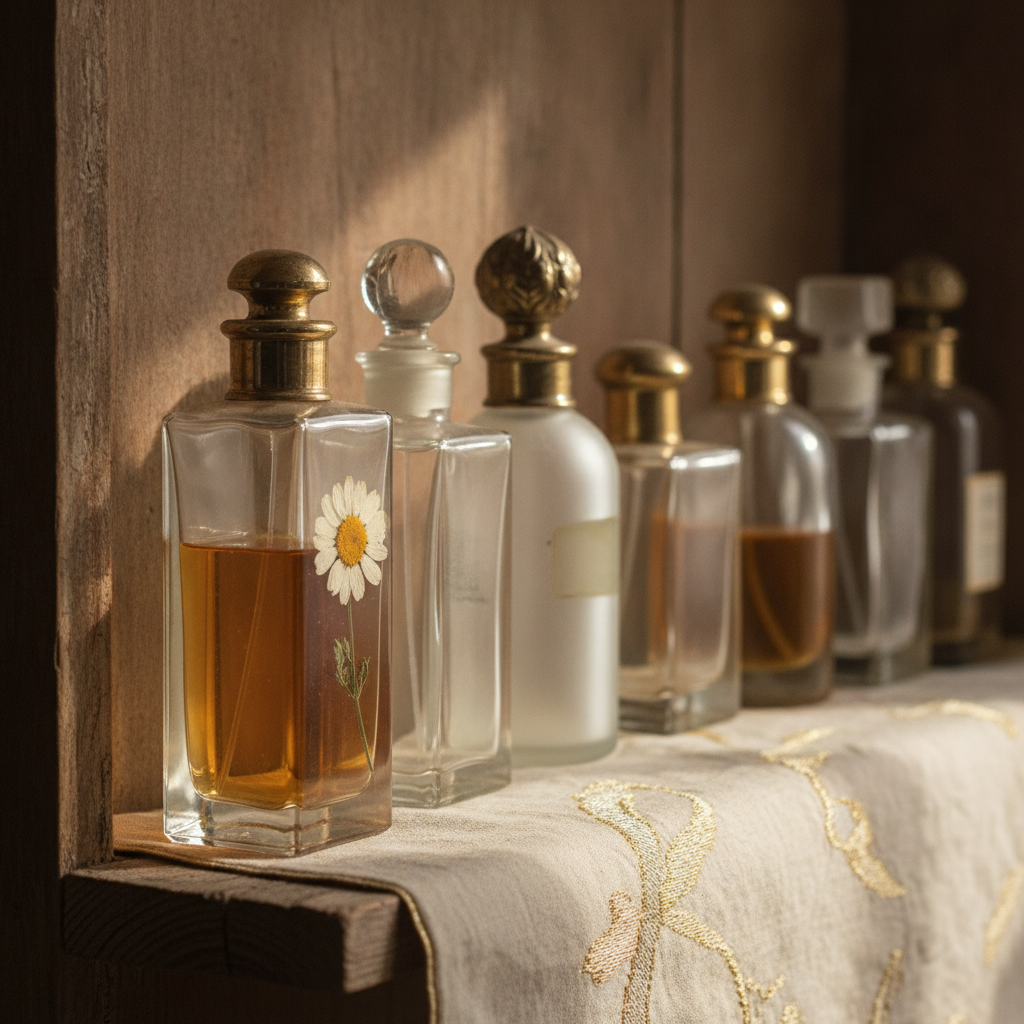
There's a bottle at the back of your shelf. You know the one. You haven't sprayed it in over a year, maybe longer. You move it when you're dusting. You put it back.
And you don't throw it away.
This is not about clutter. It is not a decluttering guide in disguise, promising you'll feel lighter once you let it go. Sometimes you should let it go. But sometimes the bottle isn't really a bottle anymore — it's a record. And records are worth keeping.
The person it belonged to
Some bottles land on your shelf because someone is gone.
Maybe it was theirs and you inherited it. Maybe it was yours, but the smell is so completely theirs that wearing it feels like putting on someone else's clothes. You open it once in a while — a quiet thing, private — and then you close it again.
That bottle isn't a perfume anymore, not in the way a perfume is meant to be used. It's something closer to a photograph. You wouldn't throw out a photograph because you're not actively looking at it.
This is one of the stranger things about scent: it bypasses memory in a way that photographs don't quite manage. A photo shows you a face. A smell returns you. For a moment you are actually back. That is worth something. Some bottles earn their place on the shelf by doing exactly that, occasionally, when you need them to.

The city you won't go back to
Then there are the bottles you bought somewhere.
A market in a city you were only passing through. An airport duty-free, the kind of impulse that usually embarrasses you later, except this time you love it. A small shop on a street you've already forgotten the name of, in a neighborhood that felt like yours for two hours.
The perfume smells like that trip. Not because there's anything in the bottle that says "this city" — it's just the association, the way smell works, locking memories in without asking. You wore it the whole time you were there. Now when you spray it, you're there again.
The problem is you don't always want to go back. The trip was good, but it's over, and some days the smell is too much — not in a bad way, just in an a lot way. So the bottle waits. It doesn't need to be worn regularly to matter.
There's something related in the scents that feel tied to a specific turning point in your life — that strange experience of a bottle that used to be yours and now belongs entirely to a version of you that no longer exists.
The one that no longer fits you
This one is trickier.
You bought it. You loved it. You wore it for a whole year — maybe two — and then something shifted. Your taste moved, your life moved, and the perfume started to feel like it belonged to a different chapter. Not because anything is wrong with it. It's still beautiful. It just isn't you right now.
These are actually the hardest to part with, because there's no sadness attached to them, no person, no place. Just the quiet fact that you are not the same perfume person you were five years ago, and sometimes the old bottles are evidence of that. Little markers of who you were and what you wanted to smell like then.
Keeping one or two of those feels entirely reasonable. Keeping thirty of them starts to look less like a record and more like avoidance. At some point, a bottle that genuinely no longer serves you — no memory, no person, no place — can go. There's good guidance on what to actually do with a perfume you no longer love if you're ready for that step. Some bottles deserve to be worn by someone who will actually enjoy them.
But the meaningful ones? Keep them. The shelf is yours.
What the back row actually is
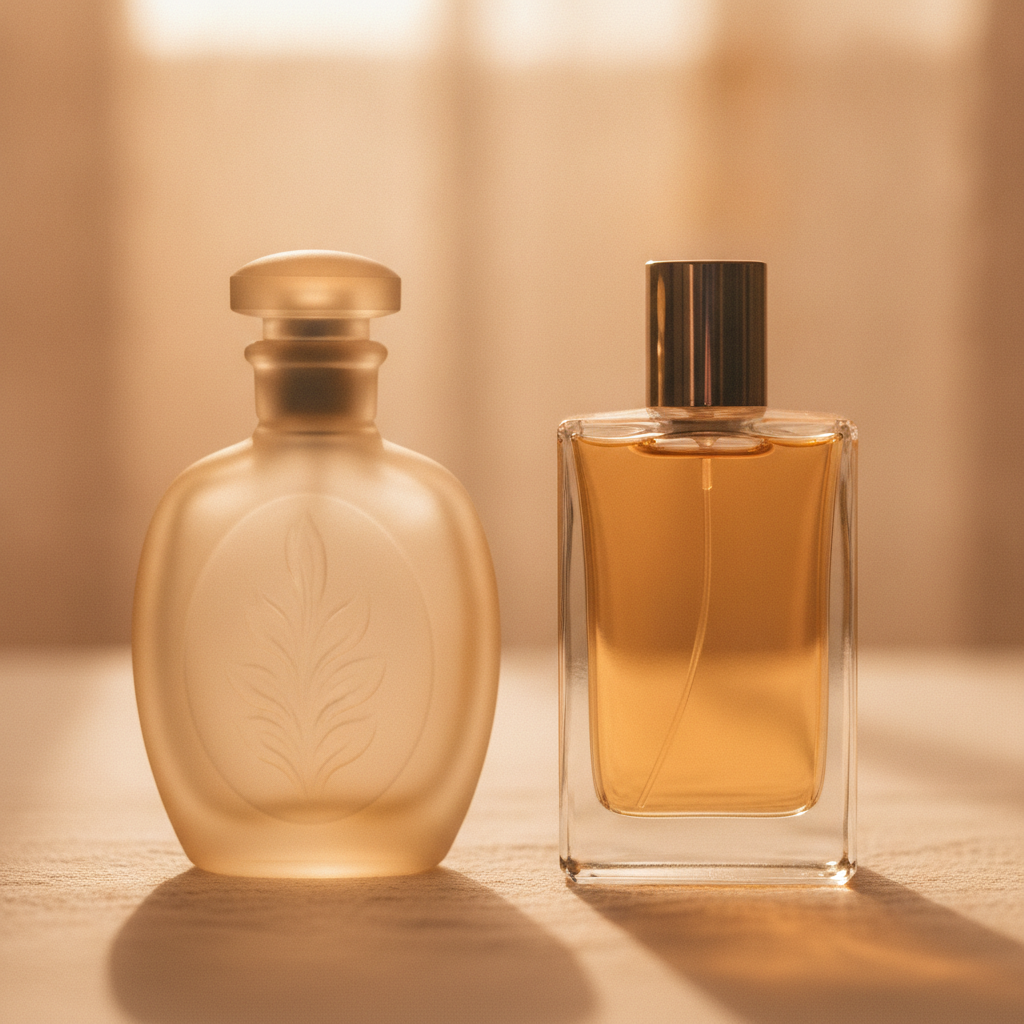
When you look at a shelf like this — one active bottle, one city bottle, one that smells like someone you miss — what you're looking at is an autobiography, the long form of what a single year of wears says about the year you had. Not curated or flattered, just honest. Here's who I've been. Here's who I loved. Here's where I went.
Most of us don't have an easy way to hold that. Perfume does it without trying.
That's part of what makes the back row worth naming. Not every bottle there needs to be justified, logged, or rotated into use. Some of them just need to exist.
The Historian feature in TheScentStyler does something that feels related to this — it takes a week of what you've been wearing and builds a short written narrative from it, the way a journal does, but without requiring you to be the one to write it. If you've been thinking about what your collection is actually saying about you — not just what it smells like, but what it holds — that's a good place to start.
Keep reading The Drydown
The Drydown publishes a new piece most days. If you’d like them quietly delivered, leave your email — no noise, just the writing.
One email per new piece. Unsubscribe anytime.