
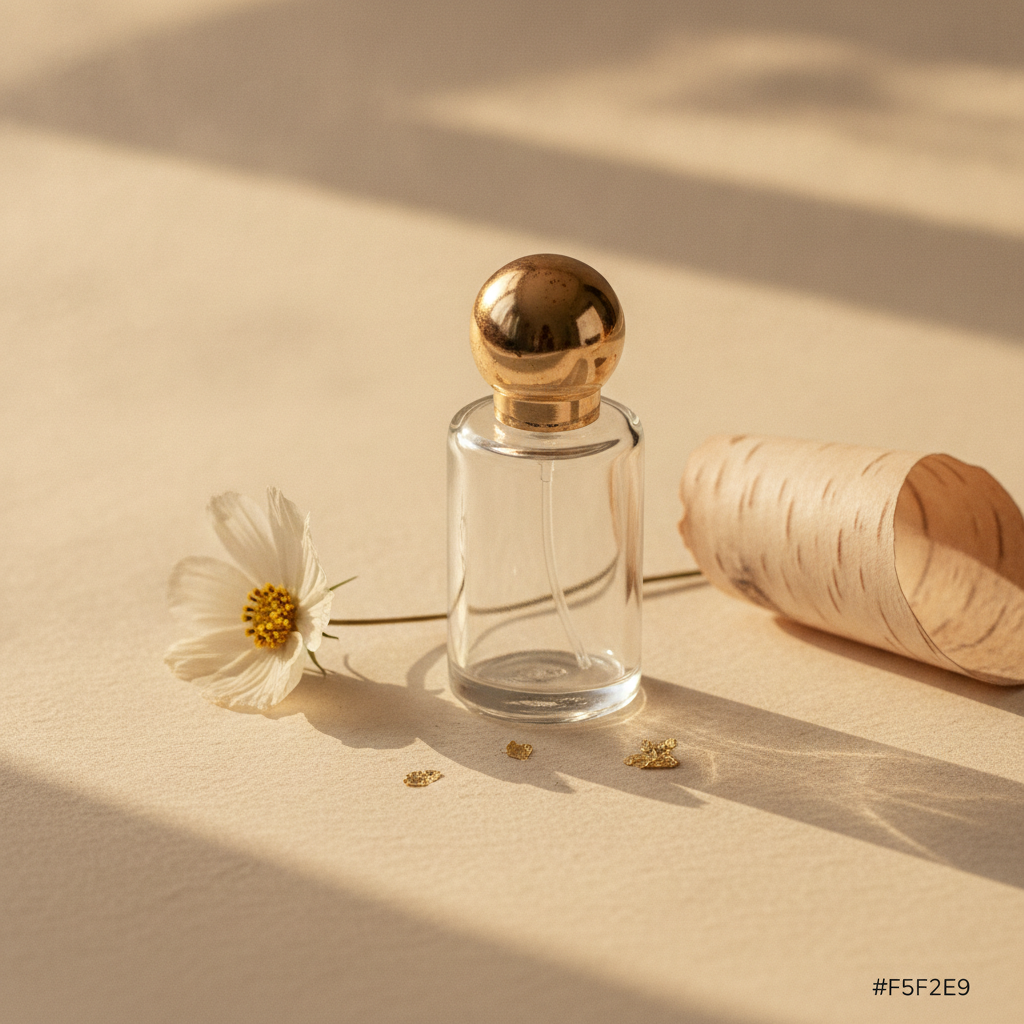
Some perfumes announce themselves the moment you walk into a room. Others do something quieter — they settle into your skin and become almost indistinguishable from you. People lean in rather than step back. They can't quite name what they're smelling. They just think you smell good.
That second kind is what people mean by a skin scent.
What "skin scent" actually means
A skin scent isn't a category you'll find on a fragrance house's website. It's a description of how something behaves — on you, specifically. It's a fragrance that wears close to the body, blends with your natural warmth and chemistry, and reads less like "perfume" and more like an elevated version of your own skin.
The notes that tend to create this effect are soft, sheer, and body-adjacent: musks (especially clean or slightly soapy ones), sandalwood, cashmeran, skin-like ambers, light cedarwood. Not exclusively — sometimes a very soft floral or a diluted gourmand can do it too — but those are the building blocks you see most often.
What these notes have in common is low volatility. They don't jump off the skin aggressively. They radiate slowly, in a small radius, and they have a way of reading as warmth rather than fragrance.
Why the same fragrance doesn't behave the same way on everyone
Here's where it gets interesting — and a little humbling if you've ever bought a perfume because it smelled like a skin scent on a friend.
Your skin chemistry changes everything. pH levels, how oily or dry your skin is, your body temperature, even what you've eaten — all of it affects how a fragrance opens, how long it lasts, and how closely it hugs the body versus how much it projects outward.
A musky sandalwood that whispers on one person might bloom warmly and carry across a room on someone else. A clean amber that you expect to be soft could go slightly powdery and loud once it hits your skin's particular chemistry. Neither outcome is wrong. They're just different.
This is the frustrating and fascinating thing about skin scents: they're not a fixed property of the fragrance. They're a relationship between the fragrance and you.
So you can't rely entirely on reviews to know whether something will behave as a skin scent on your body. Someone saying a fragrance is "invisible and intimate" doesn't guarantee that experience for you. And someone saying it projects strongly doesn't mean it will for you either.
The only way to actually know
You have to wear it. That's it. There's no shortcut.
And wearing it once isn't always enough. Skin scents in particular can shift depending on the weather (heat amplifies projection; cold keeps things close), how moisturized your skin is (dry skin tends to absorb fragrance faster and quieter), and even the time of day.
This is why taking notes matters more than most people expect. Not in a clinical way — just enough to track what you actually noticed. Did it stay close all day, or did coworkers comment on it by lunchtime? Did it fade quickly, or did you catch it on your wrist hours later? Did it smell like you, or like something you put on?
Keeping a simple log of how a fragrance performs — even a few sentences after wearing it — builds a picture over time that no review site can give you. TheScentStyler is built exactly for this: you log what you wore, jot how it behaved, and over time you start to see patterns. Which houses tend to wear close on you. Which note families project more than you expected. Which of your bottles are true skin scents and which just get described that way.

Is a skin scent right for you?
That depends on what you want fragrance to do.
If you want something that enters a room with you, that people notice and ask about — a skin scent probably isn't what you're reaching for on those days. If you want something that makes you feel good without broadcasting, something that rewards the people close enough to be near you — a skin scent is hard to beat.
A lot of people find that they want both, in different bottles for different moments. The loud amber for a night out. The soft musk for a Tuesday when you just want to feel like yourself, only better.
Neither is more sophisticated than the other. It's just a matter of knowing what you're after — and paying enough attention to know which of your fragrances actually delivers it.
If you want to start building that picture, keep a journal of how your fragrances perform on you. A few notes after each wear is enough. Over time, you'll know your skin better than any review ever could.
Keep reading The Drydown
The Drydown publishes a new piece most days. If you’d like them quietly delivered, leave your email — no noise, just the writing.
One email per new piece. Unsubscribe anytime.