
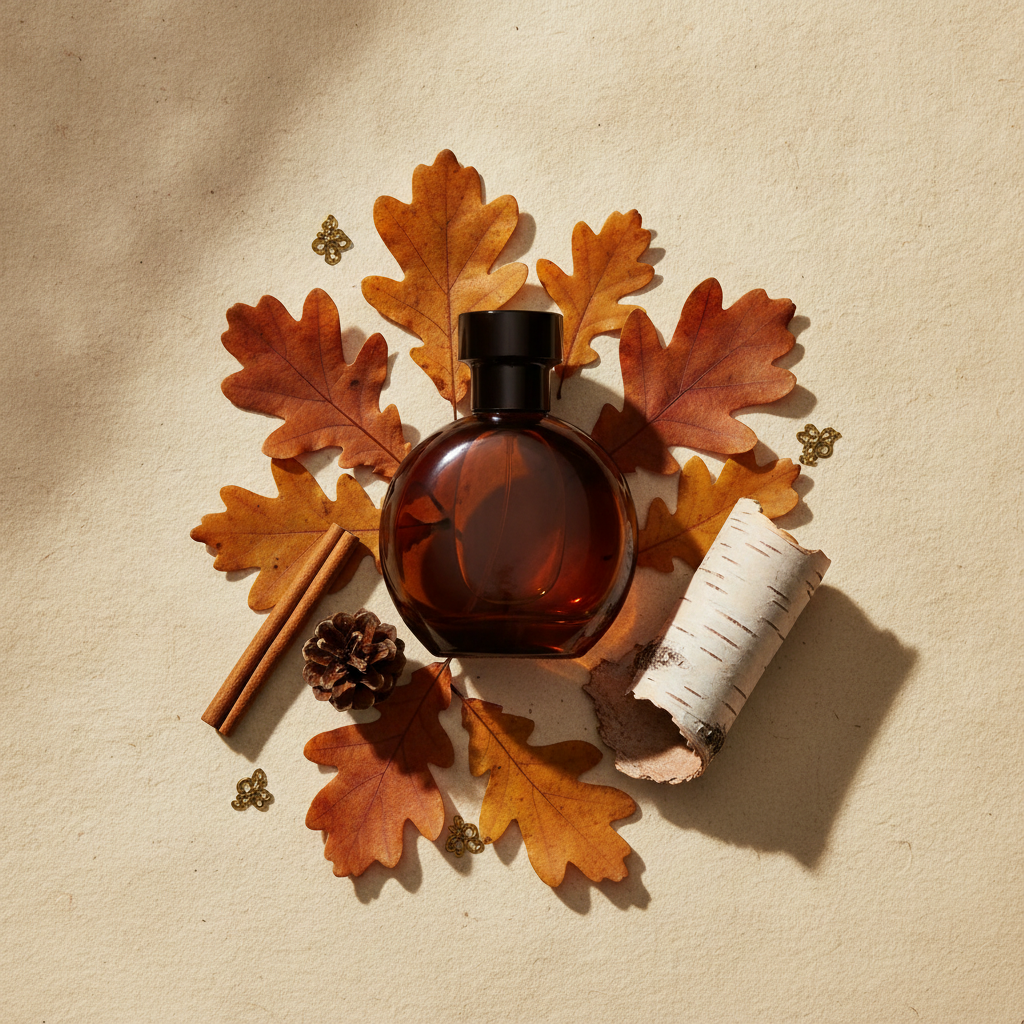
There's a moment every year — usually sometime in late September or early October — when you step outside and the air has changed. Not just the temperature. The smell. Something low and damp and slightly smoky, the faint sweetness of leaves beginning to break down, cold earth underneath it all. And without meaning to, you're somewhere else. A childhood kitchen. A school hallway. The backseat of a car headed somewhere for a long weekend.
Fall does this more than any other season. And it's not an accident.
Smell is the season's native language
Every sense can carry memory, but smell gets there faster and more completely than the others. It's wiring: your nose connects almost directly to the parts of your brain that handle emotion and long-term memory, without the usual relay stations. A smell can land before you've consciously registered it — before you've even named what you're smelling — and pull up something intact from twenty years ago.
Fall tends to have a richer smell vocabulary than the other seasons. Summer has warmth and sunscreen and cut grass, but a lot of summer smells are soft and background. Fall is louder about it. Woodsmoke is acrid and specific. Wet leaves have a particular kind of green-brown earthiness — that's partly geosmin, the same compound that makes rain on dry earth smell the way it does. Cinnamon, clove, baked apple: these are warm and rich and they linger. Cold air itself acts like a slow-release mechanism, holding scent molecules closer to the ground, keeping them around longer than summer heat does.
So you're getting more smell, from more distinct sources, at a time of year that's already charged with transition. The combination tends to stick.
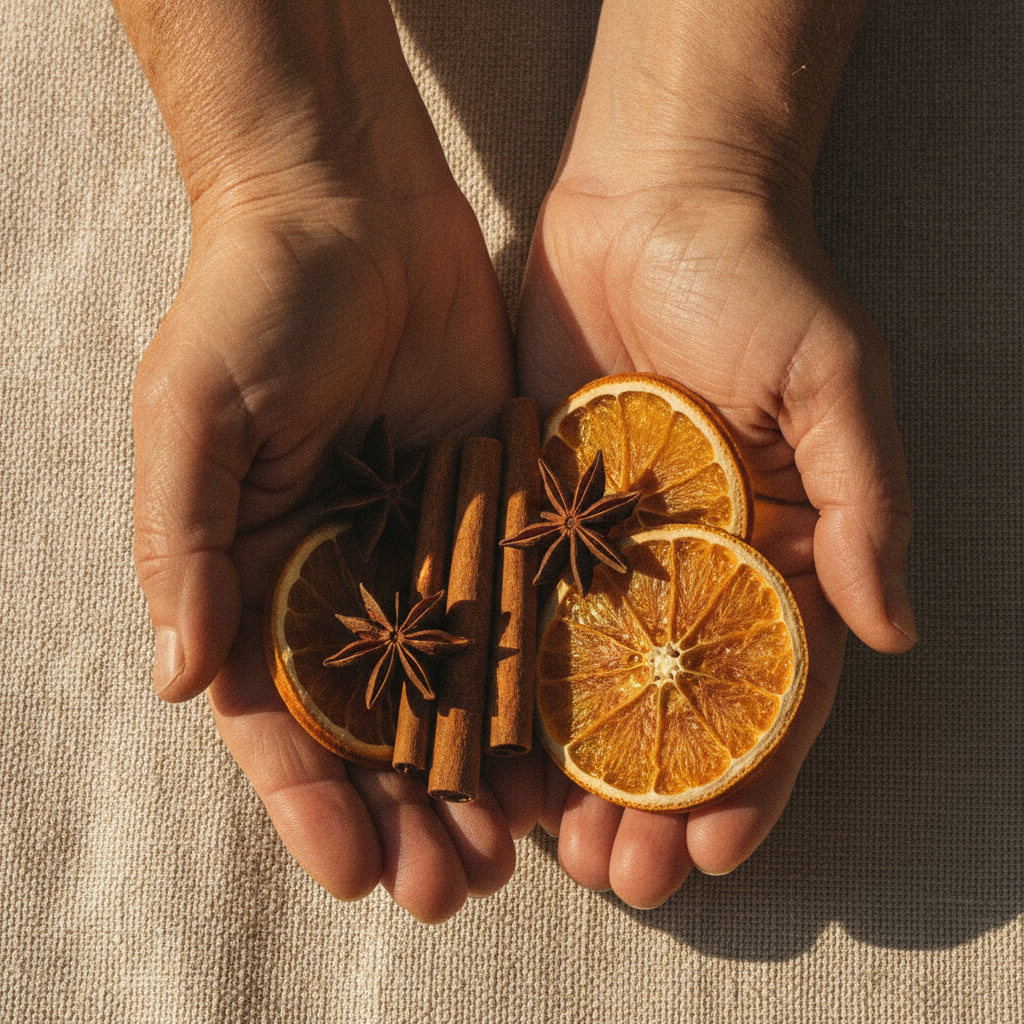
The associations get written young
For most people, the strongest autumn scent memories were laid down in childhood — which makes sense, because that's when so many of the year's big punctuation marks happened. The start of school. Halloween. The first holiday gatherings. Those events came loaded with sensory detail, and smell was part of the package every time.
Pull a wool coat from storage and it smells faintly of last year: wherever you wore it, whatever you walked through. That smell — slightly musty, slightly lanolin-warm — is practically a time capsule. Woodsmoke from a neighbor's chimney means evenings are getting shorter, whether you've registered that consciously or not. Even the inside of a car with the heat on for the first time since spring has its own specific mustiness that arrives every fall like clockwork.
These aren't random associations. They're patterns your brain recognized and filed, over years of repetition, until they became almost reflexive. By adulthood, the smell arrives before the thought — and the feeling follows right behind it.
Why perfume does the same thing
This is why certain fragrances feel so essentially autumnal, even before you've thought about what's in them. Woods, resins, ambers — they tend to be warmer and heavier in character, and they echo the same olfactory territory as woodsmoke and dried leaves. Spices remind the nose of something baked, something domestic. Leather and tobacco have a smoky, slightly animalic depth that fits cold air.
These aren't just aesthetic choices. Wear a fragrance through enough October evenings and it starts to absorb the season. The perfume and the time of year become associated, and eventually the scent can carry the feeling of fall on its own — even in July, if you reach for that bottle.
Some people notice this and start rotating their wardrobe by season almost instinctively, not because they're following rules but because the wrong scent in October feels slightly off, like wearing the wrong coat. The pull only deepens as the light goes — winter scents land differently when it gets dark at five.

Your autumn might smell like something else entirely
Here's the thing worth sitting with: not everyone's autumn archive looks the same.
If you grew up somewhere without seasons, or spent a formative fall somewhere unexpected, or have a particular memory tied to a very specific smell — a certain candle, a grandmother's house, a specific perfume someone wore — that's your version. It doesn't have to match the cultural shorthand of cinnamon and woodsmoke. It just has to be true.
The interesting work is actually noticing. What do you reach for when October arrives? Is there a scent that makes the season feel right? Is there one that, every year without fail, takes you somewhere specific? Those patterns are worth following, and once you start paying attention, they tend to multiply.
TheScentStyler's Historian does exactly this — it takes a week's worth of what you wore and when, and turns it into a short written account of your scent life: what you reached for, what the days were like, what the choices say in aggregate. In autumn especially, when scent memory runs deep, it can be a strange and satisfying thing to read back.
If you've never tracked what you wear through a season before, fall is the natural place to start. The scents are vivid, the memories are close to the surface, and you're probably already reaching for bottles you haven't touched in months. That's a story worth keeping.
Start writing it with TheScentStyler — before the season passes and takes its particular smell with it.
Keep reading The Drydown
The Drydown publishes a new piece most days. If you’d like them quietly delivered, leave your email — no noise, just the writing.
One email per new piece. Unsubscribe anytime.