
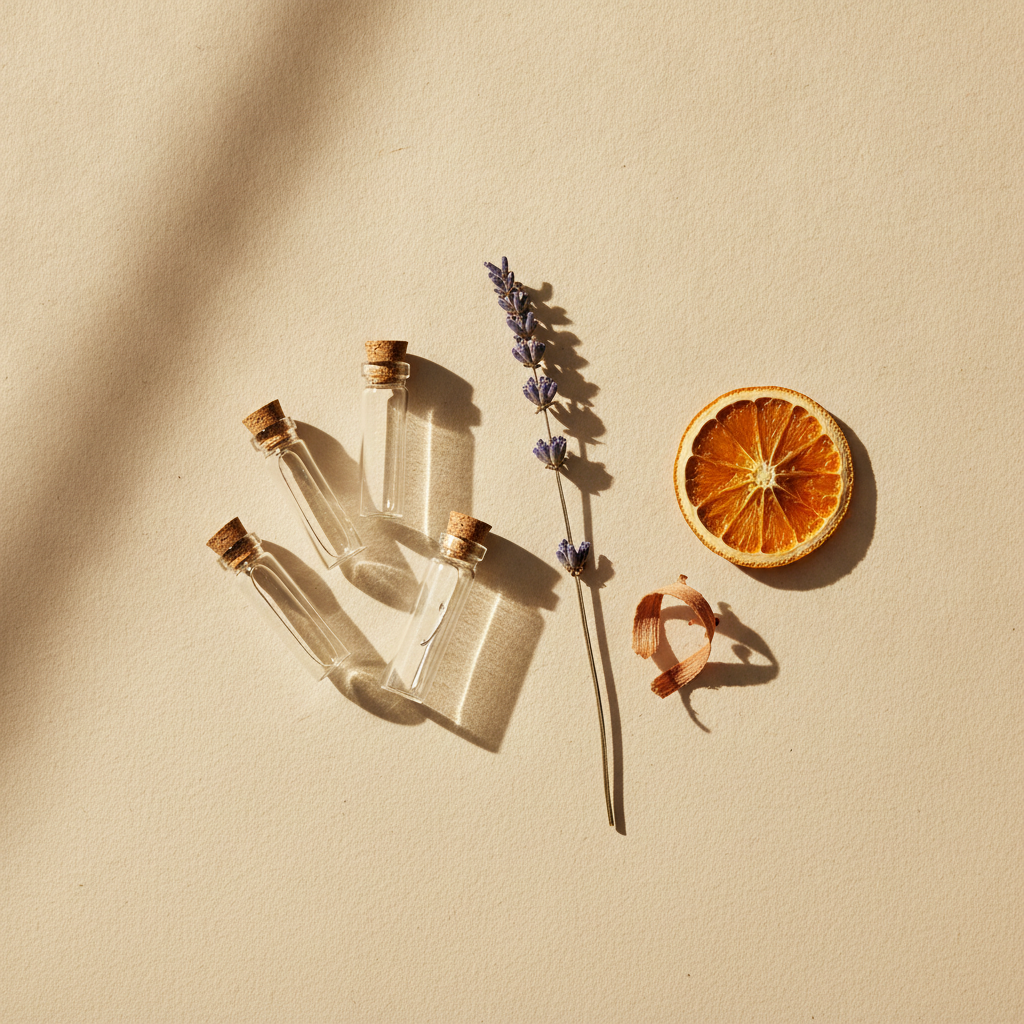
Most people find their signature scent the expensive way — buying a bottle on impulse, wearing it three times, and then spending the next two years wondering if something better is out there. It doesn't have to go like that.
Finding a scent you actually want to wear every day (or most days) is less about luck and more about slowing down and paying attention. It is a different task from picking a scent set aside for the big days, but the instincts overlap. Here's a process that actually works.
Start with what you already know you like
You don't start from zero. Think about scents you've reached for — candles, products, moments when someone walked by and you instinctively turned your head. Were they warm and woody? Clean and airy? Sweet in a dark, resinous way? Bright and citrusy?
Fragrance is organized into loose families: citrus, floral, woody, oriental (rich, warm, spiced), fougère (green and herbaceous), and aquatic, among others. You don't need to memorize them, but it helps to know roughly which direction you're already pointing.
If you already own any perfume at all — even something cheap, even a gift you don't wear much — think about whether you wear it because you like it or because it's just there. That distinction tells you something.
Sample before you spend
This is the rule that saves the most money: never buy a full bottle of something you haven't worn for a full day. There is a full method for testing a fragrance before you buy.
A spritz at a counter or sniffing a cap tells you almost nothing. What matters is how a fragrance behaves on your skin over hours — how it opens, what it settles into, whether it starts to annoy you by mid-afternoon. Skin chemistry is real. The same perfume can smell completely different on two people, and it can smell different on you depending on hydration, diet, even the time of year.
Most niche houses and plenty of mainstream ones sell samples or discovery sets for a few dollars. Fragrance split communities exist for this exact reason. The cost of six or seven samples is a fraction of one full bottle, and they'll tell you far more.
Wear one scent per day when you're testing. Don't stack them — you'll lose track of what you're actually responding to.

Pay attention to how it makes you feel — and how others respond
There are two useful data points when you're narrowing down.
The first is purely internal: does wearing this scent make you feel like yourself, or like you're wearing a costume? A good signature scent tends to feel like background and presence at the same time — you're not constantly aware of it, but when you do catch a drift, it feels right.
The second is external: do people mention it? Not in a "you need external validation" way, but in a practical sense. A scent that prompts occasional unprompted comments — "you smell nice today," or even just someone leaning slightly closer — is doing something useful. One that people never acknowledge might be invisible, or might just not be landing.
Neither data point overrules the other. You're the one who has to wear it.
Keep notes while you test
Here's where most people lose track: they test five things, loved two of them, and two weeks later can't remember which one was which or why they liked it.
Write it down as you go. Even rough notes — "Tuesday, Sample B: dry and woody, clean but warm, got a compliment at 2pm, still smelled good at dinner" — are enough to build a real picture. When you're keeping a catalog and logging your tests in TheScentStyler, patterns start to surface fast. You'll notice you consistently respond to certain base notes, or that a whole family keeps appearing in your favorites, or that the scents you love in the bottle don't hold up on your skin.
That pattern is more useful than any "best signature scent" list online. It's yours.
Give it real time before committing
If one scent keeps coming back to the top, don't rush. Wear the sample out. Live with it across different days and contexts — a work week, a weekend, a warmer day if you've been testing in winter.
A signature scent should feel comfortable in most situations, not just one. If it only works on weekend evenings, it's a great evening scent, not a signature.
Know that "signature" can mean a small rotation
One scent forever is a lovely idea, but it's also a lot of pressure. Most devoted fragrance wearers eventually settle into a small rotation — maybe two or three scents that share a common character, worn depending on mood or weather. That counts. A winter woody and a summer citrus that both feel like you is a perfectly coherent signature.
The point isn't to reduce yourself to a single bottle. It's to stop guessing and start knowing what you reach for and why.
The shortcut is just paying attention
The real reason people end up with fifty bottles and no signature is that they were shopping instead of noticing. When you slow down, test on skin, and track what you actually like versus what you thought you'd like, the field narrows quickly.
Once you find it, TheScentStyler can catalog it for you — notes, DNA, the full picture — so you're never starting from scratch again. The Librarian fills in the fragrance details automatically, and your bottle has a proper home in your collection.
Then you can spend less time searching and more time actually wearing it.
Keep reading The Drydown
The Drydown publishes a new piece most days. If you’d like them quietly delivered, leave your email — no noise, just the writing.
One email per new piece. Unsubscribe anytime.